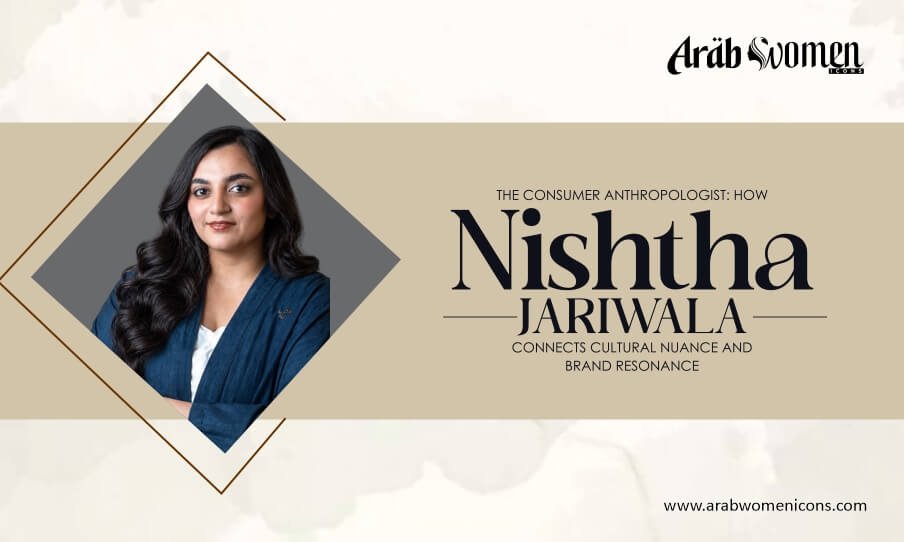
Within the Middle East’s fast-moving consumer goods sector, a leader is required for modern brand transformation. One who views product marketing beyond a simple sales transaction. And looks at it as an ongoing relationship. An association where deep financial logic meets authentic human behavior. Proving consistently this capacity is Nishtha Jariwala, Savola Food’s Brand Management Professional. She dependably proves her visionary leadership spanning the region’s competitive commercial landscape. With a solid academic background in finance, Nishtha Jariwala originally began her professional path. It is a discipline that gave her an analytical edge. It also made her fall in love with structured metrics. And provided a clear understanding of corporate business viability. However, a naturally creative spirit is what she has always possessed. In her heart, she felt deeply drawn to the hidden magic of human culture, individual psychology, and the underlying stories that power daily consumer choices.
At the time when she pursued her Master’s degree at the SP Jain School of Global Management, what came together beautifully was this unique combination of analytical and creative skills. Her specialized education provided her with the remarkable opportunity to live and study across three distinct global cities: Singapore, London, and Dubai. This intense international experience became the definitive turning point in her professional career. Immersing herself in completely different countries exposed her to highly diverse societies, unique consumer habits, and contrasting corporate business environments. She became deeply fascinated by the way a single global brand could mean completely different things to different consumer groups, and how truly successful brands manage to adapt locally while remaining completely true to their core identity.
Translating Real-World Observation Into Action
Beyond academics, Nishtha Jariwala spent her time exploring local communities, hidden neighborhoods, and cultural experiences in every city she lived in. The more she immersed herself in different cultures, the more she realized that marketing is ultimately about understanding people. It is about decoding human behavior, building connections, and creating relevance in an ever-changing world.
Shortly after graduating, she joined Kitopi as a Brand Management Intern. “Working in a cloud kitchen ecosystem serving multiple cuisines and nationalities further strengthened my understanding of consumer-centric marketing.” Every brand, campaign, and strategy had to be viewed through the lens of a different customer segment. It was there that she truly fell in love with brand management; not just as a function, but as a discipline that combines creativity, psychology, strategy, and business impact.
The Multicultural Classroom
Dubai itself has been an incredible classroom. Few places in the world offer marketers the opportunity to engage with such a diverse mix of cultures, nationalities, and perspectives. It constantly challenges you to be agile, empathetic, and globally minded.
Looking back, every step of her journey, from studying finance to living across continents, to working with multicultural brands, prepared her for her role at Savola. Her education shaped her perspective, her experiences sharpened her understanding of consumers, and her early career taught me how to translate insights into action.
Today, while building a career in Brand Management, Nishtha Jariwala carries one belief that continues to guide her: “Great brands are not built by selling products; they are built by understanding people. The closer we get to human truth, the stronger the brand becomes.”
The Authenticity Shift
The FMCG industry is evolving rapidly. There are some major shifts in consumer behavior that Nishtha Jariwala has observed in recent years. She says that the brands that will win in the future are those that use technology to become more human, not less. One of the biggest shifts she sees in FMCG today is that while technology and AI are transforming the way brands operate, consumers are craving authenticity more than ever. They no longer just buy products; they buy into people, values, and stories. Consumers want to know who is behind the brand, what the company stands for, what its values are, and whether its actions match its messaging. In a world increasingly driven by algorithms, trust has become the ultimate currency. As a result, experiential marketing, community-building, and genuine storytelling are becoming more powerful than traditional advertising alone. To stay relevant, brands are shifting from selling products to building ecosystems of trust; using technology to personalize experiences while doubling down on authenticity, community, and human connection.
The Strategic Sequentialism
When developing and executing brand strategies, she honestly feels that the framing of ‘balancing’ creativity against data slightly misrepresents how it works day to day. They’re not on a seesaw; they operate sequentially. Data narrows the problem space; creativity solves what’s left. A concrete example: whenever they have a new product launch, they evaluate the numbers 360 degrees well before launch. That’s a data job; clean, quantifiable, no room for opinion. But deciding how to fix it (reformulate, reposition, or reprice) is a creative and strategic call that no spreadsheet makes for you. She has learned to get suspicious of any strategy that’s 100% data-justified, because it usually means no one took a risk, and equally suspicious of any campaign that’s 100% gut feel, because it usually means no one checked if the problem was real. For her, the most effective brand strategies are built at the intersection of insight and imagination. Data provides the direction; creativity brings it to life.
The Meaningful Solution
In her view, the most successful brands are not those that sell the best products; they are the ones that solve the most meaningful consumer problems. In today’s highly connected marketplace, consumers have endless choices. What differentiates a winning brand is its ability to make people’s lives easier, better, or more fulfilling. When a product genuinely removes a pain point, simplifies a routine, or adds value to everyday life, it naturally earns trust and loyalty. The strongest brands don’t start with what they want to sell; they start with what consumers need. Products can be copied, features can be replicated, but a deep understanding of consumer needs remains a lasting competitive advantage. Ultimately, brands that focus on improving lives rather than simply driving transactions are the ones that create sustainable success.
The Multicultural Lens
As a marketing professional working in the Middle East, Nishtha Jariwala ensures that her approach in building campaigns resonates with diverse cultural and demographic audiences. Her working rule is: one message, many lenses. The campaign idea has to be singular and clear, but she plans for the fact that a Filipino expat, a second-generation Emirati, and a European executive will each run that same message through a completely different cultural filter before it lands. The practical version of this showed up in an Eid campaign she worked on, where the core message had to feel celebratory and warm without being so specific to one cultural expression of Eid that it alienated the dozen other ways it’s observed across our audience. The most successful campaigns are not those that speak to everyone in the same way, but those that make different audiences feel understood in their own way.
The Consumer Foundation
She also believes that Consumer insight is the foundation of every strong brand decision. Without understanding consumers, even the most creative campaigns risk missing the mark. For her, the most valuable insights are not about what consumers are doing, but why they are doing it. Understanding the emotions, motivations, and unmet needs behind a purchase decision allows brands to move from simply communicating products to creating meaningful connections. Consumer insights influence everything, from brand positioning and innovation to communication and engagement strategies. They help brands speak the consumer’s language, solve relevant problems, and stay culturally relevant in an ever-changing world. She believes curiosity is one of the most underrated skills in marketing. The brands that win are the ones that never stop asking questions, never stop listening, and continuously translate consumer understanding into action.
The Technology Trap
Digital platforms continue to transform marketing. According to Nishtha Jariwala, artificial intelligence, aka AI’s biggest impact on brand building, won’t be the flashy generative stuff; it’ll be quietly making personalization cheap enough to do at scale. Right now, true 1:1 relevance is expensive and reserved for big brands with big budgets. Over the next five years, that cost collapses, and the brands that win will be the ones using that newly-cheap personalization to actually listen better, not just retarget harder. The trap she’d flag is mistaking automation for connection. A perfectly-timed AI-generated message that still feels generic will lose every time to a slightly less optimized message that feels human. The technology is table stakes; what differentiates is whether a brand uses it to get closer to people or just to talk to more of them faster.
The Deep Metrics
She measures the effectiveness of a brand campaign beyond traditional metrics such as sales and market share. While they are important, she doesn’t believe they tell the entire story of a campaign’s success. For her, one of the most important questions is: Did they change the way consumers think, feel, or engage with the brand? Sometimes the strongest impact of a campaign is not immediately visible in sales data, but in the conversations it creates, the trust it builds, and the perception shifts it drives. She pays close attention to consumer sentiment, engagement, advocacy, and qualitative feedback. Social conversations, consumer reactions, and real-world behaviors often reveal insights that numbers alone cannot capture. Ultimately, the most effective campaigns do more than generate transactions; they build relationships. Because while sales can be won in a moment, brand loyalty is built over time.
The Contagious Energy
One leadership principle that strongly guides Nishtha Jariwala is the belief that energy is contagious. In marketing, they often focus on strategies, processes, and frameworks, but people underestimate the impact of the energy a leader brings into a room. Enthusiasm, curiosity, and belief in an idea have the power to influence how teams collaborate, create, and execute. She’s seen how one person showing up excited and invested can spark better brainstorming sessions, encourage bolder ideas, and accelerate momentum across a project. Equally, a lack of energy can slow progress in ways that no dashboard or process can explain. Beyond energy, she believes in creating an environment where every function feels heard and valued. The best ideas often emerge when different perspectives come together around a shared goal. For her, leadership is not about having all the answers; it’s about creating the conditions where people can do their best work. When teams feel energized, trusted, and aligned behind a common purpose, collaboration becomes natural, and results follow.
The Middle East Horizon
Looking ahead, she believes a powerful combination of technology, diversity, and human understanding will define the future of marketing in the Middle East. What makes this region unique is that it brings together people from every corner of the world. As marketers, they are constantly challenged to create brands and experiences that resonate across cultures, generations, and perspectives. Few regions offer that opportunity on such a scale. What excites her most is that the Middle East is not just adopting global trends; it is increasingly shaping them, especially in FMCG. From digital innovation to entrepreneurship and consumer engagement, the region is becoming a testing ground for new ideas and bold thinking. At the same time, she believes the future belongs to brands that remain deeply human. As technology continues to advance, the real opportunity will be creating experiences that make people feel understood, connected, and valued. For marketers, there has never been a more exciting time to be in the Middle East. They are not just witnessing the future of marketing; they are helping build it.
The Superpower of Curiosity
Finally, to aspiring women marketers who hope to build influential careers and become future industry leaders, Nishtha Jariwala’s advice is simple: get out into the world. Marketing is not a desk job. Some of the best lessons won’t come from a textbook, a presentation, or a report; they will come from observing people, exploring new places, trying new experiences, and staying endlessly curious. The world is the greatest classroom a marketer can have. Every conversation, culture, store visit, travel experience, and consumer interaction teaches you something about how people think, behave, and make decisions. She would also encourage women to be bold. Don’t wait until you feel completely ready. Take on challenges, share your ideas, and trust your perspective. Growth comes from action, not perfection. Most importantly, never stop learning. Trends will change, technology will evolve, and platforms will come and go, but curiosity will always remain the greatest superpower.