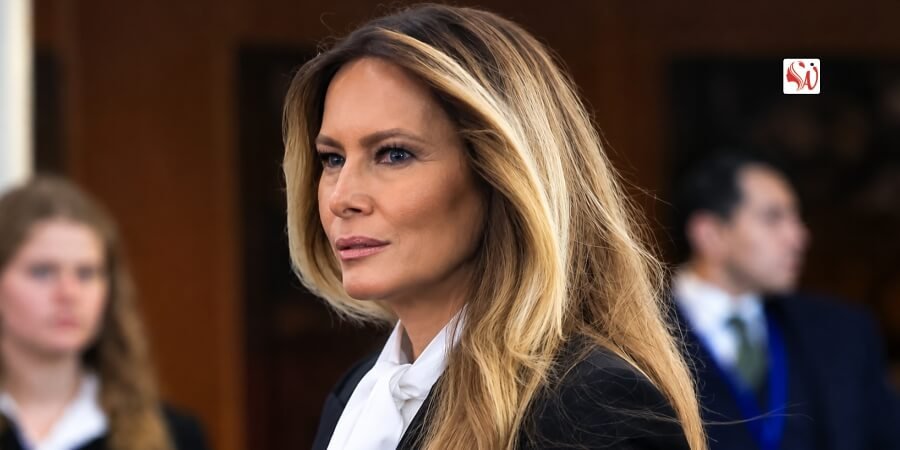
Artificial intelligence is moving from laboratories and technology companies into classrooms, homes and everyday childhood experiences. That shift has created a difficult question for educators and parents: should young people be protected from emerging technology, taught how to use it, or both? Melania Trump has increasingly placed herself in the middle of that conversation, using her role as first lady to promote AI education, digital literacy and technology initiatives aimed at children.
Her approach has developed into a series of programs rather than a single campaign. In August 2025, Melania Trump launched the Presidential Artificial Intelligence Challenge, inviting K-12 students and educators across the United States to develop projects using AI to address community problems. A month later, she hosted a White House Task Force on AI Education meeting involving government officials and technology executives. By 2026, the focus had expanded internationally through her Fostering the Future Together initiative.
From Online Safety to AI Education
The connection between Melania Trump and technology education is partly rooted in her earlier work around children’s online experiences. Her BE BEST initiative focused on children’s well-being and online safety, giving her an existing platform from which to discuss the changing relationship between young people and digital technology.
AI adds another layer to that conversation. Unlike conventional websites or social media platforms, generative AI can produce text, images, audio and other material in response to a child’s questions. That creates educational possibilities, but it also raises questions about privacy, accuracy, dependency and how much independent thinking students should retain.
The OECD’s 2026 AI literacy framework describes AI literacy as more than simply knowing how to operate a chatbot. It includes understanding how AI systems work, evaluating their outputs critically, and using them creatively and ethically. That broader definition helps explain why education has become an important part of the AI debate.
The Presidential AI Challenge
The Presidential AI Challenge became one of Melania Trump‘s most visible technology initiatives. Announced in August 2025, the nationwide competition was designed for students from kindergarten through Grade 12, with participants encouraged to use AI tools or methods to develop solutions to problems in their communities. The initiative was presented as a way of giving students practical exposure to a technology expected to influence future careers.
The challenge also reflected an important change in the way AI is being discussed in education. Rather than presenting students solely as consumers of technology, the program positioned them as people who could experiment with it and use it to develop ideas.
That distinction matters. AI education can mean teaching students what machine learning is, explaining how to verify AI-generated information, or simply showing them how to use a tool. A project-based competition adds another dimension by asking students to connect technology with problems outside the classroom.
A Larger White House Conversation
In September 2025, Melania Trump hosted the White House Task Force on Artificial Intelligence Education alongside cabinet officials and private-sector leaders. The administration said more than 135 pledges had been made in support of AI education initiatives. Her remarks at the meeting framed AI as a major force in economic development while also calling for responsible guidance.
Her position has therefore contained two ideas at the same time: children should gain familiarity with AI, and adults should provide boundaries around that exposure. That balance is significant because the educational debate is no longer simply about whether AI exists in schools. Students are already encountering these tools outside school, which makes questions of supervision, literacy and responsible use increasingly relevant.
The issue is not without disagreement. Education specialists have raised questions about whether AI tools should be introduced at particular ages and whether there is sufficient evidence that they improve learning. Stanford education professor Victor Lee, for example, told The Washington Post that research should play a central role in determining which AI interventions actually work in classrooms. Other experts have focused more heavily on children’s digital well-being and potential harms.
Taking the Conversation International
The next stage of Melania Trump‘s technology agenda moved beyond American schools. Her Fostering the Future Together initiative brought first spouses and equivalent representatives from different countries into discussions about children, education and technology.
The first global summit took place at the White House in March 2026, bringing representatives from 45 countries together with technology companies. According to the White House, discussions covered educational technology, AI in education, online safety and digital literacy. Governments from nine countries also presented strategies for integrating technology into education systems.
This international element changes the scale of the initiative. The conversation is no longer limited to preparing American students for AI-related careers. It also involves questions about how different countries can provide children and educators with access to emerging tools while addressing online risks.
The initiative’s stated goal is to make advanced technology, including AI, available to children, educators and parents while also protecting young people from online dangers.
The Promise and the Difficult Questions
The educational possibilities are substantial. In April 2026, Melania Trump participated in an AI and virtual-reality educational program with Queen Camilla, where students explored historical locations in Britain through immersive technology. The White House presented the experience as an example of how students could access places and educational experiences without physically travelling to them.
Yet access alone does not guarantee better learning. UNESCO has warned that AI in education can deepen existing inequalities when students lack reliable internet access or appropriate technology. Its 2025 report noted that approximately 2.6 billion people worldwide still lacked internet access as of 2024, highlighting the possibility of an AI divide alongside the existing digital divide. UNESCO also called for strong safeguards around privacy, safety, ethics and equitable access.
The OECD’s 2026 Digital Education Outlook offers another important caution. Its research review suggests generative AI can support learning when it is guided by sound teaching principles, but simply using AI to complete tasks does not necessarily produce genuine learning. The report notes that outsourcing cognitive work to general-purpose AI can create risks of disengagement and weaker skill development.
What the Focus Could Mean for Young People
For Melania Trump, technology education has increasingly become part of a broader conversation about preparing children for a future shaped by AI. Her initiatives place curiosity, experimentation and digital skills alongside online protection, rather than treating technology solely as a threat or solely as an opportunity.
That approach will continue to face practical tests. Schools need teachers who understand the technology, students need guidance on evaluating AI-generated information, and families need clearer expectations around privacy and responsible use. Technology companies also have a role because the tools entering classrooms are often developed outside the education system.
The significance of Melania Trump‘s AI focus ultimately lies in bringing the subject into a highly visible public conversation about childhood and education. Her Presidential AI Challenge, White House task-force work, international coalition and technology demonstrations represent different parts of the same agenda: helping young people understand a technology that is rapidly becoming part of everyday life.
As AI becomes more capable, the central educational question may not be whether children should encounter it. It may be how they encounter it, who guides them, and whether schools teach them to question technology as carefully as they teach them to use it. That is where Melania Trump‘s technology education agenda intersects with a much wider challenge facing educators, parents and policymakers around the world