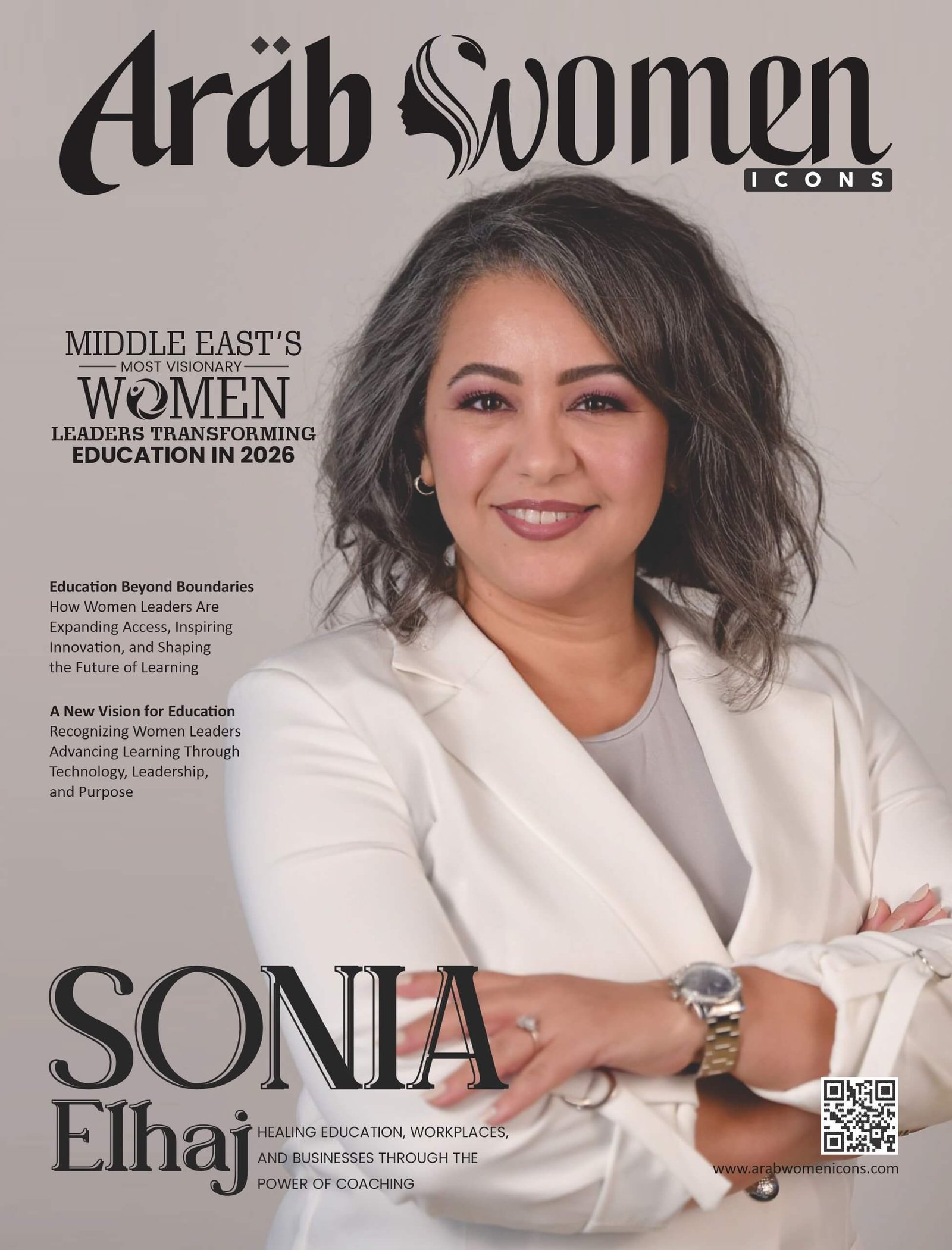
There are educators who teach what they know. There are educators who make people question what they believe they are capable of becoming. For Sonia Elhaj, education has always belonged to the latter category. An expert in Human Development for 25+ years, Sonia Elhaj has built a career across education, coaching, and professional training with one question at its centre: What becomes possible when an individual is given the space, tools, and beliefs to embody more of who they are?
That question began taking shape before coaching became a defining part of Sonia Elhaj’s professional identity. Her journey started with English language teaching, where she witnessed learners arrive unable to utter a word of English and gradually become confident communicators. With safety, encouragement, fun, and a psychologically safe environment, some progressed to near-native levels of proficiency.
For Sonia Elhaj, those transformations revealed something deeper than language acquisition. They offered a glimpse into human potential. Sonia Elhaj internalised that a powerful educator cannot simply be a transmitter of information. A teacher needs to become a coach, mentor, leader, advisor, and even performer. Each role creates a different kind of connection with the learner.
Over time, education taught Sonia Elhaj how to develop capability. Coaching taught her how to unlock potential. Professional development showed her how to connect the two with meaningful performance in the real world. Today, she brings all three perspectives into her work at Zayed University, where she operates through the lenses of educator, coach, trainer, entrepreneur, and performer. Her methods include curiosity, vulnerability, play, improvisation, and powerful questioning. She sees these not simply as teaching techniques, but as ways of creating the right conditions where people can take ownership of creating thriving lives and careers.
Sonia Elhaj does not believe education or training should operate as a hierarchy in which the person at the front of the room has all the answers. Instead, she sees it as a relational and agile practice where people feel seen, heard, and empowered to alchemise old, limiting beliefs into new, expansive realities. Ultimately, her role is to help people express a version of themselves they have not yet fully accessed and give them the courage to embody it.
From Knowledge to Transformation
For Sonia Elhaj, transformational education begins with a shift: it must develop the whole human being, not simply the intellect. Although academic rigour and excellence remain essential, in a world defined by rapid technological change, students also need emotional intelligence, self-awareness, critical thinking, collaboration, entrepreneurial thinking, adaptability, and the ability to navigate uncertainty.
Artificial intelligence has made information increasingly easy to access. The differentiator, Sonia Elhaj believes, is therefore becoming less about what people know and more about how they think, how they respond, and who they choose to become. That changes the questions students need to ask. Instead of focusing exclusively on “What is the right answer?”, they consider: “What am I learning about myself? What capability am I developing? How might that capability serve me beyond the classroom?”
Her coaching-based, trauma-informed teaching weaves strengths, mental fitness, emotional agility, and self-awareness into the learning experience. The result is an environment where students increasingly describe learning as a lifelong journey shaped by passion and growth rather than simply a process of getting things right.
For Sonia Elhaj, true transformation occurs when a learner moves from being a passive recipient to an active creator- from asking, “What do I need to know?” to asking, “Who am I becoming through this experience?”
Building the Skills to Thrive in an Uncertain Future
The future of work will not always provide clear instructions or clearly defined problems. Sonia Elhaj therefore designs learning experiences and assessment instruments to mimic the complexity of the real world. If an activity does not develop self-awareness, leadership, or a transferable skill, she questions whether it belongs in the curriculum at all. Her Fundamentals of Innovation and Entrepreneurship course provides an example.
Students have pitched ideas including a social study arcade, a gaming-inspired career platform, a multisensory sleep-support device, and AI-enabled parking solutions to entrepreneurs and industry leaders. The goal was not simply to come up with a viable product. The process itself is the focus and the objective. Students learn to listen to users and to each other, challenge assumptions, respond to feedback, iterate, collaborate, and communicate with increasing confidence. They also learn an important lesson about failure: mistakes are to be treated as data rather than evidence that they have failed or an excuse to quit.
Improvisation and play are essential levers that support and activate this Design-Thinking philosophy. To Sonia Elhaj, improvisation is not entertainment. It is a pedagogical tool that teaches people to listen, remain present, respond to what emerges, and continue moving when circumstances do not unfold according to plan. Agility, creativity, critical thinking, and comfort with uncertainty are not extras in this rapidly changing world. They are central to future readiness.
From Giving Answers to Creating Agency
Perhaps the most significant transformation coaching has brought to Sonia’s teaching is reframing the relationship between educator and learner.
The question is no longer simply, “What should I tell this student?” It becomes: What question will help this student gain real agency?
One advising session demonstrated the difference. A student was distressed about appearing on recorded breakout sessions and wanted to turn off her camera and disappear. Sonia Elhaj did not immediately attempt to solve the problem or simply restate the rules. Instead, she first created space for the student to express her fears, explore her options, and consider different perspectives. Next, the conversation connected the challenge to the student’s larger ambition: becoming a diplomat and representing her country internationally. Something shifted.
Rather than seeing the uncomfortable classroom situation as an obstacle, the student began to see it as an opportunity to start embodying the person and professional she wanted to become. Her question changed to: “How will I start showing up as that confident, successful, and fulfilled diplomat version of me- now?” That, to Sonia Elhaj, is coaching in action. It is not about rescuing, judging, prescribing, or applying the rules. It is about creating the conditions for ownership, accountability, and possibility while collapsing the timeline of success. Sometimes, that change in mindset produces very tangible and quick outcomes. One first-semester student received an internship offer from a prominent bank immediately after an outstanding project presentation, showing what can happen when entrepreneurial thinking, experiential learning, and risk-taking are cultivated early.
The Ripple Effects of Meaningful Education
Sonia Elhaj does not measure her most meaningful successes through awards or titles. For her, the real milestones are the moments when someone begins to see themselves differently. One such milestone came with the graduation of the first College of Interdisciplinary Studies cohort in Abu Dhabi. Having experienced active learning, interdisciplinarity, and coaching, these students emerged as entrepreneurial, curious, growth-minded graduates who were more confident in positioning themselves within the job market, more willing to take risks, innovate, and tackle complex problems. Some of the most powerful evidence of impact arrives much later.
Former students sometimes contact Sonia Elhaj years, or even decades, after leaving her classroom. They do not necessarily return because they need an answer. They return to tell her that a classroom activity or coaching conversation helped them reset their lives or career paths. Those moments have reinforced one of Sonia Elhaj’s deepest beliefs: the true measure of education is often delayed. An educator may never see the full ripple effect of a conversation, a question, or a realisation while the student is still sitting in front of them. This is why we need patience as educators; we must not focus on metrics and predictable results as the only valuable ROI measure. More importantly, we need to pay attention to education as a sustainable experience; i.e., emotional health, mental fitness, and human fulfillment are essential aspects of ROI within the classroom, the workplace, the boardroom, and the economic ecosystem as a whole.
You Cannot Evoke Transformation through a Slide Deck
Emotional intelligence, resilience, and adaptability have become essential professional skills to employers. SE does not believe these qualities can simply be presented on a slide and expected to land. They must be experienced, practised, and reflected upon. Her classrooms provide students with opportunities to experiment, make mistakes, give and receive feedback, and try again without shame.
Improvisation and play support that process by teaching students to listen, stay present, respond to what emerges, and “fail forward” when things do not go according to plan. Reflection is equally important. Students are encouraged to look beyond the grades and what they have achieved, and examine how they approached the challenge. What happened when they became uncomfortable? How did they respond to feedback? What assumptions did they make about themselves and others?
Sonia Elhaj also deliberately brings her own humanity into the classroom. She does not want students to believe that educators or coaches have somehow “arrived” at a destination. Growth involves experimentation, uncertainty, and lifelong learning. By normalising failure, modelling vulnerability, and practising self-compassion, difficult emotions and conflicts can become opportunities for authentic learning rather than experiences that need to be avoided. For this to happen, a teacher, parent, coach, and leader must be involved in their own journey of self-development and transformation.
Rethinking What It Means to Be Future-Ready
Across the MENA region, Sonia Elhaj sees one challenge standing out: the gap between academic achievement and genuine workforce readiness. The rapid adoption of AI has made that gap more visible. It is possible to produce students who perform well academically and can find instant answers through AI, yet remain underprepared to communicate, solve complex problems, or articulate the value they can bring to an employer.
For Sonia Elhaj, the answer is not to abandon academic rigour. It is to broaden the definition of rigour. Her response includes industry engagement, interactive webinars, live conversations, and authentic classroom challenges. Entrepreneurs and business leaders have been brought into the classroom to expose students to innovation, industry trends, and workplace challenges.
A prominent Emiratisation leader specifically commended her students for their confidence, curiosity, discipline, and willingness to challenge assumptions. Sonia Elhaj believes meaningful progress will require genuine university-industry partnerships, experiential learning, authentic assessment, interdisciplinary projects, and deep coaching conversations- not just events or hype. Just as importantly, educators themselves need continuous development and upskilling. Education, in her view, must become less about transmitting answers and more about developing people who can self-regulate, create, innovate, and access their fullest potential.
Career Readiness Starts on Day One
For Sonia Elhaj, career preparation should not be something that happens when students are about to graduate. If a student starts thinking about CVs and internships in the third or fourth year, she believes it is already too late.
Career readiness should be embedded into the curriculum from the first semester of university. Sonia Elhaj believes this is the responsibility of every instructor. She treats the classroom as a workplace, a job-market environment, and a working-team incubator. The questions are always the same: How does this learning translate beyond the university? What capability is the student developing? Can the student articulate its value? This way of thinking influences how she leverages industry engagement, communication, personal branding, networking, coaching, and authentic problem-solving.
Sonia Elhaj career coaching has also shown her a recurring problem beyond the university classroom: talented people often underestimate themselves, even when senior. They talk about what they have done rather than the impact they have created. They also focus on hard work and being busy instead of alignment, purpose, vision and strategy. Sonia Elhaj teaches students and professionals to position themselves for the role they want rather than simply list skills or job titles. Visibility, in her method, is about being able to explain how someone can innovate and solve problems in order to be a more influential member of the team or community.
The Personal Business Plan shows this idea in action. Rather than having students complete a theoretical project about an imaginary employer -something she considers unengaging and easily replicated by AI- they find real internship advertisements, analyse the roles, tailor their CVs and cover letters, develop STAR-style interview responses, and use storytelling to shape their career direction now and in the future. To further reduce reliance on AI, students are asked to submit a video recording of their self-introduction and discussion of their candidacy role, a viva of sorts that mimics real practices in the job market.
The Identity Shift Behind Lasting Confidence
In a time when social media and validation-seeking behaviours, Sonia Elhaj believes loudness and external performance can easily be mistaken for leadership or confidence. Real confidence is not about how busy someone seems, how they look, or how easily they dominate the conversation. Healthy confidence is the outward manifestation of who someone is internally. Building this kind of confidence requires self-regulation, deep listening, reconnecting with purpose, and choosing ways to act based on an aligned sense of identity. It cannot be achieved in one session. It requires thoughtful and consistent work, including being ready to ask a tough but important question: Without the fears, limiting beliefs, and learned reactions, who am I really at my core?
Sonia Elhaj keeps bringing her students and coachees back to this question when they get stuck. She guides people to use confidence as a way of being or a lifestyle. She encourages them to take microsteps, notice evidence that things are working, and to celebrate daily wins, even when they are small. Sonia Elhaj also uses life and career narratives as powerful coaching tools. By identifying and “alchemising” limiting decisions that have become accepted as truth, an individual can begin to see themselves differently and consider possibilities that previously seemed unavailable.
In an AI-Driven World, Human Connection Is the Differentiator
Sonia Elhaj is aware that AI is transforming education and adapts her teaching and coaching accordingly, but she does not believe AI will make educators obsolete. In many ways, she believes it will make human connection even more important. AI can support individuals by conducting research, streamlining processes, and personalising some aspects of learning. What it cannot yet replicate is genuine human energy, presence, empathy, discernment, ethical judgement, creativity, and the ability to truly and fully witness another person.
She sees this directly in her teaching. Despite the availability of AI-generated content, students continue to value the experience of being genuinely seen and heard. Her recent student evaluation was 4.89 out of 5, which she attributes less to technology or knowledge than to years of listening, experimenting with pedagogy, incorporating entrepreneurial mindsets, applying coaching methods, and caring deeply about the learner.
Looking ahead, she expects education to become increasingly lifelong, interdisciplinary, personalised, and skills-based. Coaching is also increasingly becoming a leadership mindset, teaching pedagogy and relational approach embedded across schools, universities, organisations, and communities globally, and it is high time that educators, parents and leaders in the MENA region follow suit.
Listen First.
For too long, teachers, trainers and coaches have functioned with the shame that they needed to “have all the answers ready” and that in order to stand out, they had to “know more than everyone else”. For educators, coaches, and leaders who want to bring meaningful change, Sonia Elhaj’s first advice may feel counter-intuitive, but is straightforward and essential: Listen before you speak. Listen to connect and discover, not to respond.
Listen to your gut, your students, colleagues, and the field around you. Stay present. When triggered or dysregulated, create distance between the trigger and your response. Become familiar with your body and recognise triggers as information about where growth is needed.
Sonia Elhaj also encourages people to be with their emotions instead of always trying to run from them. To her, healing and evolving as a human being starts with accepting all parts of oneself. Difficult emotions and limiting beliefs can become opportunities to create a stronger self and, ultimately, a better world.
Curiosity is also important. Keep learning. Question and let go of approaches that no longer serve you or the people you teach or care for. Ask questions instead of making assumptions about the situation. It is also important to examine the role you play in relationships and systems.
Are you operating in Karpman’s Drama Triangle as a coach, parent, educator, or leader? Are you constantly using a punitive approach with students or children? Are you over-giving to colleagues, volunteering for every project and task, only to end up in resentment and burnout? Are you always feeling like a victim who needs saving?
Sonia Elhaj encourages individuals to explore a shift into the Empowerment Triangle, which elevates how people teach, lead, coach, and connect with the world around them. Small changes in habits, practices, and responses create big shifts with powerful ripple effects.
A Legacy of Transformational Education
Sonia Elhaj’s goal goes beyond teaching a class, coaching a client, or helping a student get a job. Her legacy is to contribute to the ascension of human beings into Creative Consciousness, and she believes education is one of the most powerful contexts in which to actualise that transformation.
Students arrive to university having lived through adverse childhood experiences and having absorbed limiting beliefs and decisions from traditional schooling, family systems, and social conditioning. Many operate from Reactive Consciousness, a state shaped by survival, fear, external validation, control, and rigidity.
Sonia Elhaj proposes Creative Consciousness instead. This is grounded in inner safety, expansion, authenticity, vision, and alignment. The question shifts from “What should I do?” to a deeper one: “What bigger purpose wants to be expressed through me now?” That is the reframe SE is showing up with in classrooms, coaching conversations, advising sessions, and work meetings. Her intention is for every student, client, and collaborator to leave an interaction with her feeling more regulated and knowing they are more capable, creative, and resourceful than they may have believed previously.
The first graduating cohort of the College of Interdisciplinary Studies at ZU gave her a glimpse of this legacy: entrepreneurial, curious, growth-minded graduates showing up as change-makers both locally and globally. She has witnessed similar transformations among coaching clients, including a professional securing her dream senior role within weeks, after months of unsuccessful job searching; an entrepreneur leaving a toxic job to scale a soul-aligned business; and a consultant being headhunted days after realigning her LinkedIn brand and visibility.
For Sonia Elhaj, these are not one-time wins. They demonstrate that the philosophy she has developed over years is already making a difference in people’s lives. Perhaps that is why she can say, with confidence, that she is already living her legacy. Her mission is to heal education, workplaces, and entrepreneurship through the power of coaching- accompanying people as they build their lives, careers, and businesses and helping them create legacies of their own.