Technology is changing the way people learn, work, communicate, and solve problems. Artificial Intelligence, Big Data, and Machine Learning are no longer limited to research laboratories or specialist technology teams. They are becoming part of healthcare, education, business, cybersecurity, and everyday decision-making. As these technologies continue to develop, universities have an important role to play in preparing people not only to understand them, but also to question, improve, and use them responsibly.
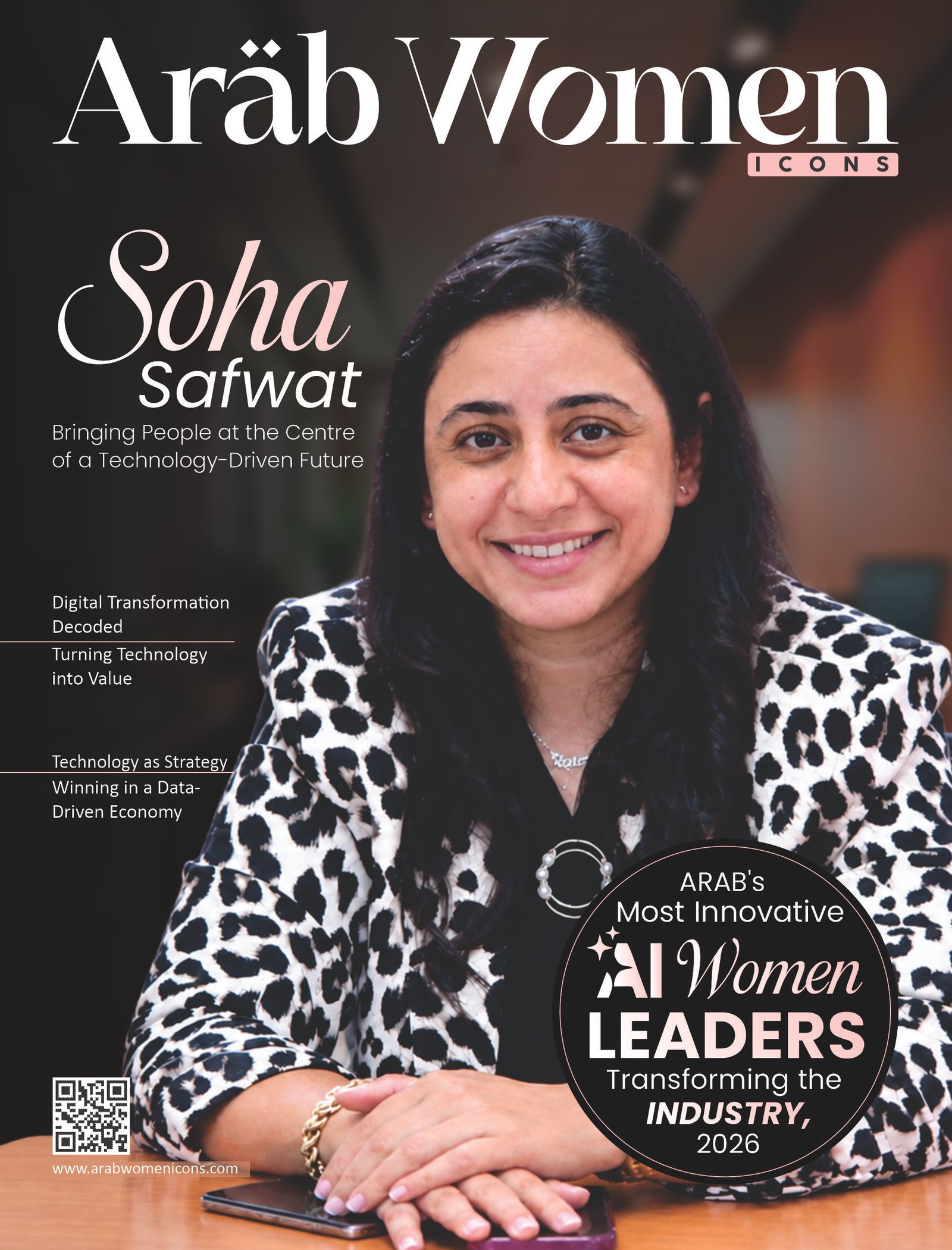
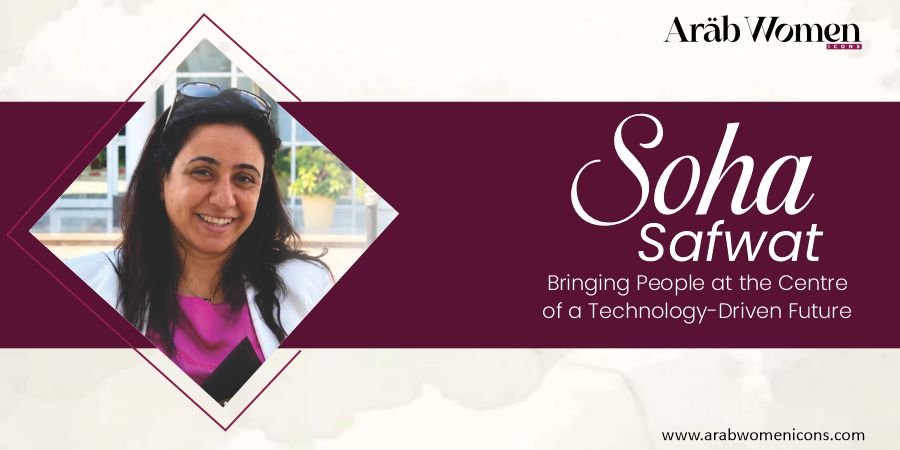
This changing landscape places academic leaders at the intersection of knowledge, innovation, and human development. Soha Safwat, Dean of the Computers and Information Systems Faculty and Director of the Technology Transfer Office at Egyptian Chinese University, has built her career around that intersection. A researcher in Big Data, Data Mining, and Machine Learning, she brings together academic experience, research, teaching, and institutional leadership in her work with students and faculty.
Her journey has included academic roles at Private University, MSA University, and Modern Sciences and Arts University, giving her experience across different areas of higher education. Her academic foundation was strengthened through a PhD in Computer Science from Cairo University, completed between 2006 and 2012, followed by years of teaching, research, and professional development.
Today, Soha’s work extends beyond the classroom. Her experience in programming, project management, organizational development, lecturing, and technology transfer reflects a broader understanding of what modern education demands. She works in an environment where technical knowledge must connect with practical skills, research must respond to real challenges, and students must be prepared for a technology landscape that continues to evolve.
At the heart of her approach is a belief that education should create more than technically capable graduates. It should give people the confidence to explore ideas, solve problems, keep learning, and contribute meaningfully to the world around them. That perspective continues to shape her work as an academic leader, researcher, mentor, and advocate for the responsible use of emerging technologies.
The Academic Leader as a Builder of Possibility
Soha’s journey from computer science, data science and artificial intelligence research to academic leadership has been shaped by continuous learning, teaching and close engagement with students and colleagues. Her academic path, from undergraduate studies at MSA to graduate studies at AUC and Cairo University, followed by years of teaching, research and administration, taught her that knowledge is never static. Technology changes, institutions evolve, and academic leaders must evolve with them.
Research taught her to question assumptions, examine problems carefully and accept that meaningful progress often comes through experimentation. Teaching added another important lesson: leadership is not about having every answer, but about helping people discover their own capabilities.
As she moved into administrative roles, Soha became increasingly convinced that strong academic environments are built around empowerment, collaboration and a clear connection between education and society’s needs.
Today, her leadership approach is grounded in listening, building capable teams, supporting initiative and creating opportunities for students and faculty members to grow. She sees leadership less as a position and more as a responsibility to help others succeed.
Redefining Higher Education in the Age of AI
Artificial Intelligence is reshaping higher education at multiple levels, from what universities teach to how students learn, how research is conducted and what employers expect from graduates. Soha sees AI tools supporting personalized learning, faster feedback, intelligent tutoring, data-driven academic support and more efficient research.
Yet, she believes the deeper transformation concerns the role of the university itself. With information now instantly accessible, education can no longer revolve mainly around memorization. Universities need to develop critical thinking, creativity, problem-solving, communication and the ability to use AI responsibly.
Egypt and the wider Arab region also have an opportunity to contribute solutions shaped around their own languages, cultures and challenges. Arabic-language technologies, healthcare applications, smart infrastructure, cybersecurity and education are areas where regional researchers and innovators can create meaningful impact.
The university of the future, in Soha’s view, should do more than teach students how to use AI. It should prepare them to question it, improve it, build with it and understand its wider impact on society.
Preparing Students for a Changing Technology Market
Soha’s approach to education combines strong academic foundations with practical, industry-oriented learning. Students need solid knowledge of programming, algorithms, software engineering, data and computing fundamentals, while also gaining exposure to rapidly developing fields such as Artificial Intelligence, Data Science and Cybersecurity.
At the faculty, workshops, projects, competitions, technical communities and other activities give students opportunities to apply their knowledge. Initiatives such as “Future Qualified Graduate for the Job Market” are designed to bridge the gap between university education and professional expectations by developing technical skills, digital presence, employability and awareness of emerging technologies.
Real challenges are equally important. Competitions, hackathons and practical cybersecurity activities place students in situations where they must think critically, collaborate and perform under pressure.
Soha does not see the goal as preparing graduates for a single job. Technology changes too quickly for that approach. Instead, she wants students to develop the ability to keep learning, adapt confidently and remain valuable throughout their careers.
Creating Space for Ideas to Become Innovation
Soha believes innovation begins with psychological and intellectual freedom, giving people the confidence to ask questions, challenge assumptions and try something new. Students are encouraged to move beyond examinations through projects, hackathons, competitions, research experiences and interdisciplinary collaboration. Such experiences help them take an idea, test it, improve it and explore how it can be applied to a real problem.
Innovation among faculty members and researchers requires collaboration and institutional support. Some of the strongest ideas can emerge when people from different disciplines approach the same challenge from different perspectives. Academic leadership, therefore, has a role in creating room for experimentation, supporting research and recognizing initiative.
Soha also sees value in unsuccessful experiments. When students and researchers understand why an approach did not work and use that knowledge to improve the next version, the experience becomes part of the innovation process.
The culture she seeks to build is one where curiosity and initiative encourage people to turn real problems into opportunities for research and development.
Mentorship That Turns Learners into Builders
Mentorship and hands-on exposure play a fundamental role in developing future technology innovators. A student may understand an algorithm in a classroom, but a different kind of learning begins when that student has to solve a real problem, work with a team, manage time and defend a technical decision.
Programming competitions, hackathons and applied projects develop more than technical knowledge. They build resilience, teamwork, communication, confidence and the ability to think under pressure, qualities that are increasingly important for future technology leaders.
Soha sees mentorship as a process of guiding rather than providing ready-made solutions. A mentor should ask the right questions, offer direction when necessary and gradually encourage students to work independently.
One of the most rewarding moments in education, she believes, comes when students move from asking, “What should I do?” to confidently saying, “This is the approach I want to test.” That shift reflects growing confidence and ownership.
When strong academic preparation comes together with mentorship and practical exposure, students begin to see themselves not only as learners, but as builders, researchers and potential innovators.
AI’s Next Chapter Will Be More Than a Prompt
Over the next five years, Soha expects generative and agentic AI, multimodal systems, intelligent cybersecurity, AI-enabled healthcare, advanced data analytics, edge AI, and trustworthy and explainable AI to have a significant impact across industries.
She is particularly interested in how AI is moving beyond systems that simply respond to individual prompts toward technologies capable of reasoning across multiple sources, interacting with tools and supporting more complex workflows. Multimodal AI will further expand these possibilities by bringing together text, images, audio, video and sensor data.
Arabic-language AI also holds particular importance for the region. Systems that understand language varieties, cultural context and local needs can create applications that are more relevant to Arab communities.
Soha also sees strong potential in domain-specific AI across healthcare, education, agriculture, smart cities, industry and cybersecurity. The region, she believes, should not limit itself to adopting these technologies. It should contribute its own research, datasets, products and companies to their development.
Keeping Human Responsibility at the Centre of AI
Responsible AI, according to Soha, needs to be considered from the beginning of the AI lifecycle rather than added after a system has been developed. Accuracy alone cannot determine whether an AI system is truly effective.
She points to fairness, transparency, accountability, privacy, security, reliability and meaningful human oversight as essential principles. Developers need to understand where their data comes from, who may be underrepresented, what errors a system can produce and who could be affected by those errors.
Transparency becomes particularly important when AI is used in high-impact decisions. People should know when AI is involved and have appropriate ways to understand or challenge significant outcomes.
Universities carry an added responsibility because they educate the people who will build future systems. Ethical reasoning, therefore, should form part of technical education rather than remain confined to a single course.
Soha wants students to understand that a more powerful model is not necessarily a better system. The important questions are whether it is safe, fair and explainable, whether its limitations are understood, who is accountable and whether it creates genuine value for society.
More Space for Women in Technology
Greater participation of women in technology requires more than encouraging them to enter the field. Soha believes women need environments where they can enter, remain, advance and take on leadership roles.
Universities can contribute through early exposure to technology, mentorship, research opportunities, competitions, entrepreneurship support and visible female role models. Seeing women succeed as engineers, researchers, founders and academic leaders can make technology careers and leadership feel more attainable to younger students.
Organizations also have a role to play by creating transparent opportunities for advancement and cultures where performance, competence and contribution guide leadership opportunities. Policymakers can support this through scholarships, digital-skills initiatives, research funding and programs that broaden access to emerging technologies.
Soha sees representation as having a wider effect. When a woman reaches a leadership position, she not only advances her own career but also expands what younger women can imagine for themselves.
Her hope is to see a future where women in AI leadership are no longer viewed as exceptions, but as a natural and essential part of the technology ecosystem.
Global Technology Needs Local Understanding
What excites Soha most is AI that moves beyond demonstrations and creates measurable improvements in people’s lives. Healthcare stands out as a powerful example, with AI supporting medical-image analysis, early detection, clinical decision-making and more efficient use of limited resources.
Cybersecurity presents another important opportunity as expanding digital services create new risks that require faster and more adaptive detection and response. Soha also sees potential across education, smart cities, sustainability, agriculture and public services.
Egypt and the wider Arab region can create opportunities where global technologies meet local challenges. The region has engineering talent, growing digital ecosystems and problems that can become sources of innovation.
Becoming global leaders, however, requires more than adopting existing technologies. Soha points to the need for high-quality local datasets, stronger research-industry collaboration, startup ecosystems, investment in computing infrastructure and clear frameworks for responsible AI.
She believes the region’s advantage can come from building solutions that are locally relevant while remaining globally competitive, while giving young innovators the confidence and resources to turn research into practical products and services.
A Legacy Built Through People and Possibility
Soha envisions a university environment where students do not simply wait for the future to arrive but actively participate in creating it. She wants to contribute to an academic culture that brings together strong scientific foundations, curiosity, innovation, responsibility and practical impact. As an educator, she wants students to understand that learning does not end with a degree. As a researcher, she wants knowledge to move beyond publication and address real problems. As a mentor, she hopes to give young people the confidence to pursue ideas that may initially seem difficult. As an academic leader, she wants to create systems and opportunities that continue supporting people beyond any individual position.
The legacy she values is not a title or a single achievement. It is the people who carry the work forward: graduates who become capable professionals, researchers who create meaningful knowledge, women who see leadership as attainable, and students who eventually become mentors themselves.
For Soha, the most meaningful form of leadership is creating opportunities that continue to grow long after the leader has moved on.