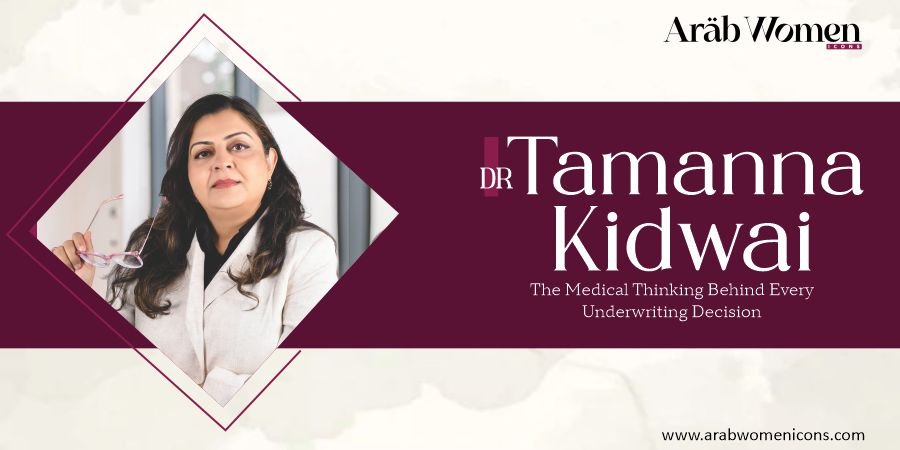
Life insurance underwriting sits at a thoughtful intersection of medicine and financial responsibility. Behind every policy decision is a careful assessment of risk, where clinical understanding, technical judgment, and consistency can influence the long-term health of an insurance portfolio. The work calls for more than knowledge of medical conditions or underwriting rules; it requires the ability to weigh evidence carefully and make decisions with discipline.
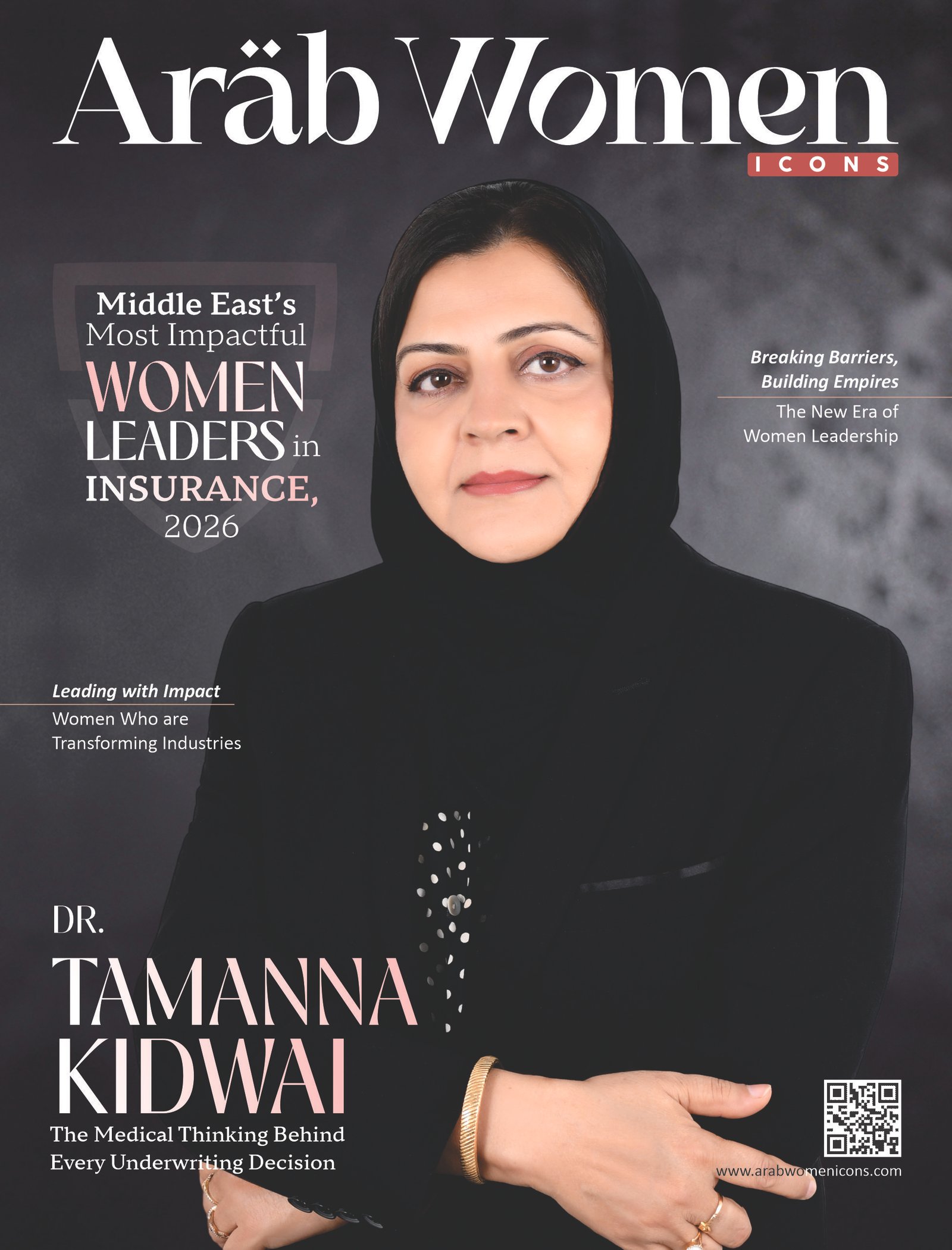
That combination of expertise defines Dr Tamanna Kidwai, Life Underwriter at Sukoon Insurance. With more than 20 years of experience in life insurance underwriting, she brings together medical expertise, technical underwriting knowledge, and leadership experience. Her career has included serving as a Chief Medical Officer, where she provided clinical oversight, handled complex risk decisions, and supported governance across retail and group life portfolios.
Her professional experience extends across Indian life insurance underwriting as well as U.S. life and health insurance processes. This has given her exposure to medical review, operational excellence, process transitions, and quality frameworks, while also shaping a disciplined approach to risk assessment. She has built and led medical underwriting teams, strengthened medical decisioning standards, and contributed to portfolio health through evidence-based evaluation and consistent underwriting practices.
At the centre of her work is the relationship between sound medical judgment and responsible risk assessment. It is a perspective shaped by years of experience across different insurance environments and by an understanding of the importance of getting complex decisions right. Her journey provides a closer look at the expertise, leadership, and careful decision-making that sit behind effective life insurance underwriting.
Where Medical Insight Meets Insurance Risk
Insurance underwriting sits at an intersection where medical knowledge, evidence, judgement, and financial responsibility must work together. A diagnosis alone rarely tells the full story. The duration of a condition, its severity, treatment, complications, and likely outlook can all influence how risk is understood.
Dr Kidwai’s journey into life insurance underwriting developed through precisely this intersection. Medicine was her starting point, but her professional foundations were also shaped by experiences in structured processes, quality management, and insurance operations. Early roles with global organisations such as GE Capital Services and Genpact exposed her to Six Sigma principles and the US Long-Term Care insurance market. Her LOMA certifications strengthened her understanding of insurance principles, while COPC process audits developed her perspective on governance, quality standards, performance management, and consistency in decision-making. Pasted markdown
Over the years, she built experience across medical underwriting, leadership, and governance in India. Her move to the UAE represents an extension of that experience rather than a new beginning. At Sukoon Insurance in Dubai, she is applying what she has learned while remaining open to the dynamics of the local market. Her approach is not to replicate practices from India, but to understand what worked, why it worked, and what can be adapted appropriately to the UAE. Pasted markdown
Reading Beyond the Diagnosis
Her medical background remains central to the way she evaluates underwriting cases. Rather than stopping at a diagnosis, Dr Kidwai looks at the wider clinical story: how long the condition has existed, its severity, whether it is controlled, the treatment being received, possible complications, and the likely outlook.
Cardiac investigations became one area of particular expertise during her career. She became highly comfortable evaluating ECGs, TMTs, and other cardiac reports, reviewing thousands of such investigations over the years. The experience taught her to recognize patterns, question inconsistencies, and understand the clinical significance behind a report rather than simply recording a diagnosis. Pasted markdown
Her medical training taught her to connect the dots. Insurance experience then taught her how to translate those observations into a long-term risk assessment.
The Balance Behind Fair Underwriting
Rigour and fairness, in her view, depend on balance. Underwriters have a responsibility to the insurer and the wider pool of policyholders, but every application also represents a real person.
Two people may carry the same diagnosis while presenting very different levels of risk. Age, disease severity, treatment, control, complications, and overall health can all alter the assessment. Fair underwriting therefore requires evidence to be considered without assumptions or personal bias. Rigorous underwriting also means knowing when the available information is insufficient and further questions need to be asked. Pasted markdown
Experience has helped Dr Kidwai develop another important judgement: knowing when there is enough information to make a decision and when it is necessary to pause and investigate further.
A Wider View of Medical Leadership
Her experience as a Chief Medical Officer broadened that perspective considerably. Earlier in her career, the individual case naturally occupied the centre of attention. Leadership brought a wider set of questions into view: whether processes were consistent, guidelines remained appropriate, decisions were being made for the right reasons, teams were adequately supported, and medical developments were being reflected in practice. Pasted markdown
She came to see governance as something that extends beyond policies and procedures. It is also about creating a culture in which people take ownership of decisions and feel comfortable challenging something that does not appear right.
Medical leadership also requires an understanding of the wider business. Working with underwriting, claims, actuarial, reinsurance, and senior management means being able to explain why the medical perspective matters to the organisation as a whole. Pasted markdown
Individual Risk and Portfolio Thinking
The distinction between individual Life and group Life business requires a different way of thinking. Individual Life underwriting allows close attention to a person’s medical history, lifestyle, occupation, financial circumstances, and other personal factors. Group Life requires a broader view that includes age profiles, occupations, claims experience, concentration of risks, benefit structures, and demographics.
The question consequently shifts from assessing the risk of one person to understanding what that risk means within a particular group. Dr Kidwai believes effective underwriting requires both perspectives: understanding the individual risk while also understanding the portfolio surrounding it. Pasted markdown
Experience That Travels, Practices That Adapt
Her international exposure began early through GE Capital Services and Genpact, where she gained insight into the US Mortgage and Long-Term Care market and developed a strong foundation in Six Sigma. That experience continues to influence how she approaches processes. She naturally asks whether something can be done better, where unnecessary variation exists, what the data indicates, and how quality can be improved without making processes unnecessarily complicated. Pasted markdown
Her years in India added deeper, ground-level experience in medical underwriting, leadership, governance, and team management. The combination has shaped her approach to decision-making.
The UAE presents a different opportunity. She sees the insurance market as one with considerable potential, supported by a diverse customer base, growing awareness of protection products, greater use of technology, and an appetite for more efficient ways of working. Yet she is equally conscious that there is much to learn.
Her philosophy is straightforward: international experience is valuable not because practices should be copied, but because the principles behind them can be understood and adapted. Her role at Sukoon Insurance gives her the opportunity to bring her experience in medical underwriting and risk assessment into the UAE while learning the local business environment, customer needs, and regulatory landscape. She sees this as an opportunity to contribute to underwriting practices, processes, and governance at the organisation. Pasted markdown
Developing Independent Underwriters
When developing medical underwriting professionals, Dr Kidwai looks for curiosity, ownership, and independent thinking. Technical knowledge matters, but underwriting also depends heavily on judgement.
She wants professionals to be able to explain why they reached a decision rather than simply referring to a guideline. She also values healthy professional disagreement, recalling that some of her strongest underwriting discussions have involved people challenging her initial thinking. Pasted markdown
Her aim is not to create teams that depend on her for every difficult case. She wants professionals who can analyse cases independently, form their own opinions, and recognise when escalation is genuinely necessary.
Governance With Room for Judgement
Strong medical governance, in her view, rests on consistency, accountability, and continuous learning. Clear guidelines and escalation mechanisms are important, but professional judgement must remain part of the process because medicine does not always fit neatly into a checklist. Pasted markdown
Governance also has to evolve alongside medical treatment, survival outcomes, and the growing understanding of disease. Technology has a role in that evolution. Automation, analytics, and AI-assisted decision support can improve consistency, identify trends, and support more informed underwriting decisions. Yet these tools should augment medical expertise rather than replace it, particularly when cases are complex or borderline.
Technology, Data, and Human Judgement
Dr Kidwai views the growing use of technology in underwriting as an opportunity. AI, automation, and better data integration can accelerate routine decisions and reveal patterns that may be difficult to identify manually. Pasted markdown
Still, she does not see technology replacing experienced medical underwriters. Difficult cases are often difficult precisely because information is incomplete, contradictory, or clinically complicated. Human judgement remains essential.
Her Six Sigma background has made her comfortable with data-driven improvement, while her medical experience has reinforced the understanding that not everything important can be captured in a spreadsheet. The future underwriter, she believes, will need to understand both data and technology while retaining the confidence to question what the data is saying. Pasted markdown
The Human Responsibility Behind Every Application
Underwriting carries an ethical responsibility because every application represents a person and often a family whose financial security is connected to the policy. Dr Kidwai approaches that responsibility by holding two principles together. Insurance must operate according to fairness and sustainability, but professional judgement cannot be replaced by emotion. Ethical underwriting means remaining objective while retaining a human perspective. It means requesting information that is genuinely necessary, avoiding assumptions, protecting confidentiality, and treating similar risks consistently. Pasted markdown
The Next Chapter of Life Underwriting
Technology, medical advancement, and data are likely to shape Life insurance underwriting significantly in the years ahead. Medical progress is already changing the outlook for conditions that were once viewed differently, requiring underwriting philosophies to keep pace.
Customers are also looking for insurance to become simpler, faster, and more transparent. The challenge, Dr Kidwai believes, is finding the right balance between speed and quality. Faster underwriting has value, but not when it compromises sound risk assessment. Pasted markdown
The next generation of medical and Life underwriters will therefore need both depth and breadth. Medical knowledge remains essential, but professionals also need an understanding of data, technology, financial concepts, reinsurance, and the commercial realities of insurance. Communication and emotional intelligence matter as well, because a sound decision has limited value if its reasoning cannot be explained clearly. Pasted markdown
Dr Kidwai encourages young professionals to remain curious: learn from claims, understand reinsurance, speak with other functions, and ask why a decision was made rather than simply memorising the answer. Her own journey, from medicine through GE Capital Services and Genpact, the US LTC market, medical underwriting, leadership, governance, and now the UAE, has reinforced a central lesson: the ability to learn and adapt may be one of the most important professional skills of all. Pasted markdown
A Definition of Balance
Outside professional responsibilities, Dr Kidwai does not claim to have discovered a perfect formula for work-life balance. Like many working women, she has navigated competing responsibilities involving growing children, a working husband, home, career, family commitments, and friendships. Different phases have required different priorities.
She has learned that balance does not mean giving everything equal time every day. Sometimes it means recognising what needs attention most at a particular moment. She has also learned to accept that everything cannot be done perfectly, making prioritisation, accepting help, and letting go of some of the guilt associated with doing everything herself important parts of the process. Pasted markdown
Her creative side offers a different kind of release. She enjoys creating the best out of waste, and keeps a small sewing kit close at hand. Sewing and working with her hands provide a welcome contrast to the analytical nature of her professional life. She also has a deep affection for animals, particularly cats, whose uncomplicated presence brings her back to the present moment. Pasted markdown
She has always believed in dreams and positive thinking, not as a substitute for effort, but as a source of direction and courage. Her family and close relationships have kept her grounded through different stages of her career.
That perspective shapes how she defines success. It is not limited to titles or professional accomplishments. A meaningful career, in her view, involves contributing something worthwhile, continuing to learn, pursuing the dreams that matter, and remaining present for the people and relationships that matter most.