Growing a business across borders requires more than an understanding of different markets. It calls for the confidence to take an idea beyond its home ground, the ability to adapt to different business environments, and the patience to establish a presence that lasts. In marketing and technology, where creative thinking must work alongside commercial understanding, international growth brings its own set of demands.
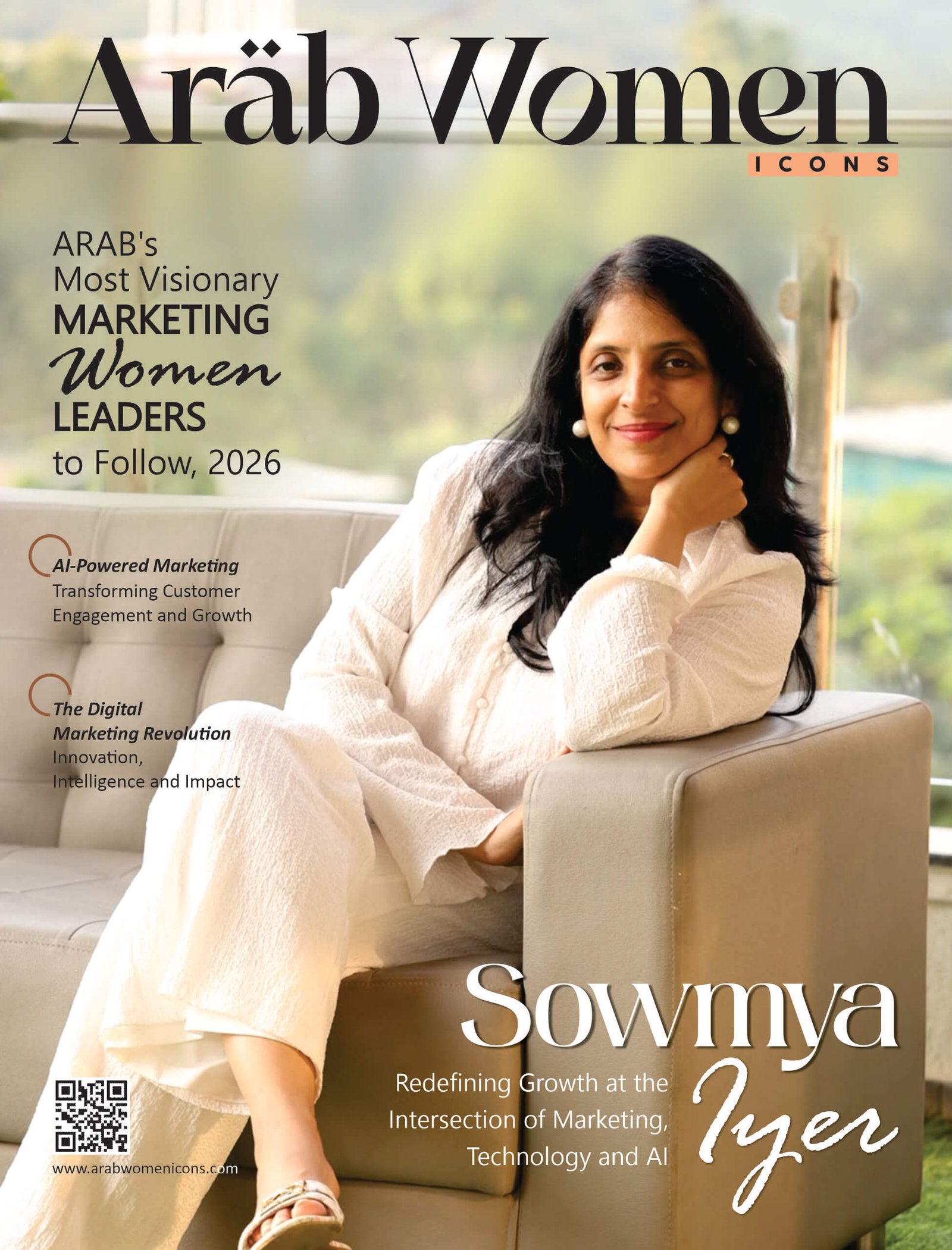
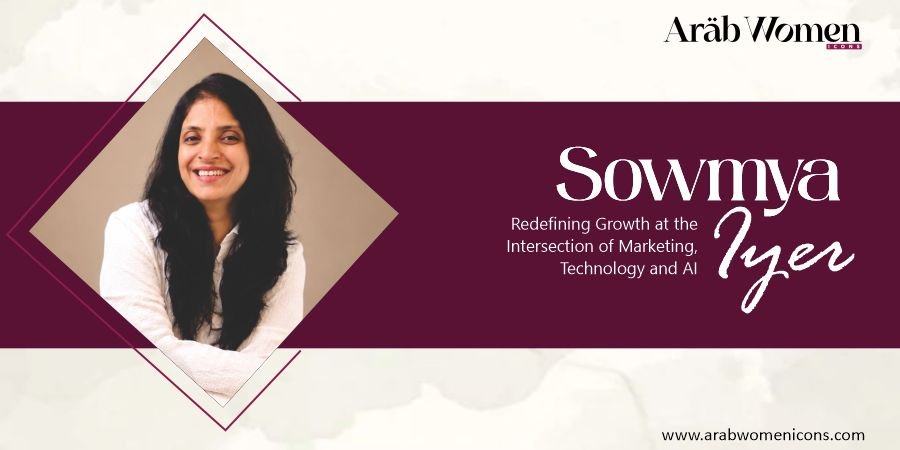
Sowmya Iyer, Founder and CEO of DViO, has taken this challenge on as a first-generation entrepreneur, leading the growth of one of India’s largest independent marketing and technology agencies. Under her leadership, DViO has developed a presence across India, the Middle East, Southeast Asia, the United States, the United Kingdom, and other international markets. Its sustained reach across multiple countries gives the company a distinctive position among independent agencies to emerge from India.
DViO’s journey reflects a business model that has extended well beyond a single domestic market. Operating across different regions requires an organisation to work across varied commercial settings while retaining a clear sense of its identity. Sowmya’s leadership has been central to the agency’s expansion, placing her at the intersection of entrepreneurship, marketing, and technology in an industry where businesses must combine creative capability with the demands of operating at scale.
Her journey offers a closer look at the decisions and ambitions behind DViO’s international presence, as well as the experience of growing an independent Indian agency into a business with a broad global footprint.
Creating Roads That Did Not Exist
“Someone had to build those roads. The roads that didn’t exist.” Sowmya wrote these lines years ago while reflecting on the purpose of her life. They capture the conviction that has shaped her journey as a first-generation entrepreneur and the founder and CEO of DViO.
With no inheritance, established network or playbook to follow, Sowmya relied on curiosity and an appetite for learning. She began working at 16, running a youth portal, working as a journalist, producing a television series and joining start-ups, all before turning 22. Creating, exploring and learning came naturally to her, making DViO a progression of interests she had pursued for years.
She disagrees with the idea that first-generation founders must wait for capital, permission or a market to mature. Markets, she believes, are rarely ready on their own. Someone has to make them ready.
The early years taught her that faith often precedes evidence and that reputation can compound faster than capital. Fifteen years into the journey, a significant share of DViO’s business continues to come through references or direct approaches from companies seeking its services. That trust, she believes, cannot be purchased. It must be earned.
A Different Model of Marketing and Transformation
Sowmya believes the traditional agency model has become disconnected from the outcomes businesses actually need. Billing for hours, retainers and deliverables can reward activity without necessarily contributing to growth. DViO was built around a different premise: marketing and technology should be accountable for business results.
Rather than operating as a conventional agency, DViO positions itself as a digital transformation and growth company comprising four businesses that work as one. Mesh AI transforms how businesses operate. DViO Digital focuses on marketing transformation. DViO One brings data together to provide marketing intelligence and market discovery, while Discovr One helps brands become visible and discoverable within AI systems.
Data sits at the centre of this model, from how it is structured to what it can predict. Every action is expected to serve a business outcome, and the company is moving its commercial models towards bottom-line impact. Sowmya draws a clear distinction between a supplier and a genuine partner: the latter must be accountable for results.
International Growth Built on Trust
DViO’s presence across India, the Middle East, Southeast Asia, the United States and the United Kingdom has grown through client relationships rather than a strategy of planting flags in new markets. Sowmya describes the company’s expansion as being driven by demand, not by pushing into territories. She believes that kind of growth is more likely to endure.
Her understanding of business has also been shaped by the relationships behind it. Life and business rarely follow a straight line, she says, and reducing relationships to transactions overlooks the trust that makes them meaningful. The relationships that helped DViO grow were built by extending trust first.
Sowmya moved to the UAE in 2015, at a time when relatively few women were leading businesses at the intersection of marketing and technology. With no established path to follow, she created her own. She also believes the region should stop treating marketing as something that must be imported. Its ambition and capital give it the potential to set its own standards, provided businesses work with partners that build locally and remain committed to the region.
DViO One: Finding Direction in Fragmented Data
For many enterprises, the challenge is no longer collecting data but making sense of it. Individual channels generate separate reports, partners present different versions of the truth, and marketing leaders are left trying to assemble a coherent picture before board meetings. Sowmya sees this as administration rather than intelligence.
Three shortcomings led to the development of DViO One. Fragmented data prevented businesses from seeing the complete customer picture. Backward-looking reports explained what had already happened, often too late for teams to respond. Marketing metrics also remained disconnected from business results, reinforcing the perception that marketing was a cost rather than a growth driver.
DViO One brings internal and external data into a unified source of marketing intelligence. It interprets that information within the context of a specific industry and extends the analysis into market discovery. Businesses can use it to identify untapped opportunities, assess what may happen next and determine how to respond.
Sowmya sees the platform as a strategic investment that can help businesses establish a growth flywheel, with intelligence informing decisions across the organization.
Moving from Reports to Reasoned Decisions
Sowmya is critical of dashboards that appear impressive in review meetings but fail to change what happens afterwards. A dashboard can describe movement in a number, but it rarely explains why that movement occurred or what leadership should do next. Teams are left to interpret the data and debate their response.
In markets changing rapidly, she believes the distance between seeing a development and acting on it can become a significant source of lost growth.
Her expectation is that business leaders should demand answers rather than simply request more reports. A CEO should be able to ask a question about growth and receive a reasoned recommendation that can be acted upon that day. Artificial intelligence creates the possibility of moving from reporting to reasoning, although Sowmya believes most organizations have yet to make that shift.
Mesh AI: Transformation That Works in Practice
Sowmya sees a gap between the growing number of enterprises purchasing AI tools and the deeper work required to transform a business. Buying technology without a clear understanding of its purpose, she argues, is not AI transformation.
Large consulting firms have traditionally dominated enterprise transformation, but her experience has taught her that the work depends heavily on trust. Clients who had seen DViO apply AI within their marketing operations began asking Mesh AI to help transform other parts of their businesses.
Pwani Oil, one of Kenya’s largest edible oil and FMCG manufacturers, illustrates this approach. DViO has worked with the company across supply chain, finance, route to market and marketing. AI and automation support operational improvements and EBITDA, while the integration of internal and external data helps identify untapped opportunities, assess new markets and understand competitor performance. This gives the business a stronger basis for entering those markets.
Mesh AI begins with the business problem rather than the technology. Sowmya also believes a responsible partner must be willing to tell a client what does not need to change. Transformation, in her view, is not a presentation or a set of recommendations. It must become a working system that people can use in their everyday roles.
Answers Engine Optimisation and the New Rules of Discovery
Sowmya believes the way people discover brands is undergoing a fundamental change. For two decades, businesses focused on securing visibility among pages of search results. Increasingly, customers ask AI systems questions and receive a direct answer. A brand absent from that answer risks being overlooked at the moment a decision is made.
This shift has changed the nature of digital visibility. The objective is no longer simply to be found, but to be understood, trusted and chosen by an AI system acting on behalf of a person. DViO developed Discovr One around this emerging discipline of Answers Engine Optimisation, or AEO.
Many brands remain unaware of what AI systems believe about them or which sources influence those perceptions. Sowmya considers that lack of visibility a serious business risk, particularly in a region adopting AI rapidly. She believes organizations that respond early will be better positioned to shape how customers discover them in the years ahead.
Rethinking a Brand’s Digital Presence
As AI systems become more influential in discovery, Sowmya argues that businesses must reconsider what constitutes their digital presence. It extends beyond a company website and its social channels to include credible information published about the brand across other sources, including material the organization did not create itself.
This requires a shift away from producing content simply to increase volume. Much of that material creates noise, which AI systems can disregard. Brands should instead focus on consistency, factual accuracy and demonstrating expertise rather than merely claiming it. Reputation must also be earned in places a company does not control.
Measurement needs to change accordingly. Traffic, in her view, is becoming a less meaningful signal on its own. Businesses should also ask whether they appear when people seek answers about their category and whether the information presented about them is accurate.
Human Judgment at the Centre of AI
Sowmya believes neither artificial intelligence nor human judgment can deliver its full value in isolation. AI without human oversight can produce answers quickly and confidently while still being wrong. Human judgment without AI, meanwhile, risks becoming slower and less informed as the volume and complexity of information increase.
DViO was among the early marketing companies to become AI-native, a transition Sowmya says required redesigning the organization rather than simply purchasing software. The company moved from traditional departments to small, self-sufficient squads. Each squad has an intelligence core of people who understand the business and can think critically about its sector, supported by talent and AI agents working together.
The model now operates across DViO’s functions, business units and business groups. Intelligence informs decisions, people make them, and every AI-led recommendation has a human owner accountable for the outcome. Sowmya describes this as a practical operating rule: human-led and AI-powered, with the order of those words carrying real significance.
Leadership Across Markets and Responsibilities
Leading an organization of around 300 people across multiple locations has taught Sowmya the importance of providing clarity at the centre while allowing freedom at the edges. She cannot, and should not, be present in every room. Learning to let go has been one of her hardest lessons as a founder. She sees herself as a custodian of the enterprise, responsible for helping it grow beyond her individual involvement.
Her understanding of leadership also extends into her personal life. She rejects the idea that there is one prescribed way to be a mother or a wife. Building the company involved lonely nights and long periods away from the warmth of home, often in ways that did not fit conventional expectations of how a woman should manage her responsibilities.
For Sowmya, love and devotion matter more than following someone else’s template. The form they take is a personal decision.
She also recognizes that a natural inclination to give can leave a person depleted. To continue supporting others, she makes time to replenish her own energy through nature, poetry, solo travel and silence.
DViO’s Vision: Growth as an Enterprise-Wide Function
Sowmya expects marketing to evolve beyond a separate department into an intelligence layer that runs through the entire business, as fundamental to operations as finance or supply chain. She wants DViO to become the growth operating system enterprises rely on as marketing, technology and AI converge.
The company’s four-business structure reflects that ambition. Mesh AI, DViO Digital, DViO One and Discovr One are designed to help enterprises pursue transformation and growth as connected objectives. Transformation without growth becomes cost-cutting, she argues, while growth without transformation is difficult to sustain.
Her wider ambition is for the Middle East to define its own approach to enterprise brand growth rather than remain a late adopter of models developed elsewhere. She believes the region has the pace and courage to establish its own standards, and she intends for DViO to contribute to that effort.
Advice for First-Generation Entrepreneurs
Sowmya’s message to first-generation founders is direct: take the first step. Established roads may not exist for people starting without inherited advantages, and the less-travelled path can be lonely and uncertain. Yet it is also the path on which entrepreneurs can create something truly their own.
She advises founders to prioritize trust over attention and to reject the assumption that ambition must come at the expense of devotion. Success does not have to follow a template, whether in business or at home. Entrepreneurs must also make time to return to themselves, recognizing that their own energy and conviction are essential to everything they build.
Faith remains central to her approach, particularly the steady belief that allows someone to build before the wider world agrees with the idea.
Sowmya returns to a question from one of her poems: “For if she didn’t, who would help discover the other side?”
It reflects the principle that has accompanied her journey from early creative ventures to leading DViO. When a road does not exist, someone has to be willing to create it first.