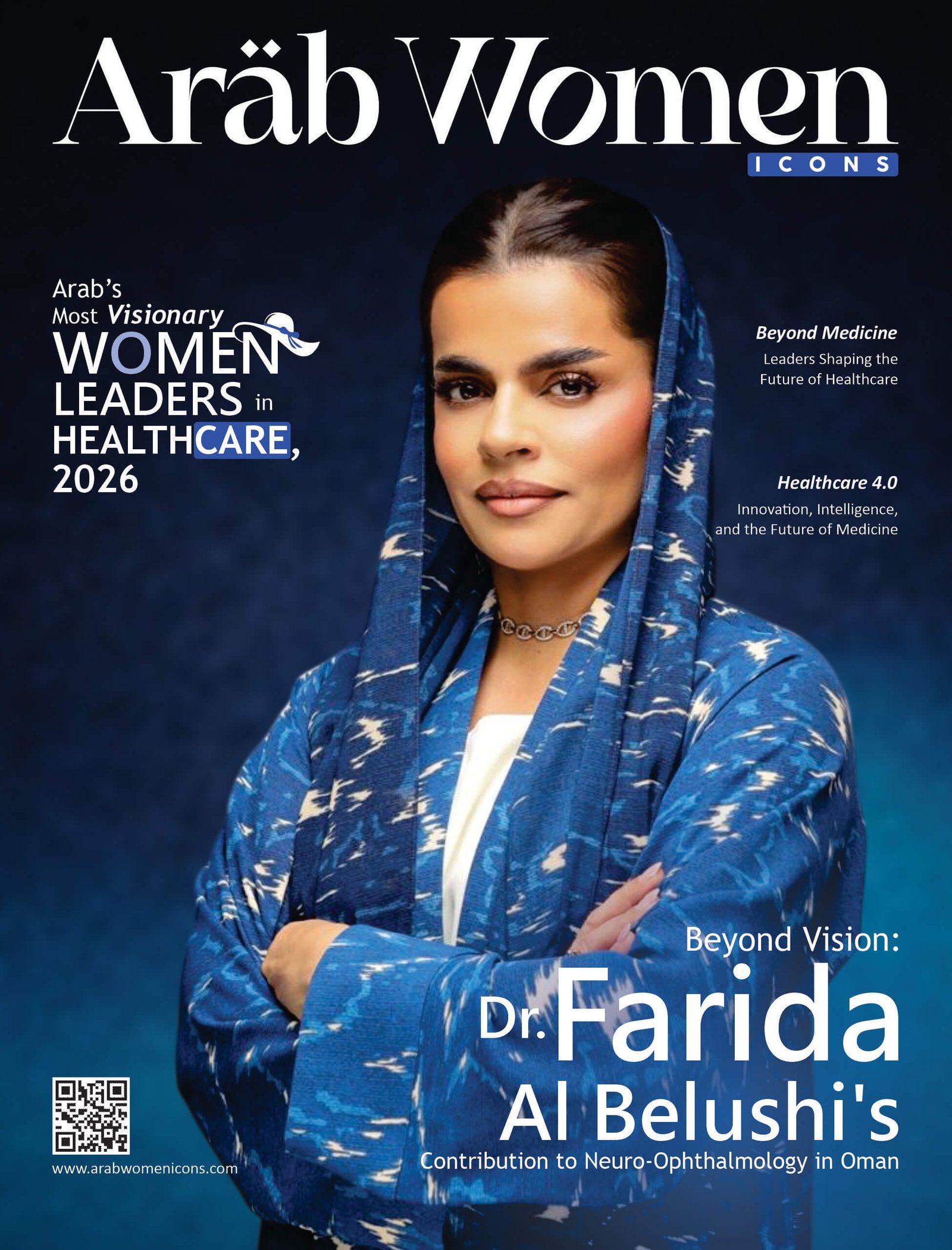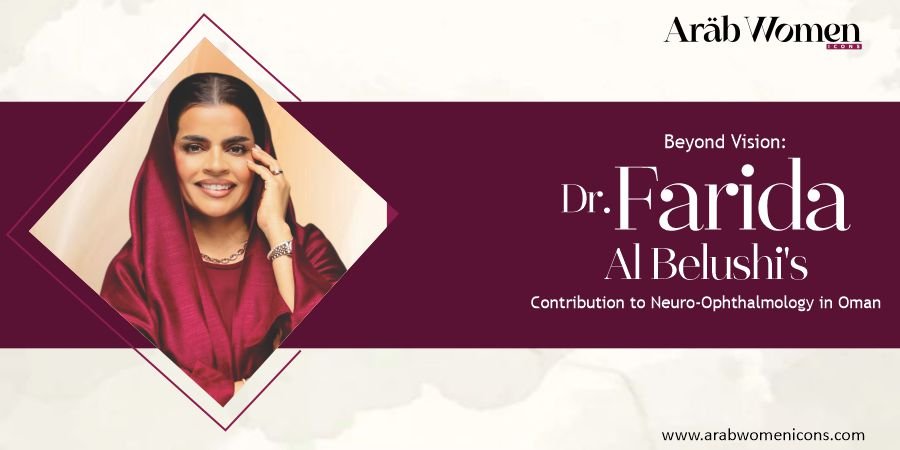
Beyond Vision: Dr. Farida Al Belushi’s Contribution to Neuro-Ophthalmology in Oman
The field of ophthalmology extends far beyond the treatment of eye conditions. Vision is closely connected to the nervous system, and understanding the relationship between the two requires a combination of medical knowledge, careful observation and clinical judgment. Neuro-ophthalmology brings these disciplines together, helping doctors identify conditions that may first appear through changes in vision but have deeper neurological causes. It is a specialty where timely diagnosis matters, particularly when a delay can affect a patient’s sight and quality of life.
At the centre of this specialised field is Dr. Farida Al Belushi, Senior Consultant Neuro-Ophthalmologist and former Head of the Ophthalmology Department at Al Nahdha Hospital, under Oman’s Ministry of Health. Alongside her clinical responsibilities, she serves as an affiliated Senior Clinical Lecturer at the College of Medicine and Health Sciences, Sultan Qaboos University, where she contributes to the training and development of future medical professionals. Her professional journey has also involved building awareness of neuro-ophthalmology in Oman, establishing the country’s first dedicated neuro-ophthalmology clinic in a Ministry of Health hospital and helping improve access to specialist care.
Her medical training includes an MD and BSc-HS from Oman, an ophthalmology residency at McGill University in Canada leading to the FRCSC (Royal College of Physicians and Surgeons of Canada), and a clinical fellowship in Neuro-Ophthalmology from the University of Ottawa. What distinguishes her work is the connection she maintains between clinical practice, patient communication and medical education. Having experienced the demands of being the country’s first qualified neuro-ophthalmologist, she understands both the responsibility of managing complex cases and the importance of helping other doctors recognise when patients need specialised attention.
For her, the work begins with understanding what a patient’s vision is telling them, but its impact reaches much further into how they are diagnosed, treated and supported.
Finding a Specialty Where Curiosity Belongs
Medicine began as an exploration for Farida. The first member of her family to enter the profession, she had little understanding of what a medical career would involve. What she did have was a desire to take on a challenge and the confidence that she could meet it. As her studies progressed, two disciplines captured her attention: neurology and ophthalmology.
Neurology fascinated her in a way few other subjects could. She was intrigued by how a defect in the nervous system could manifest itself so precisely in a patient. The complexity of those connections continued to hold her interest. Ophthalmology appealed to her for different reasons. She appreciated its clinical elegance and the balance it offered between medical and surgical practice, both of which suited the kind of doctor she wanted to become.
Neuro-ophthalmology eventually brought these interests together. The specialty offered an opportunity to understand how the eye could serve as a window into the nervous system. Rather than feeling like a difficult choice between two disciplines, it felt like finding the natural place for her curiosity.
The Human Side of Medical Practice
Looking back on her career, Farida does not point to one defining event as the greatest influence on her professional development. Instead, she identifies two relationships that have consistently shaped her experience: those with her patients and those with students and fellow doctors.
Her interactions with patients have shown her how profoundly a doctor can influence someone’s wellbeing and state of mind. Patients place considerable trust in their doctors, often at moments when they feel frightened and uncertain. She believes communication carries real power, and she tries to use it constructively by offering patients calmness, clarity and the time they need to understand their situation.
Teaching has been equally meaningful. Although doctors are expected to share their knowledge and guide others, Farida observes that they are rarely given formal training in how to teach. Nevertheless, passing on her knowledge, experience and professional wisdom gives her considerable satisfaction. She sees it as a contribution that can influence generations of medical professionals.
Both experiences offer her something she values deeply: the opportunity to make a difference in another person’s life. For her, that remains one of the most meaningful achievements of medical practice.
The Responsibility Behind Every Diagnosis
Neuro-ophthalmology presents a particular challenge because it deals with vision, a sense that people depend on throughout their lives. When a patient’s sight is threatened, the consequences can be significant, and Farida remains conscious of the responsibility attached to every clinical decision.
Yet the most rewarding aspect of the specialty is often discovering what is causing the problem. Many patients arrive with considerable anxiety because they do not understand what is happening to them. Giving their condition a name can change their outlook. Once the uncertainty begins to lift, patients often feel calmer and more settled, even when treatment cannot offer a cure.
Her approach to cases involving possible neurological causes of visual symptoms begins with urgency. Time can determine whether a patient’s vision is preserved or lost. The immediate priority is to identify the underlying disorder, recognising that the eye may be the first place where a deeper neurological problem becomes apparent.
Farida considers careful assessment and clinical judgment essential to reaching an accurate diagnosis and deciding on appropriate management. Assessment involves listening closely to the patient’s history and conducting a thorough examination without overlooking relevant details. Clinical judgment then brings those findings together, helping determine their significance, the urgency of the situation and which investigations are necessary.
Diagnostic tests support this process, but they cannot replace a clinician’s ability to interpret the findings. An accurate diagnosis makes it possible to begin the right treatment at the right time, something that can be particularly important when a patient’s sight is at risk.
How Technology is Changing Neuro-Ophthalmic Diagnosis
Advances in diagnostic techniques have significantly changed the way neuro-ophthalmic conditions are identified and monitored. Optical coherence tomography, for instance, allows specialists to examine the thin layers of the retina and optic nerve in remarkable detail. It can reveal damage that may not yet be visible through routine examination and makes it possible to monitor changes over time.
Improvements in magnetic resonance imaging and computed tomography have also strengthened diagnostic capabilities. Modern MRI and CT imaging provide clearer views of the brain, optic nerves and blood vessels, helping clinicians identify the source of a problem earlier than was previously possible.
These developments are complemented by more refined visual field testing and specialised blood investigations, including antibody testing for inflammatory conditions affecting the nerves. Together, these tools have contributed to earlier detection, more precise diagnoses and greater confidence in treatment decisions.
However, Farida believes their effectiveness depends on the expertise of the person using them. Technology provides the evidence, but clinical judgment determines what that evidence means for the patient.
Making Patients Part of Their Own Care
Visual disturbances and neurological symptoms can leave patients frightened, particularly when they do not understand the possible implications. Farida’s first response is to communicate in straightforward language. She recognises that most patients have little reason to be familiar with medical terminology and does not expect them to learn it during a consultation.
Instead, she explains the diagnosis using everyday words, taking the time to ensure that patients understand their condition. She also discusses the possible consequences of neglecting treatment, including the most serious complications associated with their diagnosis. In her experience, patients are more likely to take their care seriously when they understand what is at stake.
Neuro-ophthalmology does not always allow doctors to make precise predictions about outcomes. Farida is open about this uncertainty rather than offering assurances that cannot be guaranteed. What she can offer is a commitment to working with patients and hoping for the best possible outcome.
She also encourages them to participate in treatment decisions. Having a say in their care can make patients feel more responsible for their treatment and give them a greater sense of control. When much about their condition remains uncertain, that involvement can make a considerable difference.
Collaboration as the Foundation of Specialist Care
For Farida, collaboration is fundamental to neuro-ophthalmology rather than an additional part of the job. A condition affecting the visual system is often a manifestation of a disease involving other parts of the body. The eye may be where the problem first becomes apparent, but understanding its underlying cause requires a broader medical perspective.
This makes close coordination with colleagues in neurology, neurosurgery and endocrinology essential. Each specialist brings a different understanding of the patient’s condition, and those perspectives need to come together before the complete clinical picture becomes clear.
She does not regard her patients as belonging to one specialist alone. Their care depends on shared responsibility, clear communication and mutual respect among the medical professionals involved. Keeping the patient at the centre of these discussions is what allows the team to determine the most appropriate course of action.
Establishing Neuro-Ophthalmology in Oman
When Farida returned to Oman in 2011 after completing her residency and fellowship in Canada, she became the country’s first qualified neuro-ophthalmologist. At the time, awareness of the specialty was extremely limited, even within the medical community.
One of her first major contributions was establishing the country’s first neuro-ophthalmology clinic in a Ministry of Health hospital. This created a dedicated point of access for patients and gave her an opportunity to influence how visual and neurological conditions were managed.
Building awareness became an important part of that work. She began delivering presentations wherever opportunities arose, explaining the nature of neuro-ophthalmic conditions, which patients should be referred and when referrals were necessary. Initially, she was responsible for covering the entire country.
Gradually, referral practices began to change. Rather than setting aside visual complaints that fell outside their immediate expertise, colleagues became more familiar with recognising cases that required specialist attention. Early referrals became a more established part of clinical practice, creating better opportunities for timely diagnosis.
Fifteen years on, Farida sees an increasing number of complex cases. Greater awareness and easier access to specialist services have contributed to this change, with patients travelling to Muscat from different parts of Oman to receive care.
However, she believes the next stage of progress must extend beyond medical professionals. Public awareness remains important. People need to understand that any significant change in vision deserves prompt medical attention rather than being ignored or unnecessarily delayed.
Learning Through Responsibility and Leadership
One of the most demanding periods of Farida’s career was the twelve years she spent as the Ministry of Health’s only neuro-ophthalmologist. During that time, she personally assessed every patient, arranged admissions, coordinated referrals and directed treatment. The responsibility was considerable because there was no established team of specialists to share the workload.
Those years strengthened her independence and gave her a practical understanding of what clinical responsibility involves. When a patient was suspected of having a brain or skull base tumour, she would sometimes remain at work beyond regular hours, waiting for neuroimaging from another hospital so she could review the results herself.
Her priority was to ensure that patients received appropriate management without unnecessary delays. With no other neuro-ophthalmologist available to take on that responsibility, she knew the importance of following each case through.
Working alone also made continuous learning essential. Maintaining her clinical knowledge required regular reading, questioning and updating her understanding of the specialty. She came to recognise that medical expertise is never complete and that professional responsibility does not necessarily end when the clinic closes.
Her leadership responsibilities presented a different set of challenges. As head of department, she led the Ministry of Health’s largest ophthalmology department at Al Nahdha Hospital through the COVID-19 pandemic, an experience that added another dimension to her professional responsibilities.
Developments Shaping the Future of the Specialty
Looking ahead, Farida sees three areas of development with considerable potential to improve neuro-ophthalmic care.
Artificial intelligence is one of them. Software capable of analysing retinal scans and brain imaging is becoming increasingly sophisticated in identifying subtle changes. She believes these technologies may eventually help detect conditions such as optic nerve swelling and early nerve damage, particularly in healthcare settings where access to a specialist is limited.
The second area involves targeted treatments for inflammatory and immune-related diseases affecting the optic nerve. Newer therapies are designed to act on specific components of the immune system, potentially offering better disease control while reducing unwanted side effects.
The third area concerns protecting and repairing damaged nerve tissue. Although research into neuroprotection and gene therapy for inherited optic nerve diseases remains in development, Farida considers this an especially important direction. It addresses one of the most difficult challenges in the specialty: damage to the optic nerve that cannot be reversed.
These developments offer different possibilities, from improving early diagnosis to expanding treatment options and addressing conditions that have historically been difficult to manage.
Preparing the Next Generation of Specialists
Farida regards mentorship and knowledge-sharing as essential to the continued development of neuro-ophthalmology. Medical expertise cannot remain concentrated among a small number of individuals. It must be transferred to other professionals to ensure that patients continue receiving appropriate care as doctors move through different stages of their careers.
Since 2012, she has served as a trainer for ophthalmology residents under the Oman Medical Specialty Board. She is also an affiliated senior clinical lecturer at the College of Medicine and Health Sciences at Sultan Qaboos University.
Her teaching approach gives residents the opportunity to take an active role in clinical practice while she supervises, supports and guides them. Rather than limiting their learning to observation, she encourages them to manage cases and develop confidence through direct experience.
She has seen many residents begin their training with apprehension about neuro-ophthalmology and gradually become more comfortable with the specialty. To her, this demonstrates that confidence develops through practical involvement rather than simply watching someone else work.
Knowledge-sharing also extends beyond formal training programmes. Every colleague who understands when to recognise and refer a neuro-ophthalmic condition becomes another point of support for patients who may need specialist attention.
Expanding Access to Specialist Care Across Oman
Farida has already established an important foundation for neuro-ophthalmology in Oman through the creation of the country’s first dedicated clinic and the development of specialist referral pathways. Another significant step has been securing approval for idebenone, a treatment for Leber hereditary optic neuropathy, an inherited condition that causes vision loss.
Her current work includes developing a management pathway for idiopathic intracranial hypertension. The proposed approach incorporates medical treatment, weight-loss therapies and bariatric surgery, with the objective of protecting patients’ vision.
Her future aspirations build on these developments. She wants to expand access to specialist expertise, diagnostic tools and treatments while helping more clinicians acquire the skills needed to manage neuro-ophthalmic conditions. Strengthening referral pathways is another important priority.
Her longer-term ambition is to see dedicated neuro-ophthalmology clinics established in Ministry of Health hospitals across Oman’s regions. Such a network would allow patients to access timely, coordinated specialist care closer to home, reducing the need to travel to Muscat for every consultation.
For Farida, the continued development of the specialty depends on making that level of care accessible to patients wherever they live.