The logistics and mobility sector operate where movement, business, regulation, technology, and risk meet. Behind every contract, transaction, partnership, and operational decision is a legal framework that must keep pace with the realities of a highly connected industry. The role of an in-house legal professional therefore extends beyond interpreting laws. It calls for careful attention to detail, practical understanding, sound organization, and a willingness to keep learning as new legal and business challenges emerge.
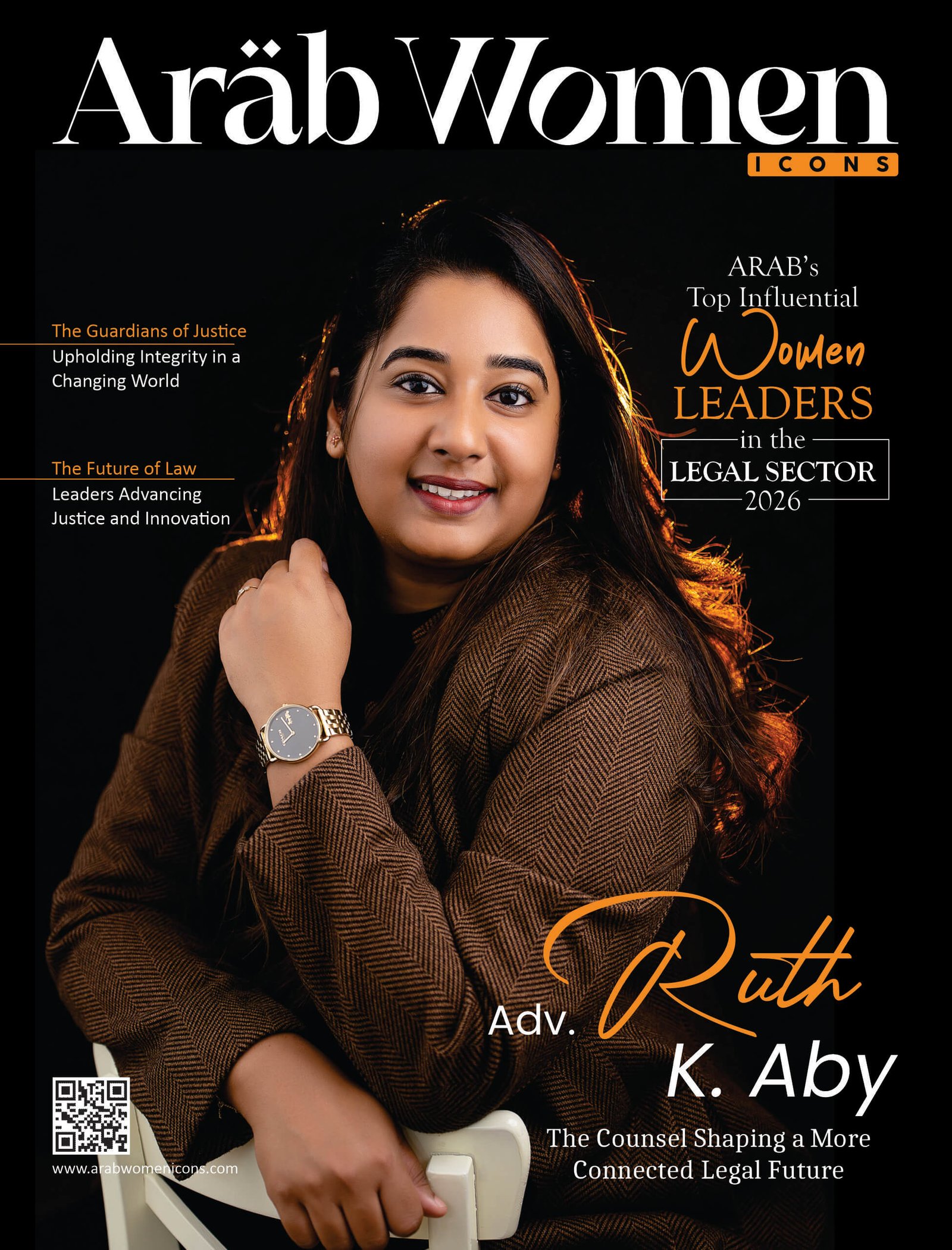
Working within this environment is Adv. Ruth K. Aby, In-House Legal Counsel in the logistics and mobility sector in the UAE. With a focused and committed approach to her profession, she has developed a broad interest across Intellectual Property Rights, Technology Law, Corporate Law, Banking Law, Entertainment Law, Data Protection, Fashion Law, Alternative Dispute Resolution, and Labour Law. Her professional journey reflects not only this breadth, but also a continuing curiosity about how these areas intersect with business, technology and innovation.
Adv. Ruth K. Aby brings the same structured approach to her everyday work. Accuracy, time management, organization, and attention to detail form an important part of how she handles responsibilities. She is systematic in maintaining records and approaching her work, while her willingness to keep developing across different areas of law reflects a professional mindset shaped by curiosity and continuous learning. For Ruth, however, accuracy and attention to detail are more than professional skills; they are a professional responsibility, particularly in a field where even a small omission can sometimes have a disproportionate impact.
In a field where legal responsibilities can intersect with business needs in many different ways, this breadth allows her to view her role through more than one legal lens while remaining grounded in the practical demands of the organization. Her approach is guided by three principles: clarity, preparation and practicality- understanding the bigger picture, identifying legal and commercial risks, and finding solutions that are both legally sound and workable in the real world.
A Legal Career Shaped by Curiosity
Law was not an obvious career choice for Ruth when she was growing up in Kerala, India. As the first lawyer in her family, her entry into the profession began with encouragement from her father, who recognized qualities in her that he believed would suit legal practice. His belief became the starting point of a professional direction she had not initially imagined for herself.
She pursued a B.Com., LL.B. (Hons.), followed by a master’s degree in Intellectual Property Rights and Technology Law. After enrolling as an advocate with the High Court of Kerala, her early professional years included internships across different parts of India. Exposure to different legal environments, professional cultures and areas of practice showed her that law extended far beyond what could be learned from textbooks. These experiences also helped shape her understanding that legal practice is not confined to one discipline or one way of thinking.
After completing her education, Adv. Ruth K. Aby moved to the UAE and began her professional career as a Legal Advisor in a company. She now works as an In-house Legal Counsel in the logistics and mobility sector in the UAE. Throughout this period, she has continued to invest in professional courses, seminars, certifications and practical learning. More recently, she completed her journey towards recognition as a Chief Artificial Intelligence Officer, reflecting her interest in the intersection of law, technology and business. This progression reflects her belief that legal education does not end with a degree and that the profession requires continuous learning and adaptation.
Curiosity has remained central to the way she has approached her profession. She has never wanted to confine herself to one narrow area because, in her view, the legal profession itself continues to evolve. Corporate law connects with technology, technology connects with intellectual property, intellectual property connects with brands and creativity, and all of these eventually connect with business. For Adv. Ruth K. Aby, exploring these intersections is what has made the profession more meaningful.
Legal Advice That Works Beyond the Page
Adv. Ruth K. Aby believes that a lawyer’s role extends beyond simply knowing the law. Effective legal practice requires an understanding of the client’s business, objectives, risks and practical realities.
Her approach is built around three principles: clarity, preparation and practicality. When handling a complex matter, she first seeks to understand the bigger picture. Once the facts are clear, she identifies the legal and commercial risks before looking for solutions that are legally sound and workable in practice.
Communication is equally important. Clients should understand not only what the law says, but what it means for them and what options are available. For Adv. Ruth K. Aby, legal advice should not simply state the law; it should provide clarity, create confidence and help clients make informed decisions.
Protecting Ideas, Brands and Innovation
Intellectual property interests Adv. Ruth K. Aby because it protects something intangible that can nevertheless hold considerable value. An idea, invention, brand, design, creative work or technological innovation can become an important business asset, even though it cannot be touched or physically possessed.
The digital environment has made the issue more complex. Content and intellectual assets can cross borders within seconds, creating opportunities alongside significant risks. Businesses must consider trademark protection, copyright, confidential information, licensing, digital content, counterfeiting and unauthorized use.
Adv. Ruth K. Aby also sees a recurring challenge in the way businesses approach intellectual property. Many recognize its value only after a dispute has emerged. She believes IP protection should instead form part of business strategy from the beginning, rather than becoming a consideration only when something goes wrong.
Preparing Law for Emerging Technology
Artificial intelligence has become one of the most important areas at the intersection of technology and law, but Adv. Ruth K. Aby believes the conversation needs to extend further. Data protection, cybersecurity, digital identity, automated decision-making, cloud technologies and intellectual property in the digital environment also require close attention.
One of the central difficulties is the pace of technological development. Technology can advance faster than legal frameworks, leaving businesses to make responsible decisions even when there is no straightforward legal answer.
This changing environment will require lawyers who understand technology well enough to ask the right questions. Adv. Ruth K. Aby does not believe every lawyer needs to become a programmer. She believes lawyers need to understand how technology works, what risks it creates and how law can respond.
Her own journey towards recognition as a Chief Artificial Intelligence Officer reflects this broader approach to the future of legal practice.
Balancing Regulation and Business
Banking and financial law interests Adv. Ruth K. Aby because the field brings together law, commerce, regulation and public confidence. Financial institutions operate within highly regulated environments, where even a relatively small compliance gap can have significant consequences.
Regulatory developments also mean that compliance cannot be treated as a one-time exercise. Organizations need systems that continuously monitor changes, assess risks and adapt internal processes.
The challenge for businesses is finding an appropriate balance between regulatory compliance and operational efficiency. Adv. Ruth K. Aby believes a strong legal function can help achieve that balance by making compliance part of the business process rather than treating it as an obstacle to business.
When Creativity Becomes the Core Asset
Entertainment and fashion present another area where Adv. Ruth K. Aby sees a strong connection between law and creativity. In these industries, creativity itself is a central business asset, making intellectual property particularly important.
Designers, artists, performers and brands must deal with trademarks, copyrights, designs, licensing, endorsements, contracts, image rights and brand protection. The digital environment adds another layer of complexity through the speed at which content can be reproduced and distributed without authorization.
Protecting a fashion or entertainment brand, she notes, is therefore not simply about registering a trademark. It involves protecting an entire identity, including its name, design language, reputation, creative assets and relationship with consumers.
Choosing the Right Route to Resolve Disputes
Alternative Dispute Resolution can give businesses a more flexible way to address commercial and corporate disputes. Mediation and arbitration can sometimes offer greater confidentiality, procedural flexibility and commercial practicality than traditional litigation.
A business dispute is rarely limited to a legal issue. It can affect relationships, reputation, time and resources. ADR can be particularly useful when parties want to preserve a commercial relationship while resolving their differences.
Adv. Ruth K. Aby does not see one route as suitable for every dispute. The nature of the matter, contractual arrangements, urgency, confidentiality and relationship between the parties all need to be considered before selecting the appropriate approach. For her, the circumstances of each dispute should determine the most appropriate route rather than applying a single solution to every situation.
Trust Begins with Clear Rules and Fair Practices
The relationship between employers and employees is also changing as workplace practices evolve. Employment law increasingly intersects with data protection, remote working, workplace technology, confidentiality, intellectual property, employee monitoring and the responsible use of AI.
Organizations need clear policies, properly drafted contracts and transparent workplace practices. Employees, meanwhile, need to understand both their rights and their contractual responsibilities.
Adv. Ruth K. Aby believes the strongest workplaces are those where compliance is not treated simply as a legal requirement. It should also form part of building trust, fairness and organizational stability.
Technology as an Extension of Legal Practice
Technology is changing legal practice by helping lawyers research, organize information, analyze documents and automate repetitive tasks. Adv. Ruth K. Aby sees potential for AI to give lawyers more time for strategy, judgment, negotiation and client relationships.
At the same time, she believes technology should assist legal professionals rather than replace professional judgment. Confidentiality, data security, accuracy, bias, accountability and ethical use all require careful consideration.
Her own journey towards becoming a Chief Artificial Intelligence Officer has strengthened her belief that the future lawyer will need two forms of intelligence: legal intelligence and technological awareness. Professionals who understand both will be better positioned to navigate the changing legal landscape.
For Adv. Ruth K. Aby, the future of the profession can be captured in a simple thought: “Where Legal Excellence Meets the Intelligence of Tomorrow.” She sees the greatest opportunity not in replacing the human element of law with technology, but in bringing legal expertise and technological intelligence together to create more informed, responsible and forward-looking solutions.
Technology should expand the capabilities of a lawyer, while judgment, ethics and human understanding, however, must remain at the heart of the profession.
Precision as a Professional Responsibility
Accuracy and organization are central to Adv. Ruth K. Aby’s working methods. Complex legal matters can involve large volumes of information, so she breaks them into manageable components: facts, legal issues, risks, timelines, documents and required actions.
Important work is reviewed more than once because, in legal practice, a small omission can sometimes have a disproportionate impact. Technology and organizational tools can improve efficiency, but accountability ultimately remains with the lawyer.
For Adv. Ruth K. Aby, attention to detail is therefore not simply a professional skill. It is a professional responsibility.
Learning Through Change
Building a legal career has involved its share of challenges. As a first-generation lawyer, Adv. Ruth K. Aby had to develop her professional path largely through learning and experience. Moving from Kerala to the UAE brought another significant transition, requiring her to adapt to a different professional and regulatory environment.
There were moments when stepping outside her comfort zone became necessary. Those experiences taught her resilience, adaptability and the importance of continuous learning.
She has come to view challenges differently. “Challenges are not always interruptions to a career journey. Sometimes, they become the experiences that define it.”
Preparing the Next Generation of Lawyers
Adv. Ruth K. Aby expects technology-related law, data protection, AI governance, cybersecurity, intellectual property, fintech and digital commerce to continue evolving significantly.
For young lawyers, that means legal education cannot end with a degree. The profession demands lifelong learning, alongside technological awareness, commercial understanding, communication skills and the ability to work across disciplines.
Above all, she believes young lawyers should remain curious. The ability to learn, unlearn and relearn may become one of the most valuable professional skills of the future. For Adv. Ruth K. Aby, curiosity is not simply a personal quality; it is an increasingly important professional capability in a legal environment that continues to evolve.
Bridging Law, Business and Technology
Adv. Ruth K. Aby hopes her career will reflect the idea that a legal professional can continue evolving without losing sight of integrity, responsibility and service.
Coming from a family with no legal background, she understands the importance of having someone who believes in your potential. Her father played that role in her life, and she hopes her own experience can encourage others to recognize that their starting point does not have to define their destination.
Contributing to the legal profession while helping bridge the gap between law, business and technology would be meaningful to her. She wants the next generation to see law not simply as a profession of rules, but as a profession grounded in knowledge, responsibility, innovation and continuous growth. For Adv. Ruth K. Aby, the goal is not to move away from the fundamentals of law, but to carry those fundamentals forward into an increasingly technology-driven future.
A legal career, in her view, is not built simply by knowing where the law stands today. It also requires remaining curious about where it is going tomorrow.