At the Heart of School Transformation
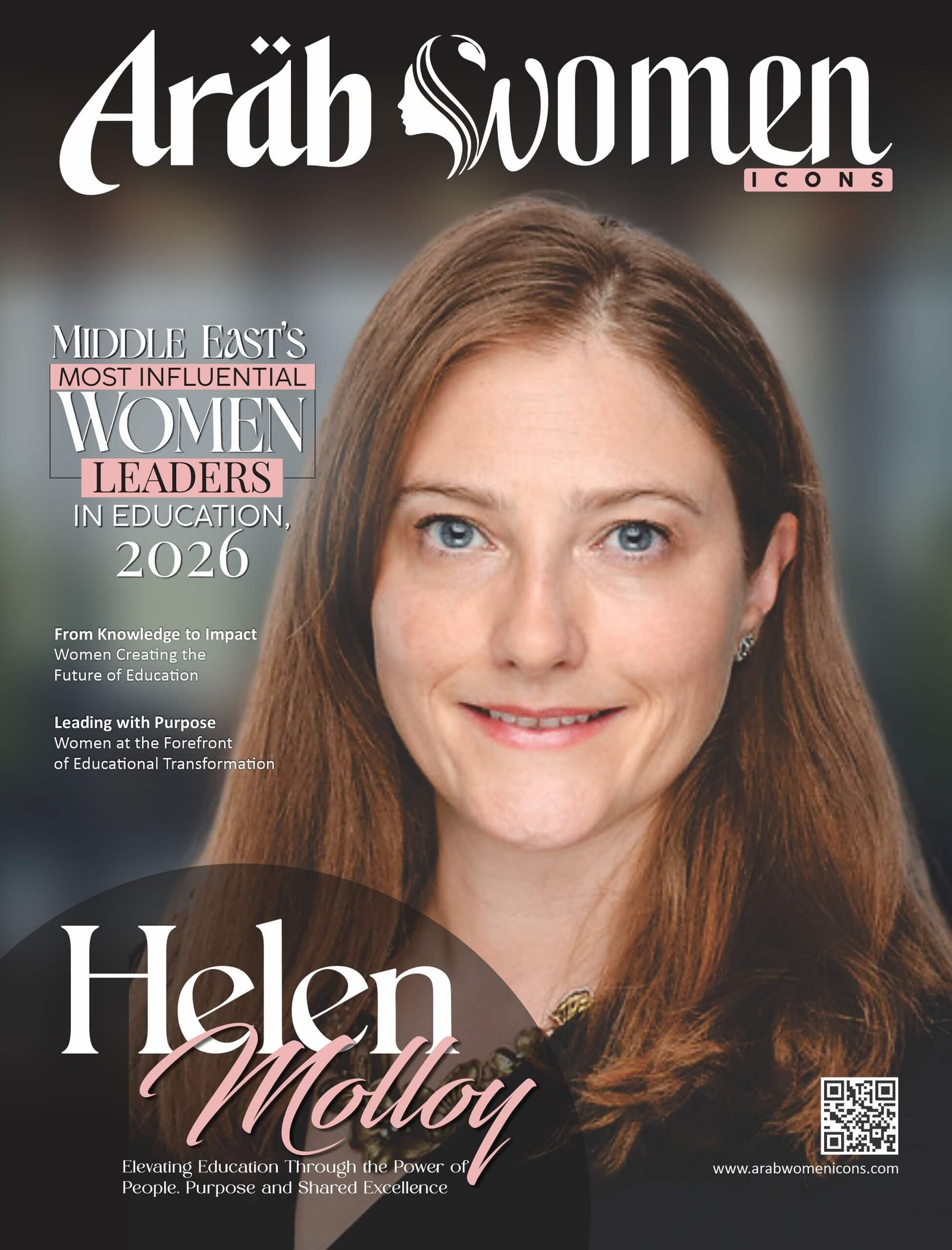
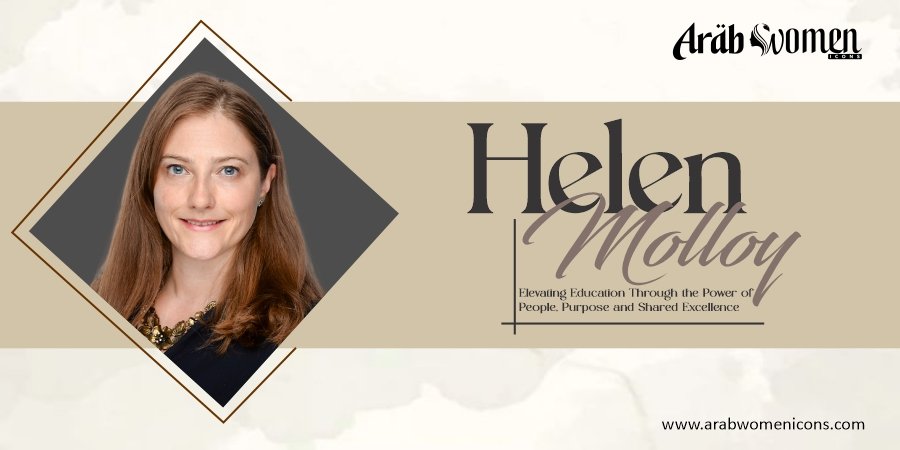
It is the beginning of another busy day at GEMS Founders School Dubai. As sunlight fills the glass-fronted campus, more than 6,000 students from around the world arrive for another day of learning. Within this vibrant British curriculum school is Helen Molloy, Assistant Principal and a founding member of the Senior Leadership Team, recently recognised among the Middle East’s Most Influential Women Education Leaders to Watch in 2026.
Since the school opened, Helen has played an important role in its growth and development, contributing to its Very Good rating from the KHDA and Outstanding outcome under the British Schools Overseas inspection framework.
With more than 25 years of educational experience across the UK and UAE, her career has encompassed classroom teaching, school and system leadership, professional learning, leadership development and quality assurance. This breadth of experience has shaped her understanding of sustainable school improvement: how strategic vision becomes everyday practice and how excellent teaching and leadership can transform outcomes for young people.
Empowering Leaders and Raising Standards
Helen’s strategic leadership experience spans curriculum development, teaching and learning, professional development, leadership coaching, quality assurance and Arabic and Islamic Education.
Her focus has been on turning strategic priorities into measurable improvements. After taking responsibility for supporting the pedagogy of the Arabic and Islamic team in early 2023, Helen’s areas of responsibility recorded improvements across 12 performance indicators in the subsequent KHDA inspection in December 2023, contributing to the school’s overall Very Good rating.
Leadership development and succession planning have also been central to her work. Through a recent cluster-wide coaching programme, Helen supported more than 20 leaders across multiple schools, with feedback highlighting stronger leadership clarity and accountability, successful implementation of school initiatives and increased readiness for senior leadership opportunities.
Her work also encompasses workforce development and Emiratisation, aligning organisational growth with the wider strategic priorities and educational vision of the UAE.
Guiding Beliefs and Career Journey
Throughout her career, Helen has been guided by a simple belief: education is one of the greatest drivers of opportunity and social mobility.
She began as a classroom teacher in a high-performing British primary school before working with schools serving some of the UK’s most disadvantaged communities. These contrasting experiences shaped an understanding that has remained central to her work: regardless of background or circumstance, every child needs adults around them who ensure they feel seen, heard, valued and that they truly belong.
They also helped Helen recognise that while excellent teaching can transform individual lives, excellent leadership has the potential to influence entire communities. As she progressed through leadership, she became increasingly interested in the relationship between school culture, strategic vision and the quality of teaching and learning.
For Helen, educational leadership therefore combines vision with service: creating the conditions in which students flourish, teachers thrive and school communities are strengthened.
The Core Philosophy of Investing in People
One lesson has remained constant throughout Helen’s career: leadership is ultimately about people.
Her leadership philosophy is rooted in kindness, integrity, equity, collaboration, high standards and lifelong learning. As an advocate of servant leadership, she believes leadership is not simply a position of authority, but a responsibility to remove barriers, create opportunities and enable others to succeed.
Central to this is the belief that kindness and high expectations are not competing values. Helen seeks to model kindness in everyday practice, whether by being a listening ear for colleagues or taking a genuine interest in students and staff. These interactions build the trust and psychological safety that underpin strong professional relationships.
When trust is established, honest conversations about accountability, challenge and improvement are more likely to lead to meaningful growth. For Helen, the strongest cultures are those in which people feel both supported and challenged to grow together.
“Sustainable school improvement is never driven by systems alone; it is powered by people.”
Creating Conditions for Global Success
Working across the UK and UAE has strengthened Helen’s appreciation of adaptability, cultural intelligence and innovation.
She recalls the rapid transition to online learning during the global pandemic in March 2020 as a defining example. Leading digital learning and innovation within the school, Helen worked with colleagues to ensure every student could continue to access learning remotely. The school’s online provision subsequently achieved the highest possible evaluation from the KHDA.
The experience reinforced the importance of teamwork, agility, continuous professional learning and sharing expertise when responding to rapidly changing circumstances and national priorities.
The Remarkable Legacy of GEMS Founders
Being part of GEMS Founders School Dubai since its opening has been one of the most rewarding experiences of Helen’s career. From welcoming a record-breaking 1,881 students in its first year to becoming one of the region’s largest National Curriculum for England schools, its journey has been remarkable.
Earning the trust of the community has been particularly significant. Establishing a new school requires families to invest in a vision before its outcomes have been fully realised. Achieving a Very Good inspection rating as a mid-market school was another important milestone, demonstrating that high-quality educational experiences can be both accessible and affordable.
Yet some of its most meaningful achievements cannot be captured by inspection grades alone. Helen recalls supporting one colleague who joined as a Teaching Assistant with aspirations of becoming a teacher. Over time, she progressed from class teacher to Lead Teacher and is now a Teaching and Learning Lead Practitioner at Associate Senior Leadership level — a journey that exemplifies the impact of recognising potential and creating opportunities for others to grow.
“A school’s greatest legacy is not its buildings or inspection grades, but the lives it transforms and the leaders it develops.”
Continuous Growth and Developing Leaders
Helen believes that the most future-ready schools are learning organisations where everyone continues to grow.
Through coaching, professional learning communities and distributed leadership, she has sought to make professional learning part of everyday school culture. One initiative Helen introduced was an annual Leadership Celebration, providing leaders with an opportunity to reflect on their growth, celebrate successes and share best practice — inspiring continued learning and ambition for the year ahead.
Her approach to leadership development begins with understanding people’s strengths, aspirations and potential. Crucially, she believes aspiring leaders need opportunities to lead, not simply opportunities to learn about leadership.
When Expo 2020 came to Dubai, Helen coached two teachers new to leadership through a special project; both subsequently progressed into middle and senior leadership positions.
Ultimately, one of the greatest measures of a leader’s success is the success of the people they develop.
Qualities and Impact of Women Leaders
In Helen’s experience, many women leaders bring a powerful combination of compassion, emotional intelligence, resilience and relational leadership.
Compassion, however, should never be mistaken for weakness. Compassionate leadership frequently requires courage, conviction and the ability to navigate difficult situations with both humanity and clarity. Women leaders can also serve as visible role models, demonstrating that leadership can be ambitious, authentic and people-centred.
Ultimately, Helen believes leadership should be judged by impact rather than gender.
“Great leadership is not defined by gender, but by the positive impact leaders have on those around them and the culture they create.”
Preparing Students for a Digital Future
Technology and artificial intelligence are transforming society at an unprecedented pace, and schools have a responsibility to prepare young people to navigate this future confidently, responsibly and ethically.
Digital literacy is essential, but so too are critical thinking and discernment. Students need to evaluate information, recognise bias and exercise sound judgement. As AI reshapes industries and professions, the capacity to learn, unlearn and relearn will become as important as technical expertise.
At the same time, schools must nurture uniquely human qualities: empathy, creativity, communication, collaboration, integrity and ethical decision-making.
“Technology may shape the future of work, but character will help shape the future of humanity.”
Inspections as a By-Product of Excellence
Helen’s experience as a qualified British Schools Overseas Inspector has reinforced her belief that inspection readiness should be the outcome of consistently strong practice rather than an objective in itself.
The most effective schools do not simply prepare for inspections; they create cultures of excellence that are evident every day. Inspection frameworks provide valuable benchmarks, but genuine improvement comes through a focus on students combined with rigorous and continuous self-evaluation.
Schools should be able to showcase their authentic culture rather than perform for external scrutiny. Helen therefore welcomes moves within the UAE towards unannounced inspections, reinforcing the principle that genuine excellence should be consistently visible.
Having experienced inspection as both a school leader and an inspector, Helen believes school improvement has no finish line. Strong schools continually seek to improve students’ learning experiences, while external inspection can provide valuable clarity and perspective on that ongoing journey.
Student-Centred Strategy and Operational Excellence
For Helen, effective strategic planning begins with a clear vision, and a shared understanding of what success looks like for students.
Strategic decisions should be evidence-informed, with data considered alongside the school’s vision and the needs of its community. Maintaining a genuinely student-centred focus requires leaders to return continually to one simple question: ‘How will this improve outcomes for learners?’
For example, when internal data identified the need for greater challenge in lessons, Helen reshaped the professional development programme to address this priority. By the end of the academic year, subsequent data showed significant improvement, demonstrating the impact of a targeted, evidence-informed response.
Future Legacy and Human Potential
Education is fundamentally a long-term endeavour.
Helen hopes young people leave school with curiosity, resilience, optimism and the confidence to pursue ambitious goals. She wants students to understand that their potential is not predetermined by circumstance and that they can make a meaningful contribution to society.
Equally, she hopes to contribute to a generation of educators and leaders who continue to inspire and develop others. For Helen, the strongest schools are built upon collective rather than individual success.
“I hope my legacy will be centred on developing people, creating opportunities and fostering a lifelong love of learning.”
Strategic Advice for Aspiring Women Leaders
Helen’s advice to aspiring women leaders is simple: lead with integrity, authenticity, purpose and kindness.
Support others, celebrate their success and create opportunities for colleagues to grow. Maintain high expectations while balancing ambition with empathy. Seek mentors, embrace constructive feedback and commit to continuous learning.
Above all, be confident in your values rather than trying to imitate someone else’s leadership style. Leadership is not about status or titles; it is about service, influence and impact.
“The most meaningful and enduring impact comes not through individual success, but through enabling others to grow, succeed and thrive alongside you.”