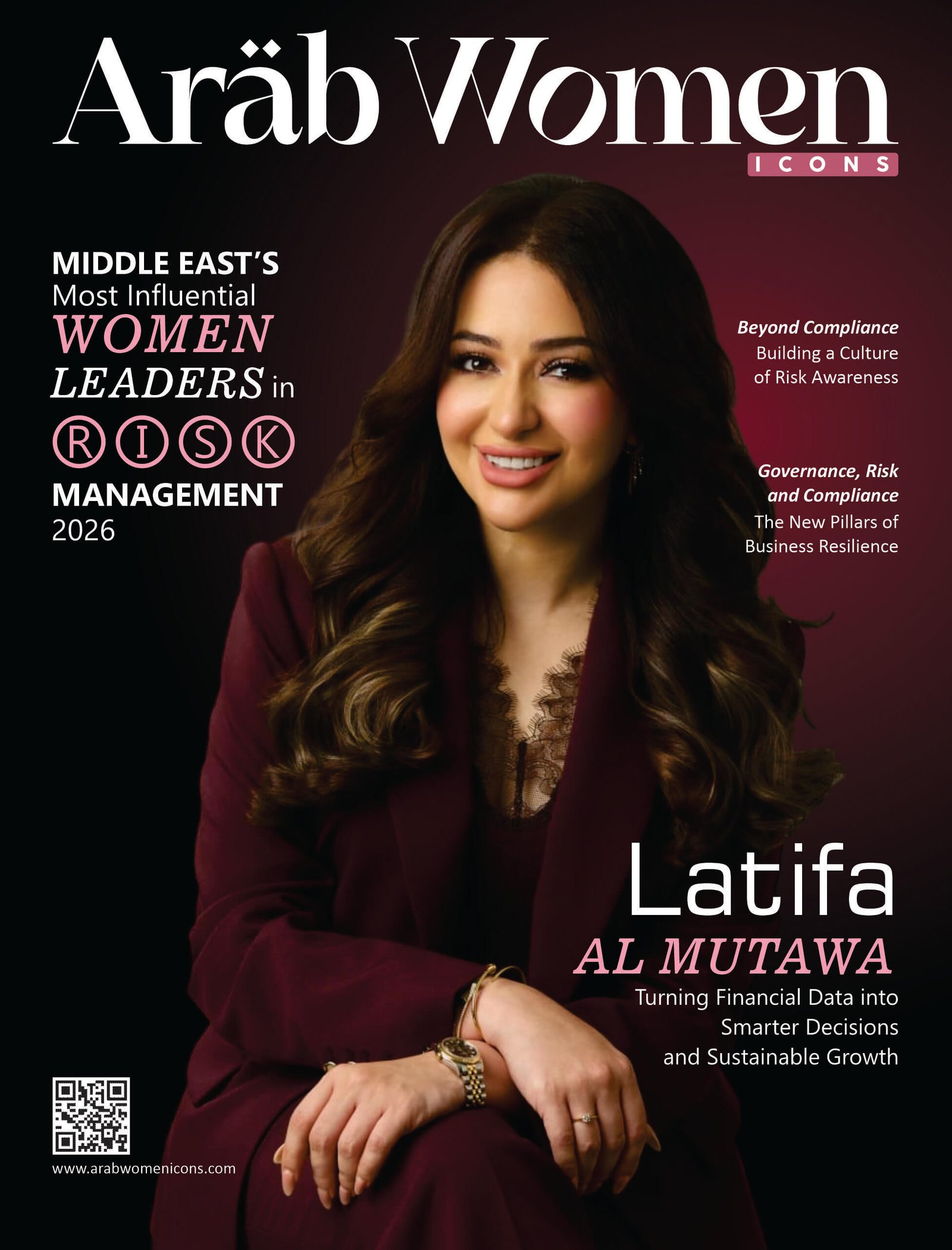
Turning Financial Data into Smarter Decisions and Sustainable Growth
A loan approval, a credit score or a digital application may appear to be individual steps in a financial transaction. Behind each one, however, sits a network of decisions, policies, technology and risk assessments that determine how smoothly the financial system works. Building and improving that network takes someone who understands both the detail of financial operations and the larger picture of where the industry is heading.
That combination has defined the career of Latifa Al Mutawa, AGM – Bahrain Credit Reference Bureau and Data Services at The BENEFIT Company. Over two decades, she has worked across banking, risk management, technology and financial innovation, gaining experience from both institutional and sector-wide perspectives. Her early years in banking, where she spent around 11 years in credit risk, portfolio management and financial operations, gave her a strong foundation in how financial decisions are made and managed.
Her work later moved beyond the boundaries of a single banking institution. At The BENEFIT Company, she became involved in national financial infrastructure projects, including initiatives to advance digital onboarding and transform lending through digital solutions. The journey has brought together the different strands of her expertise: understanding risk, applying technology and contributing to changes that affect the wider financial sector.
Understanding the Value Behind Financial Information
Latifa’s experience across the credit reference and data services sector has reinforced a belief that risk management should be viewed as a strategic enabler of responsible growth, rather than simply a control function.
Having worked on both sides of the credit ecosystem, she understands how financial institutions evaluate risk and how reliable information can improve decision-making, transparency, and access to finance. She has also come to recognise that data has limited value when it remains in its raw form. Its real potential emerges when it is translated into meaningful insights, intelligent models, and products that respond to genuine market needs.
Trust remains equally important. Financial infrastructure depends on accuracy, confidentiality, strong governance, and responsible data practices. Innovation must operate within these principles, while collaboration between institutions helps create the shared direction needed for sustainable progress.
Lessons in Transformation and Leadership
One of the defining challenges in Latifa’s career was managing the merger and migration between conventional and Islamic banking environments. She learned that such transitions involve considerably more than integrating systems. They require institutions to reconcile different cultures, risk philosophies, governance frameworks, credit policies, and operating models without disrupting business continuity or stakeholder confidence.
Another significant experience involved moving lending operations away from manual processes towards more efficient, risk-oriented systems. Early in her career, she worked on reducing credit application turnaround times through automation while maintaining the integrity of credit assessments.
Both experiences shaped her approach to leadership and decision-making. They taught her to remain adaptable, exercise strategic judgement, and question established practices when improvement is necessary.
She believes leadership is tested most clearly during uncertain periods. It requires the ability to recognise possibilities, make difficult decisions, and maintain direction when familiar ways of working no longer serve the organisation.
Connecting Strategic Vision with Operational Delivery
As Assistant General Manager of Bahrain Credit Reference Bureau and Data Services at The BENEFIT Company, Latifa approaches leadership through a combination of commercial awareness, risk management, operational resilience, and technological understanding.
Her multidisciplinary background allows her to examine decisions from different perspectives. While operational excellence remains essential when managing critical financial infrastructure, she also places considerable attention on emerging opportunities and the capabilities required to pursue them.
This balance is reflected in her involvement in several initiatives, including the national eKYC service, launched in 2019 as the first of its kind worldwide. The service has benefited the financial sector by enabling digital customer onboarding while maintaining due diligence requirements. Her work has also included the digitalisation of credit reporting, Consumer Lending Marketplaces, analytical models, and data-driven services.
Latifa believes effective execution depends on clear priorities, capable teams, accountability, and measurable outcomes. Her responsibility extends beyond maintaining existing operations. It also involves recognising where the organisation needs to go and ensuring that strategic ambitions translate into practical results.
A Leadership Style Built on Trust and Accountability
Latifa’s leadership philosophy centres on empowerment, integrity, and continuous development. Having taken on leadership responsibilities early in her career, she learned that individuals bring different strengths and capabilities to a team. She believes people perform at their best when they feel trusted and have the confidence to contribute. She encourages her colleagues to think independently, question assumptions, apply critical judgement, and take responsibility for their work.
However, empowerment must come with clear expectations. Professional standards, accountability, and a commitment to results remain essential. She also believes leaders must demonstrate the behaviours they expect from others, particularly during demanding periods.
Mentorship is another responsibility she takes seriously. Alongside guiding her team, she works with undergraduate and postgraduate students, sharing professional knowledge and experience with those preparing to enter the industry.
Aligning Individual Contributions with a National Vision
At The BENEFIT Company, Latifa sees the organisation’s responsibilities as extending beyond the provision of financial infrastructure. Its work contributes to Bahrain’s digital financial ecosystem, supports financial inclusion, and creates opportunities for innovation.
Within the Credit Reference Bureau and Data Services function, she translates these broader ambitions into priorities involving operational excellence, product development, responsible data practices, and stakeholder engagement.
Her previous banking experience gives her a practical understanding of the challenges financial institutions encounter. This perspective helps her identify solutions such as digital lending enablers, SME credit scoring, and data-driven decision models. She believes alignment becomes stronger when employees understand how their responsibilities contribute to a larger objective. That understanding encourages ownership, makes innovation more relevant, and helps teams work towards common results.
Credit Information as a Foundation for Financial Inclusion
Latifa’s experience in banking and national credit reference services has shown her how reliable information influences decisions throughout the credit lifecycle. Accurate credit records help financial institutions assess creditworthiness, maintain portfolio quality, and make informed lending decisions. Individuals benefit through greater financial awareness and more responsible financial behaviour, while small and medium-sized enterprises can gain improved visibility that helps address information gaps often associated with limited access to financing.
She also sees opportunities for credit insights beyond conventional lending. Government services, telecommunications, utilities, real estate, and supply chains can all benefit from more informed assessments. The responsible use of alternative data presents another area of potential. It can help institutions understand individuals and businesses with limited traditional credit histories, creating opportunities for broader financial participation.
Latifa believes the value of credit information should not be confined to identifying potential losses. It should also help institutions recognise viable opportunities and make financial services more accessible.
Protecting Data Integrity in an Interconnected Ecosystem
Maintaining accurate and reliable credit information becomes increasingly challenging as financial institutions exchange data across different platforms and reporting environments. Each institution may follow different systems and practices, making consistency, timely reporting, and information quality essential. Latifa’s background in credit, enterprise, and operational risk has reinforced the importance of effective governance, clear accountability, strong controls, and continuous monitoring.
The growing use of artificial intelligence, advanced analytics, and alternative data introduces further considerations. While these technologies offer new possibilities, their adoption must be accompanied by transparency, confidentiality, and fairness.
Alternative data, in particular, can help underserved individuals and SMEs gain better access to financial services. However, its usefulness depends on whether the information is relevant, dependable, and managed responsibly.
Latifa believes technology can change the way financial decisions are made, but the credibility of those decisions will always depend on the integrity of the underlying information and the accountability of those using it.
From Credit Reporting to Intelligent Financial Services
Credit reference services are gradually taking on a broader role within the financial ecosystem. Rather than functioning solely as providers of credit information, they are becoming important components of digital financial services.
Latifa sees the next stage of development in integrated platforms that support predictive analytics, automated decision-making, digital lending, and financial inclusion.
At The BENEFIT Company, she has contributed to this transition through initiatives such as national eKYC, digital credit reporting, credit risk and analytical models, cross-border credit information sharing, and the Consumer Lending Marketplace. These developments also support the entry of digital banks and the expansion of open and embedded finance.
Regional cooperation will be another important part of this evolution. Through her participation in the Arab Monetary Fund’s credit bureau and fintech committees, the GCC Credit Bureau Committee, and committees of the Bahrain Association of Banks, Latifa has had opportunities to exchange perspectives and contribute to industry development.
She believes the sector’s progress will depend on its ability to turn information into useful intelligence, manage risk without unnecessarily restricting access, and make innovation economically meaningful.
Technology That Makes Credit Services More Accessible
Artificial intelligence and machine learning are changing how credit reference services interpret information. Latifa sees their potential in moving credit assessments beyond historical reporting towards more predictive approaches.
Advanced analytical models can improve credit scoring, identify possible fraud earlier, and detect data quality issues before they influence financial decisions.
APIs and cloud services also allow institutions to receive information in real time, with insights integrated directly into digital lending processes. Digital identity solutions, including national eKYC, make customer onboarding faster and more secure.
However, Latifa believes technological progress should also be judged by its accessibility. Individuals and SMEs should be able to obtain and understand their own credit information without unnecessary difficulty.
When people have better visibility into their financial standing, they are better positioned to make informed decisions. This contributes to a more transparent financial environment in which information is useful to both institutions and customers.
Bahrain’s Next Opportunities in Financial Innovation
Latifa sees Bahrain as having strong foundations for further financial innovation, supported by a forward-looking regulator, trusted national infrastructure, and an active fintech community. One area with considerable potential is SME financing. Credit ratings, collateral registries, and lending marketplaces can help smaller businesses overcome financing barriers and improve their access to capital.
Open finance and embedded finance offer further possibilities by allowing information to move securely to the platforms where financial decisions are made. Meanwhile, alternative data and artificial intelligence can help extend credit opportunities to people who have limited or no conventional credit histories.
For Latifa, however, innovation must be evaluated by its practical contribution. New applications of data should protect privacy, maintain transparency, and provide clear benefits to customers and the wider economy.
Advice for the Next Generation of Financial Leaders
Latifa encourages aspiring professionals to remain curious and committed to learning. Financial data services are continually changing, and building a lasting career requires an openness to developing new capabilities across data, technology, and regulation.
She also advises young professionals to understand the business behind the tools they use. Technical knowledge alone is insufficient. They must recognise why information matters, how it influences decisions, and who is affected by those decisions.
Integrity is equally important. She believes professionals should honour their commitments, accept responsibility for mistakes, and support the people around them.
Her message to young women entering the industry is particularly direct: their perspectives deserve a place in important conversations. She encourages them to speak confidently, accept challenging responsibilities, and recognise their own capabilities.
As Bahrain celebrates Bahraini Women’s Day, Latifa also expresses her appreciation to the Supreme Council for Women for its continued efforts to empower Bahraini women and support their leadership across every sector.