Behind every successful organisation is a group of people who believe in what they are building, and behind many of those people is a leader who knows how to bring out their best. As businesses expand across markets and leadership demands continue to evolve, finding the right people has become about much more than filling positions. It is about understanding ambition, recognising potential, and creating an environment where individuals and organisations can grow together.
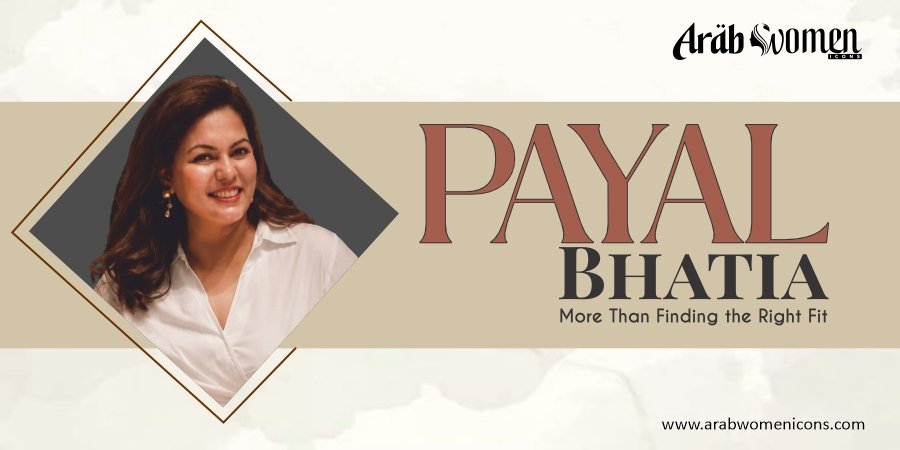
This is the space in which Payal Bhatia, Director, Executive Search & Staffing Solutions AMEA at Robbert Murray & Associates, has built her career. An Executive Headhunter, Talent Acquisition Specialist, and Corporate Staffing Partner based in Dubai, Payal Bhatia has spent more than 24 years working across executive search, talent acquisition, and corporate staffing. Payal Bhatia journey began with a simple realisation that has continued to shape her work: the success of an organisation ultimately rests on the quality of its people and leadership.
Over the years, connecting exceptional professionals with organisations has given Payal Bhatia a deeper understanding of what makes talent truly valuable. Qualifications and experience may open the door, but potential, character, values, cultural alignment, and the ability to lead often determine how far someone can go.
What keeps her connected to the profession is its deeply human nature. Markets change, technology moves forward, and business models evolve, yet people remain at the centre of every organisation that hopes to build something lasting. Every appointment therefore carries a story, whether it is a leader stepping into a larger role or a company finding the person who can help shape its next chapter.
At Robbert Murray & Associates, Payal Bhatia approaches executive search as a relationship-driven responsibility rather than a simple recruitment exercise. Her work involves understanding where an organisation wants to go, identifying the leadership capable of taking it there, and building connections based on trust, understanding, and long-term value.
For Payal Bhatia, the most rewarding part of the journey lies in those connections. The right opportunity can change the direction of a career, while the right leader can change the direction of an organisation. Bringing those two possibilities together is what continues to give meaning to her work.
Leadership That Begins with Understanding People
Working across the UAE, MENA, Africa, and Asia has given Payal Bhatia a broad perspective on what enables leaders and professionals to succeed across borders. Her experience has taught her that strong qualifications alone do not determine whether someone will succeed in a new environment. Cultural awareness, emotional intelligence, adaptability, and the ability to build trust are equally important. A candidate may have the technical expertise to enter a role, but long-term success often depends on how well they understand people, navigate differences, and adjust to unfamiliar environments.
This perspective has also shaped Payal’s understanding of leadership. Across different geographies, she has seen that effective leaders create trust, bring people together, respect local cultures, and remain focused on delivering results. Geography may change, but the human side of leadership remains central.
What Sets Exceptional Leaders Apart
Experience can tell a story about where a professional has been, but it does not always reveal the kind of leader they will become. Through her work placing CEOs, COOs, VPs, Directors, and General Managers, Payal Bhatia has seen that exceptional leaders bring something deeper to the table.
Strategic thinking, emotional intelligence, adaptability, integrity, and the ability to inspire trust are qualities that consistently distinguish strong leaders. The most effective among them are comfortable making difficult decisions while remaining open enough to listen, learn, and reconsider their approach.
Payal Bhatia believes leadership is not about having every answer. It is about asking the right questions, understanding people, and creating an environment where others can contribute meaningfully. In a business world that continues to change, adaptability has become particularly important. Leaders who can embrace change, empower their teams, and maintain sight of long-term impact are more likely to create lasting value.
Their real measure of success is therefore not limited to what they have achieved personally. It can also be seen in the people they develop, the cultures they shape, and the value they leave behind.
Reading the Person Behind the Profile
Executive search has changed considerably with the arrival of AI, digital platforms, and data analytics. Technology has made the process faster, expanded access to talent, and provided recruiters with new ways to understand markets and identify potential candidates.
Payal Bhatia, however, sees technology as a powerful support rather than a replacement for human judgement. Senior-level recruitment involves much more than matching qualifications to a job description. Understanding a leader’s personality, motivations, cultural fit, and long-term potential requires conversations and judgment that data alone cannot fully capture.
Her approach is to bring both sides together. Technology provides efficiency, broader insight, and access to information, while experience and personal interaction help reveal the individual behind the professional profile.
At the senior level, trust remains at the heart of executive search. The strongest appointments come from combining data-driven insight with genuine human understanding, creating decisions and relationships that can deliver value well beyond the initial placement.
The Leadership Challenges That Connect Industries
Payal Bhatia’s work has taken her across energy, engineering, construction, FMCG, finance, technology, manufacturing, retail, and shipping. While these sectors operate in very different environments, she has found that many of their leadership challenges are surprisingly similar.
Managing change, attracting and retaining talent, building capable teams, and balancing immediate performance with long-term growth remain common concerns. Leaders are also working through greater complexity, rapid technological developments, and changing employee expectations, all while being expected to provide clarity and maintain accountability.
The leaders who manage these pressures well tend to share a few qualities. They adapt when circumstances change, communicate a clear sense of direction, and bring people together around shared goals.
Industries may have different products, customers, and operating models, but Payal Bhatia believes the foundations of effective leadership remain much the same. People, purpose, resilience, and the ability to execute continue to shape how successfully an organisation moves forward.
When Leadership Carries a Larger Responsibility
Executive search takes on another level of complexity when a leadership position involves government or semi-government authorities, or when the appointment has wider institutional, economic, or national significance.
In such roles, professional experience is only one part of the assessment. Integrity, strategic vision, sound judgement, cultural awareness, and the ability to work with complex groups of stakeholders become equally important. A leadership decision in these environments can influence not only an organisation but also industries, communities, and broader economic priorities.
Payal Bhatia approaches such assignments with an understanding that the search is about more than filling an important position. The objective is to identify someone with the expertise and credibility to carry significant responsibility, while also possessing a genuine sense of purpose.
At this level, the right leader is someone capable of looking beyond the immediate demands of a role and helping shape what comes next. The appointment can influence an organisation’s direction for years, making judgement, responsibility, and lasting impact just as important as experience.
More Than 3,000 Stories
More than 3,000 candidates placed over the course of a career can be seen as an impressive measure of professional experience, but for Payal Bhatia, the number represents something more personal. Each placement has involved an individual with different ambitions, motivations, values, and hopes for what comes next.
Her experience in executive recruitment has shown her that finding the right match is about much more than aligning skills with a position. It requires understanding a person’s potential and recognising the kind of environment in which they can genuinely thrive.
Payal Bhatia has witnessed how one opportunity can change the direction of a career, just as the right leader can influence the future of an organisation. Those experiences have reinforced a simple lesson: listening matters, and so do trust, timing, and the creation of meaningful connections between people and organisations.
That is what makes executive search more than a recruitment exercise for her. Done well, it can become a turning point in both professional and organisational journeys.
Next Generation of GCC Leadership
The GCC is entering a period of continued investment, international expansion, and ambitious transformation. As businesses become more global and workforces increasingly diverse, Payal believes the next generation of leaders will need to offer more than the ability to deliver growth.
Strong values, reliable systems, good governance, transparency, and consistency will become increasingly important in creating organisations where people feel secure and understand their place in the larger picture.
Payal Bhatia sees belonging, stability, and purpose as important parts of performance. People are more likely to contribute at their best when they feel respected, supported, and confident about their future.
The leaders who shape the region’s next chapter, in her view, will be those who can combine ambition with responsibility. Their success will not be measured only by how quickly businesses grow, but by whether they can build trusted, stable, and people-centred organisations capable of sustaining that growth.
Finding Strength Through Experience
Payal Bhatia’s own leadership journey has also shaped the way she works with people and organisations. As a woman working in executive search and business leadership, she has encountered situations where establishing credibility, navigating expectations, and making her voice heard required additional resilience.
Rather than allowing those experiences to define her limitations, she used them to develop a leadership style grounded in confidence, authenticity, and substance. They taught her that strength does not require rigidity, and that listening can be just as powerful as speaking.
These experiences have also deepened her understanding of the challenges professionals face while building their careers. Respect, support, and empowerment are principles she carries into her work with both organisations and individuals.
Her advice comes from that perspective, combining empathy and honesty with a firm belief that people are capable of more when they are given the right environment to succeed.
Giving People a Reason to Stay
Compensation remains important in attracting senior talent, but Payal believes it is no longer enough to build lasting commitment. High-calibre professionals increasingly look at the wider experience an organisation offers, including work-life balance, security, purpose, recognition, and a clear sense of where their career can go.
She believes there is value in bringing back a stronger sense of mutual commitment between organisations and their people. There was once a time when employees could imagine growing within one company over the course of a long career. Creating that kind of relationship again requires organisations to offer more than short-term incentives.
People want to know that their contribution matters and that there is a future worth building within the organisation. Businesses that invest in development, create sustainable career paths, and provide stability can build deeper loyalty.
Payal Bhatia sees retention as more than simply trying to stop people from leaving. The stronger goal is to build an organisation that people genuinely want to remain part of.
Helping Women Build Careers with Longevity
Payal Bhatia’s message to women aspiring to reach the C-suite and boardroom is straightforward: know your worth, develop your expertise, and remain authentic.
Rather than measuring success against someone else’s definition, she encourages women to build their own leadership voice and make deliberate choices about the opportunities they pursue. Strong relationships, mentors, and sponsors can provide valuable support along the way, but career growth should not be reduced to chasing the next title.
A sustainable leadership career also requires purpose, well-being, and personal fulfilment. Reaching a senior position is an important achievement, but Payal Bhatia believes lasting leadership is ultimately reflected in the credibility a person builds, the people they influence, and the value they create.
Leaving Behind More Than a Career Record
Looking ahead,Payal Bhatia wants the next chapter of her career to extend beyond the traditional boundaries of executive search. Creating opportunities, developing talent, connecting exceptional people with organisations, and contributing to society are central to the impact she hopes to make.
Her philosophy is rooted in the belief that lasting value comes from work built on honesty, consistency, trust, and integrity. Experience and relationships, in her view, carry their greatest value when they are used to open doors for others and help emerging leaders find the environments in which they can contribute and grow.
Professional achievements will remain part of that journey, but they are not the only measure she wants to leave behind. The deeper ambition is to create opportunities, make a positive difference in people’s lives, and contribute to organisations and communities in ways that continue to matter long after a particular appointment has been made.