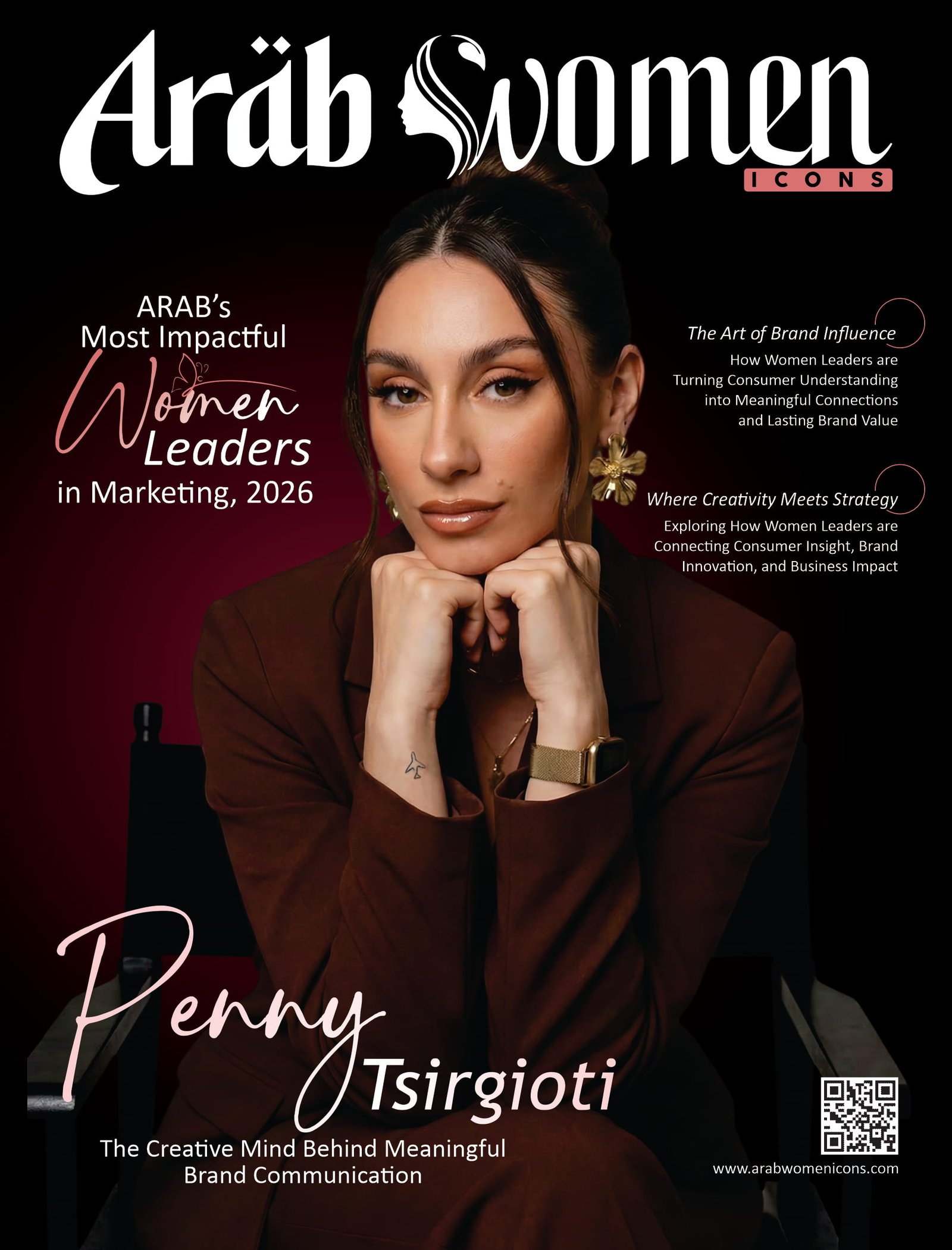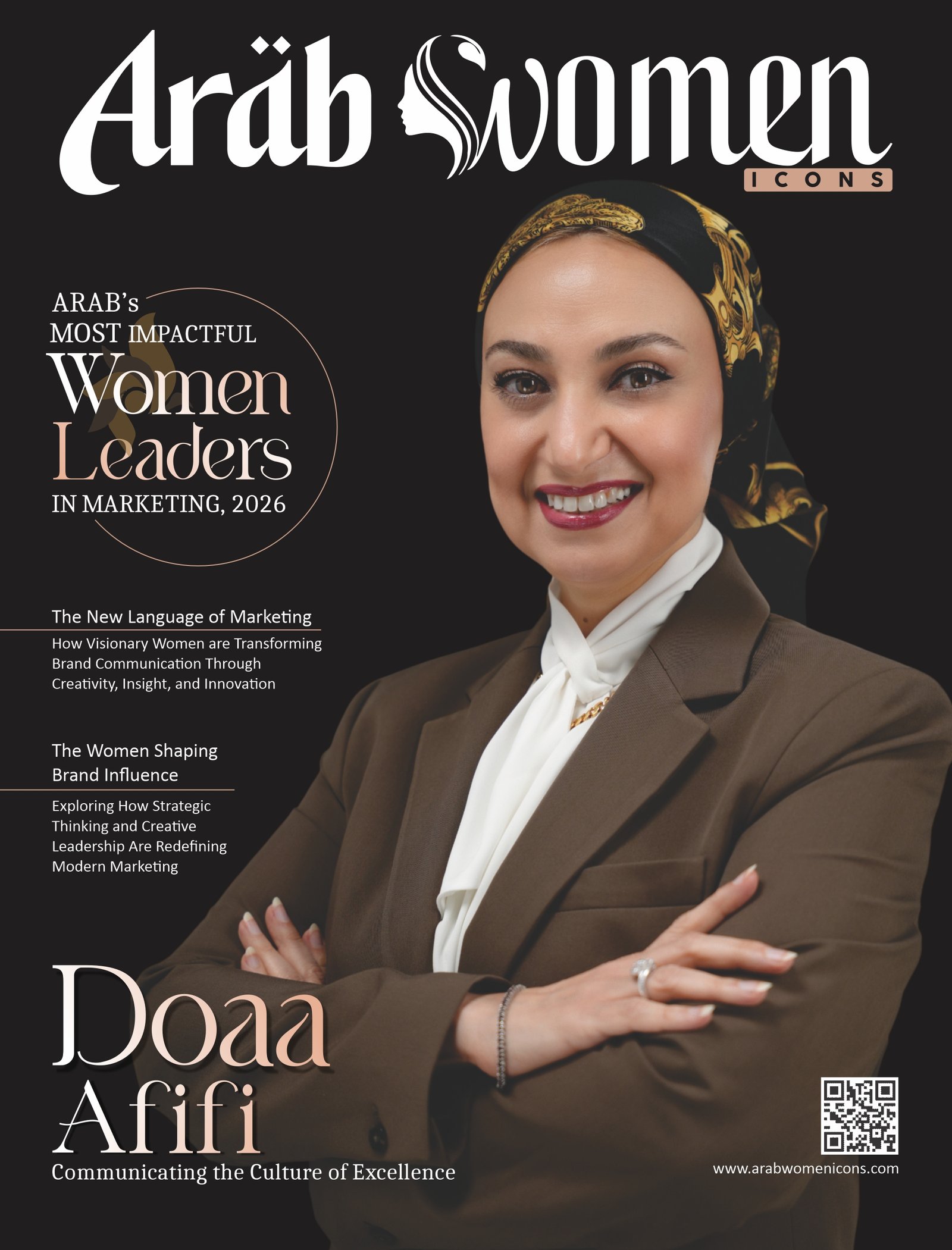
Real estate decisions are rarely made on numbers alone. Buyers are trusting a company with millions of dirhams, and that trust is built long before anyone picks up the phone. Rita Chatat, Marketing Director at MD Real Estate, has spent more than 10 years across real estate and 15 years across Marketing in different industries.
Investment, lifestyle and corporate sectors working on the gap between what a brand says and what a buyer believes.
Her position is simple. Marketing should create demand, build confidence and show up in the business results. Her work focuses on building AI-enabled marketing ecosystems where branding, performance, CRM automation and sales conversion work together instead of as separate functions. Over nine months, her team brought cost per lead down by 20% while lifting conversion by 33%.
Rita Chatat has managed significant marketing budgets, developed high-performance teams, and introduced disciplined approaches to ROI, funnel optimization and data-led decision-making. Creativity and financial responsibility do not compete, she says. Both have to work together once marketing is expected to influence the wider business. An MBA graduate from Sorbonne University Abu Dhabi, she brings a strong commercial, financial and strategic lens to the role.
Curiosity Turned into Strategic Marketing Leadership
Rita Chatat has always believed that everything starts with marketing. Before someone buys, invests, or even becomes curious, something has already shaped the way they feel. There is a perception, an emotion, and a reason to stop and pay attention. That invisible influence fascinated her long before she understood its commercial power.
As her career progressed, she became less interested in simply creating campaigns and more curious about what happened because of them. Did they change perception? Did they create demand? Did sales move? Why did one idea connect while another disappeared? She wanted to understand the business behind the brief.
That curiosity gradually changed the direction of her career. She realized that marketing should not simply receive business strategy and communicate it. Marketing intelligence should have a role in shaping the strategy itself.
Trust Comes Before the Salesperson
At MD Real Estate, Rita’s priority has been to build a marketing function that stays close to the business and understands the opportunity before a campaign begins. Her approach brings the market, the customer and the commercial objective together from the start.
In real estate, people are trusting a company with decisions that can involve millions of dirhams, so recognition alone is not enough. Reputation often enters the conversation before the salesperson does. Rita Chatat wants the MD Real Estate name to stand for credibility, market knowledge, Abu Dhabi and a consistent standard. Visibility can be bought, and a launch can make a lot of noise. Trust takes much longer to build.
She sees branding and performance as too often treated as separate worlds. Performance marketing may generate the lead, but the brand can decide whether that person trusts the company enough to answer the call. A last click can be measured. The years of perception behind it are much harder to quantify. A strong brand makes every commercial conversation that follows stronger.
When Marketing Starts Speaking the Language of Revenue
Rita Chatat has never viewed marketing as a cost center. Marketing creates demand, builds trust, strengthens positioning and supports revenue, but earning that influence requires accountability. She expects marketers to understand numbers as confidently as they understand creativity.
“I don’t celebrate leads that don’t convert. A lead is only a win when it turns into a sale,” she says. Marketing and sales should be judged on the same number: closed transactions. One of the biggest shifts she is driving is bringing marketing, sales and data around the same customer and the same target.
The change sounds straightforward until established habits have to shift. At MD Real Estate, it has reinforced a lesson she strongly believes in: the hardest part of any transformation is changing how people think, more than the technology or the process.
Protecting Creativity While Protecting Investment
Rita Chatat is deeply protective of creativity, and equally conscious of the money entrusted to marketing. Before spending begins, she wants clarity on what the campaign is expected to change. Is the objective awareness, demand, qualified leads, transactions, or market position? From there, she follows the journey beyond impressions and clicks. Lead quality, sales feedback, points where customers are lost, and eventual conversion all form part of the picture.
Rita Chatat does not believe data should be used to defend a campaign simply because the team created it. If the market shows that an idea is not working, she listens. Testing something that fails is not the real problem. The bigger failure is spending money, learning nothing, and repeating the same approach.
Taking Risks Without Losing Commercial Discipline
Some of the strongest marketing ideas feel slightly uncomfortable at first because there is no previous example to prove they will work. If every idea feels completely safe, a brand eventually becomes predictable.
Her approach is to test the idea, control the investment, understand the response, and scale it when the results justify it. When something does not work, she lets it go rather than get attached to her own creativity. “The market gets the final vote,” she tells her team. Their job is to be brave enough to experiment and disciplined enough to listen to the answer.
Making AI Work Without Losing the Human Touch
Rita Chatat sees the current AI revolution as a turning point. She compares it to the discovery of fire. “AI is like fire. You can do so much more with it, but if you don’t understand it, it burns you.” For her, the useful question is what becomes possible for marketers who learn to master it. The ones who choose to ignore it are the real risk.
In practice, she sees AI making marketing faster and more intelligent across data, personalization, content, optimization and customer journeys. Technology can create thousands of pieces of content in seconds, but it cannot decide whether any of them deserve to represent a brand. That still takes judgment, taste, instinct and an understanding of people.
Selling Possibilities, Not Just Square Metres
An investor can walk into a room thinking about yield, appreciation and opportunity, while a family can enter the same room imagining where their children will grow up. They may be looking at the same square metres but seeing two completely different futures. Real estate marketing has to understand both.
That connection between finance and emotion is what drew Rita Chatat to the industry. Few sectors sit so closely between the two. Real estate marketing influences one of the most significant financial decisions many people will make, which creates a responsibility in how those opportunities are communicated.
Abu Dhabi adds another dimension. Rita Chatat has built her career in a city that has been developing one of the region’s most ambitious real estate stories. She has watched plans become skylines, islands become destinations, and communities take shape. Communicating that transformation while witnessing it firsthand has made the work particularly meaningful.
Creating Teams That Think Beyond the Brief
Rita Chatat does not build teams to agree with her. “If everyone in the room thinks like I do, that’s an expensive echo chamber.”
Curiosity, ownership and hunger are what she looks for. She values people who are confident enough to challenge an idea respectfully and curious enough to ask why something is being done instead of simply executing it. Skills can be developed. That mindset is much harder to teach.
Her standards remain high, and people are given room to become better than the version originally hired. One of the most rewarding parts of leadership, she says, is seeing someone on the team bring forward an idea she would never have thought of herself. That is when she knows she is building talent rather than managing tasks.
Technology with Authenticity
Real estate marketing is moving toward much greater personalization. AI, predictive intelligence and better data will let marketers understand intent earlier and build customer journeys that feel individual.
As AI-generated content fills every feed, authenticity will be worth more. Buyers can already tell when something looks perfect and says nothing. The brands that win will use technology to understand people better, not to take people out of the process.
Leaving Behind a Stronger Brand and Team
Rita Chatat wants her impact at MD Real Estate to be measured by more than one successful campaign. She wants people to look back and see that marketing became inseparable from the growth of the business, through a stronger brand, a commercially intelligent function, a stronger team, and standards that kept rising.
Rita Chatat also hopes to help take Abu Dhabi’s real estate story to a wider global audience. The city has shaped her professionally, which makes contributing through the industry she knows particularly meaningful. If the business has grown, the brand is stronger, the people around her are better, and MD Real Estate has helped position Abu Dhabi with greater confidence internationally, that is what she would be proud to leave behind.
The Marketing Director as a Business Leader
Rita Chatat expects the Marketing Director of the future to look increasingly like a business leader, with an understanding of technology, finance, sales, data and customer behaviour, while still protecting creativity, instinct and brand. She wants marketing in the room early, when the questions are what to build, where the opportunity is, and what customers want before they can say it.
Her advice to ambitious marketers is to think like the person running the business. Understand how the company makes money, spend time with sales, learn finance, and know customers beyond a demographic profile. Ask why the business is making a decision before asking how it should be advertised. The moment marketers start bringing solutions to business problems instead of waiting for briefs, the value of their contribution changes.
Marketing taught her the power of perception. Business taught her that perception has economic value. Numbers can explain what happened, and AI can help predict what comes next, but great marketers still need the instinct to see something before everyone else does. After all the technology, data and transformation, she returns to the belief that shaped her career from the beginning: everything still starts with marketing.