The strongest organisations are rarely defined only by their products, technology, or market position. Their lasting advantage often comes from the people who shape culture, drive innovation, make decisions under pressure, and help businesses adapt to change. As industries become more global, digital, and interconnected, workforce transformation has become one of the most important responsibilities within modern leadership.
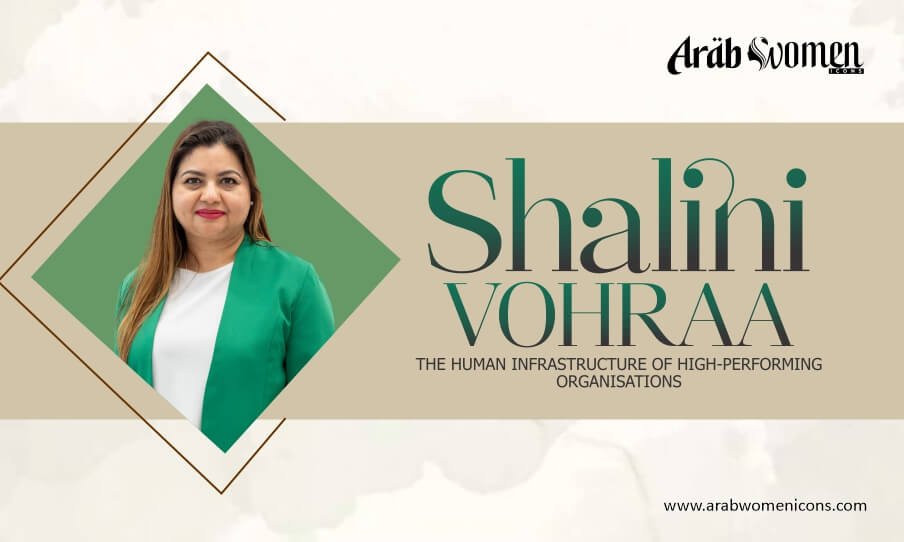
Shalini Vohraa has spent more than two decades helping organisations navigate that transformation. As a CHRO and Board Advisor, she has led enterprise-wide workforce strategies across aviation and retail conglomerates, guiding organisations that employ more than 25,000 people across India, the Middle East, and international markets.
With over 26 years of global HR leadership experience, she has built a reputation for aligning people strategy directly with business growth, profitability, and expansion.
What distinguishes Shalini Vohraa’s approach is her belief that workforce transformation is not an HR initiative but a business strategy. She views it as the intentional redesign of an organisation’s people, capabilities, culture, and ways of working so that businesses can remain competitive, resilient, and ready for what comes next.
Her work reflects a leadership philosophy that connects human potential with commercial outcomes, helping organisations grow not only through strategy and systems, but through the strength of their people.
A Philosophy Built Through Experience
Shalini Vohraa’s approach to people leadership has not been shaped by a single role or industry. It has evolved through years of working in environments where performance mattered, accountability was non-negotiable, and leadership had a direct impact on organisational outcomes. She believes people thrive when leaders create psychological safety, build capability with discipline, respect cultural differences, and use technology to enhance rather than replace human potential.
Early in her career, aviation taught her lessons that continue to influence her leadership style today. The industry operates in high-pressure environments where clarity, precision, and accountability are essential.
She learned that teams perform at their best when expectations are clearly defined, communication is consistent, and leaders remain calm and supportive even during moments of pressure. That experience reinforced her belief that removing ambiguity allows people to perform with greater confidence and ownership.
Retail introduced a different kind of challenge. Managing large and diverse workforces across fast-moving business cycles required a deep understanding of culture, capability building, and frontline engagement. She came to see culture not as something that develops on its own, but as something that leaders intentionally shape every day. Continuous learning, strong operational discipline, and meaningful connection with frontline teams became central elements of her leadership philosophy.
As she moved into CHRO and Group Head roles, Shalini Vohraa found herself working closely with CEOs, boards, and senior leadership teams during periods of organisational transformation. Those experiences revealed that leadership is ultimately a deeply human practice.
Growth requires self-awareness, courage, and the willingness to challenge familiar patterns. She became convinced that exceptional leaders are developed through intentional coaching and meaningful experiences rather than simply through tenure or position.
Working across India, the Middle East, and international teams expanded her perspective even further. She learned that culture is expressed through everyday behaviour, particularly by senior leadership. Inclusion is not only a value but a strategic capability, and leadership must adapt to different contexts while remaining authentic. These experiences strengthened her belief that cultural intelligence is one of the defining qualities of effective global leadership.
Leading HR transformation and AI-enabled people systems added another dimension to her philosophy. Technology, in her view, should make organisations more human by enabling better decisions, improving employee experiences, and creating space for leaders to focus on coaching, development, and connection.
Working Across Cultures and Geographies
Managing multicultural and geographically dispersed teams has been one of the most defining aspects of Shalini Vohraa’s career. It has made her a more adaptive, empathetic, and context-aware leader while strengthening her ability to build trust across differences and communicate with clarity.
She believes global leadership is less about authority and more about cultural intelligence, humility, and the ability to unite people around a shared purpose. Diverse teams bring broader perspectives, richer ideas, and stronger problem-solving capabilities, and she has consistently worked to create environments where those differences become a source of innovation rather than complexity.
Leading across countries and time zones also taught her the importance of influence over positional power. In international organisations, alignment cannot be achieved through hierarchy alone. Relationships, collaboration, and credibility become the foundation of effective leadership. These experiences reinforced her conviction that the strongest leaders are those who create connection across boundaries and help people move together toward common goals.
Aligning People Strategy with Business Performance
Shalini Vohraa approaches HR as a strategic business function rather than a support function. Her starting point is always the commercial agenda of the organisation. She works backwards from business priorities and translates them into clear workforce strategies that support growth, profitability, and long-term competitiveness.
Data plays an important role in that process, but she views analytics as a tool for better decisions rather than an end in itself. Building future capabilities, strengthening leadership, shaping a performance-driven culture, and leveraging technology to improve efficiency are all interconnected elements of the same strategy.
When people strategy is aligned with business outcomes, HR becomes a genuine partner in organisational success rather than a function operating on the sidelines.
The Long-Term Discipline of Developing Leaders
One of the areas where Shalini Vohraa has had significant impact is leadership development and succession planning. She believes organisations build resilience when they prepare leaders long before leadership vacancies arise.
A strong leadership pipeline begins with a clear understanding of the capabilities the business will need in the future. High-potential talent must be identified early, given meaningful cross-functional experiences, and supported through coaching and development. Succession planning should remain dynamic rather than static, allowing organisations to respond to changing business realities and emerging talent.
Diversity of thought is another critical ingredient. Leadership benches become stronger when organisations cultivate varied perspectives, backgrounds, and experiences. She also believes that leadership development cannot be delegated solely to HR. Senior leaders must be accountable for developing other leaders. When that responsibility becomes part of the organisation’s culture, the leadership pipeline becomes significantly stronger and more future-ready.
Work Culture that Encourages Innovation and Accountability
Culture, in Shalini Vohraa’s view, is not created through slogans or campaigns. It is created through behaviour, systems, and leadership consistency. She focuses on translating organisational values into observable actions that can be embedded into hiring, performance management, and leadership development.
Leadership capability sits at the centre of that effort. When leaders model empowerment, coaching, disciplined decision-making, and psychological safety, those behaviours spread naturally across teams. Culture follows leadership, and organisations become stronger when leaders consistently demonstrate the standards they expect from others.
Innovation also requires intentional design. She has built cross-functional collaboration models, rapid experimentation practices, digital collaboration platforms, and environments where employees feel safe sharing ideas and challenging assumptions. Creativity grows when people feel trusted and supported.
Accountability, meanwhile, becomes effective when it is transparent and fair. Clear goals, data-informed metrics, and regular feedback create an environment where accountability feels constructive rather than punitive. Employees perform better when expectations are explicit and feedback is timely.
Employee voice is another area she considers essential. Listening forums, pulse surveys, frontline feedback mechanisms, and recognition systems give people the opportunity to shape the culture they work within. Engagement rises when employees feel heard, respected, and valued.
Technology serves as a powerful amplifier of culture. AI-enabled learning platforms, digital communication tools, and modern collaboration systems can reinforce desired behaviours, accelerate knowledge sharing, and create consistency across geographically dispersed teams. In Shalini Vohraa’s leadership philosophy, technology is most valuable when it strengthens connection, capability, and organisational alignment.
Shalini Vohraa’s leadership journey reflects a rare combination of strategic thinking and genuine human understanding. She has built organisations from the inside out by aligning people with purpose, culture with performance, and leadership with long-term business value.
Her work demonstrates that sustainable success is achieved not only through systems and strategies, but through leaders who help others grow, contribute, and thrive every single day.
The Hidden Architecture of Organisational Change
Shalini Vohraa sees large-scale transformation as much a people challenge as a business challenge. One of the biggest obstacles is a lack of alignment at the leadership level, which often creates confusion across the organisation. She believes transformation succeeds when leaders establish a unified narrative, define clear success measures, and visibly support the change journey.
Employees also resist change when they fear job loss, unfamiliar technology, or new expectations. Transparent communication, active listening, and psychological safety help reduce that resistance. She places particular importance on middle managers, who act as translators between strategy and execution. Investing in their coaching, communication, and change leadership capabilities allows transformation to gain momentum.
Culture is another decisive factor. Legacy behaviours, silos, and outdated mindsets can slow change more than systems or processes. Shalini Vohraa believes organisations must intentionally redefine future behaviours and embed them into performance, leadership development, and recognition.
Building future capabilities through reskilling, digital learning, and role-based development programmes is equally essential. Transformation succeeds when people feel informed, supported, and part of the journey.
Balancing Performance with Human Wellbeing
Shalini Vohraa approaches wellbeing as a performance system rather than a benefits category. She believes sustainable performance comes from supporting mental, emotional, physical, and social wellbeing through thoughtful work design, healthy leadership practices, and clear expectations. This reduces burnout, improves creativity, and strengthens retention.
She also connects culture, recognition, and accountability directly to business outcomes. By aligning recognition with strategic behaviours, using culture diagnostics to identify performance barriers, and embedding inclusion into everyday collaboration, she creates environments where people feel valued while remaining accountable for results.
Employee experience, in her view, is a powerful driver of execution. When employees understand the business vision, leaders model the right behaviours, and systems reinforce clarity and psychological safety, organisations become more agile and aligned. She integrates inclusion into leadership capability and talent processes, ensuring diverse perspectives contribute to decision-making and innovation.
Her approach combines people-first and performance-driven principles into one strategy through continuous conversations, wellbeing integrated into work design, and leadership development aligned with business priorities.
Designing Organisations for Constant Reinvention
Shalini Vohraa believes future-ready organisations will move away from rigid job structures and build capability ecosystems instead. The strongest organisations will create multi-skilled talent pools, invest in continuous reskilling, and organise work around skills rather than titles.
AI will transform workflows by automating routine work and allowing employees to focus on higher-value contributions. Leadership capability will become a strategic differentiator, particularly the ability to navigate ambiguity and create stability during uncertainty. Culture will continue to drive adaptability, empowerment, inclusion, and disciplined execution.
She also sees workforce planning becoming increasingly data-driven through predictive analytics and scenario modelling. Employee experience will remain central to resilience, with wellbeing, belonging, and purpose playing a direct role in retention and performance. Agile operating models and a strategic approach to building, buying, borrowing, and automating talent will help organisations respond quickly to changing market conditions.
Evolving the Workplace for Younger Generations
Shalini Vohraa’s career has been shaped by transformation across industries and geographies. She has built HR functions from the ground up, strengthened leadership capability, modernised people systems, and delivered leadership development programmes that have received industry recognition. Her work has consistently helped organisations scale, navigate disruption, and build workplaces where people thrive while business performance accelerates.
Throughout her career, Shalini Vohraa has remained guided by clarity, empathy, inclusion, integrity, and a strong commitment to developing people. She believes purposeful leadership, continuous learning, and disciplined execution can coexist across industries, countries, and organisational contexts. These principles have shaped the way she develops leaders, transforms cultures, and helps organisations succeed through change.
Shalini Vohraa has observed that younger generations are looking for workplaces that are purposeful, empowering, and adaptable. She believes organisations that want to remain attractive employers must evolve their leadership style, create opportunities for continuous skill development, and make flexibility a core part of the employee value proposition. These shifts help organisations connect with younger talent while strengthening long-term competitiveness and organisational resilience.
Shalini Vohraa encourages emerging HR leaders to become business-savvy, data-driven, globally minded, and courageously human. She believes future CHROs will be those who understand commercial priorities, lead change confidently, build leadership capability early, and translate business strategy into meaningful people outcomes. The leaders who combine commercial acumen with empathy, influence, and clarity will be best equipped to guide organisations through an increasingly complex future.
The Future of HR in an AI-Driven World
Shalini Vohraa believes the future of HR will be shaped by AI and analytics in ways that make organisations more agile and people-focused. Talent management will become increasingly predictive, workforce planning more dynamic, and employee experience far more personalised. Automation will gradually remove routine and transactional work, allowing HR leaders to focus on capability building, culture, leadership development, and business impact. In her view, technology will not replace HR. It will strengthen its strategic influence and help organisations respond faster to change and growth opportunities.