Leadership is a skill that is not innate to each worker, and for this reason, the approaches that managers choose to influence others may differ. Some people are motivated by the same strategies used by their colleagues, while other require others require a different approach. In this regard, companies have witnessed the limitations of strict leadership style and have turned to situational approaches. I agree with this method of work and believe that it is more effective compared to other strategies because it helps leaders strike a balance between directing and supporting their subordinates based on their competencies and experience.
To begin with, the conventional approach to leadership is based on the idea that all workers can be influenced the same way, whereas the situational theory recognizes individual differences among employees. The majority of leaders understand that one-size-fits-all approaches rarely produce the desired result. Therefore, flexibility and responsiveness to the needs of the workforce are vital skills that enable managers to establish strong relationships with their employees. Notably, situational leadership requires leaders to respond to specific demands, needs, and expectations of their employees. For example, new workers may benefit from a more involved leader who will guide them through complex tasks. In contrast, a seasoned specialist may require a hands-off approach to be able to reach their own conclusions.
Moreover, situational leadership allows leaders to achieve greater effectiveness in their work by considering the varying levels of maturity of their employees. It is a known fact that not everyone is the same in terms of professional competence and willingness to perform specific tasks. Therefore, an involved leadership style may be appropriate for an employee with low competency but a strong willingness to learn, whereas the same approach may fail for a worker with medium competency and commitment. Overall, situational leadership is the best approach to ensure the high performance of employees and the organizational success in the long run.
By evaluating these factors, leaders can decide how much direction or support a team member needs. This adaptive approach prevents micromanagement while ensuring employees never feel abandoned when they need guidance. As a result, organizations build stronger relationships between managers and their teams while maintaining consistent performance across different projects.
Understanding the Different Leadership Approaches
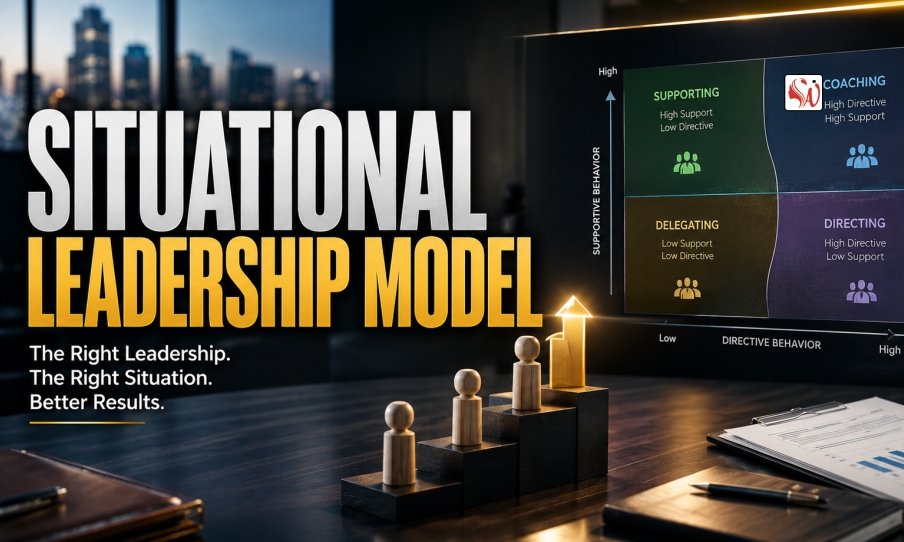
The framework generally identifies four leadership approaches that vary in terms of direction and support. Leaders move between these approaches depending on employee development rather than personal preference.
When an employee is completely new to a task, the leader provides clear instructions, close supervision, and specific expectations. This helps reduce confusion and creates a strong learning foundation. As employees begin developing skills but still face uncertainty, leaders continue offering guidance while also explaining decisions and encouraging questions.
Once employees become more capable, leadership shifts toward collaboration. Instead of directing every action, managers involve team members in problem-solving and decision-making. This increases confidence while allowing individuals to develop independent thinking.
Finally, highly experienced and motivated employees benefit from delegation. Leaders trust them with responsibility, monitor overall outcomes, and step in only when necessary. This not only improves efficiency but also creates opportunities for innovation and professional growth.
The strength of the situational leadership model lies in recognizing that employees may move between these stages depending on the task. An expert in one area can become a beginner in another, requiring leaders to adjust their approach once again.
Benefits for Organizations and Employees
Businesses operating in competitive markets need leaders who can respond quickly to changing circumstances. Flexible leadership improves communication because managers focus on understanding individual needs instead of applying identical solutions to everyone.
Employees who receive appropriate guidance often develop skills faster and become more engaged with their work. New hires feel supported during the learning process, while experienced professionals appreciate the trust placed in them. This balance reduces frustration on both sides and creates healthier workplace relationships.
The situational leadership model also contributes to stronger talent development. Managers become coaches rather than supervisors alone, helping employees overcome challenges while preparing them for greater responsibilities. This creates a reliable internal pipeline for future leadership positions and reduces dependence on external hiring.
Another advantage is improved team morale. Employees who feel understood are generally more willing to collaborate, share ideas, and contribute to organizational goals. Managers can also identify performance issues more accurately because they assess both ability and motivation before deciding how to respond.
Organizations experiencing rapid growth or digital transformation particularly benefit from this adaptability. Teams often encounter unfamiliar technologies, changing responsibilities, and evolving customer expectations. Flexible leadership enables smoother transitions without sacrificing employee confidence.
Applying the Framework in Everyday Leadership
Implementing adaptive leadership begins with observation rather than assumption. Effective managers regularly evaluate employee performance, communication patterns, confidence levels, and willingness to take initiative. These assessments should happen continuously because development is rarely linear.
Open conversations play an essential role in understanding employee needs. Rather than focusing only on performance metrics, leaders should discuss challenges, learning opportunities, and career goals. Honest communication allows managers to provide the right balance of direction and encouragement.
Training programs can also help organizations develop adaptable leaders. Instead of teaching only technical management skills, leadership development should emphasize emotional intelligence, active listening, coaching techniques, and constructive feedback. These qualities enable managers to recognize changing employee needs and respond effectively.
The situational leadership model works best when leaders remain flexible instead of becoming attached to one management style. Successful leadership is not about controlling every decision or stepping back entirely. It is about knowing when employees need instruction, collaboration, encouragement, or independence.
As workplaces continue evolving with remote teams, hybrid environments, and diverse workforces, adaptability has become one of the most valuable leadership qualities. Leaders who understand how to adjust their approach can build stronger teams, improve employee satisfaction, and achieve sustainable organizational success. Rather than asking employees to fit a single leadership style, effective managers shape their leadership around the people they serve, creating an environment where both individuals and businesses can thrive.