Architecture in the Middle East is increasingly being shaped by a deeper understanding of place. Climate, heritage, resources, public life, and the way people experience cities are becoming important parts of the design conversation. In a region where rapid development exists alongside centuries of architectural knowledge, the most meaningful work often comes from finding a balance between progress and the character of a place. It is a field that calls for creativity, but also patience, research, environmental awareness, and an understanding of how buildings and cities affect everyday life.
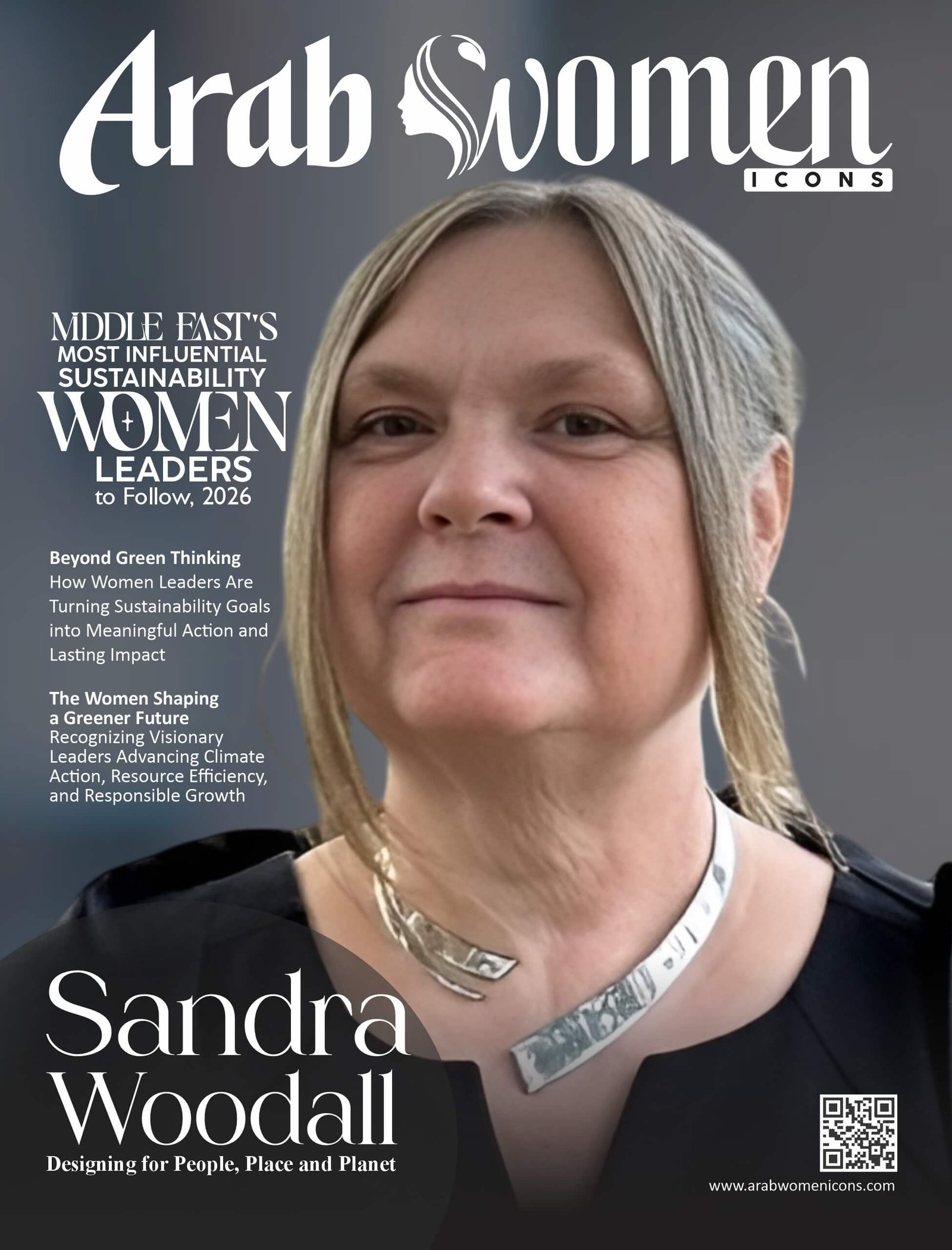
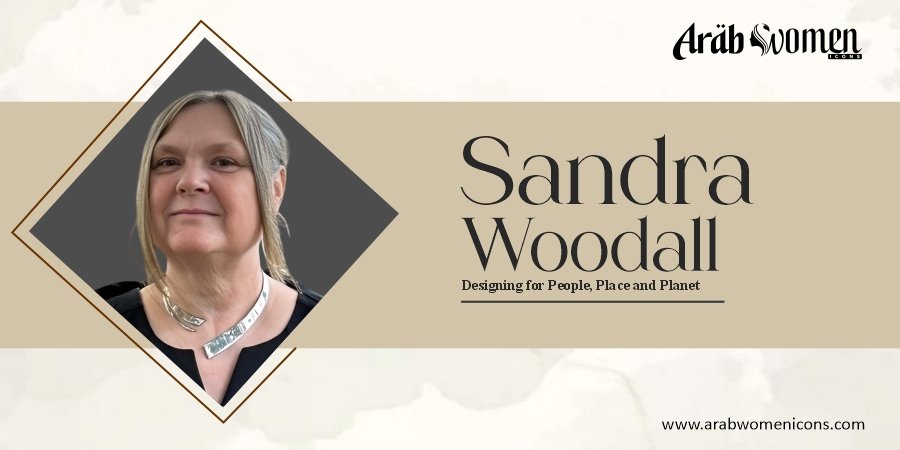
Within this evolving landscape, Sandra Woodall has built a career around connecting design with the people, environments, and communities it serves. As a FRIBA Design Principal at tangramMENA, Founder of tangramTERRA, and RIBA MENA Region Ambassador for Sustainability, she brings together architecture, urbanism, environmental research, education, and mentorship. Having lived and worked in the UAE for more than 25 years, her experience has been shaped by the region itself and by a continuing interest in how architecture can respond to its climate, culture, and changing communities.
An award-winning designer, Sandra Woodall leads tangram’s MENA region studio, which was recognised as the 2019 MENA Architecture Firm of the Year by the Middle East Economic Digest (MEED). The studio has also received six international sustainable design awards across five projects in only four years, reflecting an approach where environmental responsibility is considered part of the design process rather than an addition to it.
Her professional journey extends well beyond practice. As a Fellow of the Royal Institute of British Architects (RIBA), the Royal Society of Arts (RSA), and the Academy of Urbanism (AoU), Sandra Woodall has remained closely involved in research, professional development, and education. Her role as RIBA Regional Ambassador for Sustainability allows her to promote and develop UK design and management skills across the MENA region, while her position as Chair of the MENA Region Steering Group for the AoU connects her work with wider professional conversations across the region.
At the centre of Sandra’s work is a belief that architecture should respond to real life. Her practice brings together environmental responsibility, regional knowledge, human wellbeing, and long-term thinking. Creating a perspective that looks beyond individual buildings to the places and communities they help shape.
Bringing New Purpose to Historic Places
Sandra Woodall’s professional journey began not in architecture, but in engineering. Early in her career, she worked in her hometown on the refurbishment of the Rivington to Liverpool aqueduct, its water treatment works and service reservoirs. The work involved studying microfiche copies of drawings produced more than 150 years earlier, offering her an early understanding of how infrastructure could survive, adapt and remain relevant across generations.
Her involvement in the regeneration of Liverpool’s Albert Dock became a defining experience. The dock, the UK’s largest collection of Grade I listed buildings, carried a rich industrial history dating back to 1846. Working alongside a leading architect on its regeneration allowed Sandra Woodall to see how design could give historic structures an entirely new social and economic purpose.
The experience changed how she viewed the profession. Architecture brought together the elements that interested her most: creativity, people and complex problem-solving. Seeing derelict industrial buildings transformed into places filled with people, culture and new purpose showed her that architecture could do more than preserve history. It could change how people experience a place and contribute to the transformation of an entire city.
Creating the Conditions for Better Design
As a Fellow of the RIBA and Design Principal at tangramMENA, Sandra sees design leadership as less about producing every idea and more about creating the conditions where strong ideas can develop.
Her starting point is a clear design narrative. What is the project trying to achieve? Who is it serving? What makes the place distinctive in terms of its climate and culture? And what value should the project continue to provide 30, 50 or even 100 years from now?
Once those principles are established, Sandra Woodall believes designers need to challenge one another. Different cultures, disciplines, experiences and perspectives can make architecture richer when they are given room to contribute.
Sandra Woodall does not see this as designing by committee. She sees it as creating space for ideas to be shared, questioned and reinterpreted. Different perspectives can reveal possibilities that may otherwise remain unseen, particularly when technical, environmental, social and commercial demands pull a project in different directions. That tension can become a source of innovation.
Her responsibility as a leader is ultimately to listen, challenge and consider before having the confidence to make decisions. Each decision needs to stand up environmentally, socially, technically and experientially. She also sees leadership as protecting the thinking behind those decisions as a project moves through delivery and encounters the inevitable pressures of change.
Learning Sustainability from the Desert
Sandra Woodall’s understanding of sustainability began more than three decades ago when she arrived in the UAE to work on the analysis, review and development of the Al Ain City master plan.
At the time, Al Ain was undergoing rapid urban transformation. Living and working within the traditional desert community gave Sandra a deeper understanding of desert urbanism and the relationship between climate, culture, landscape, infrastructure and community.
The experience shaped her belief that sustainability cannot be viewed only at the scale of an individual building. It has to be considered within the wider life of a city and its people.
Her later involvement in the regeneration of Sharjah’s historic Arts and Heritage Area, which developed into the Heart of Sharjah, deepened this understanding. In 1997, she delivered the Sharjah House of Poetry and Sharjah Art Museum while working alongside the government’s archaeological expert.
The work involved understanding traditional materials and construction methods, including coral and sea stone, timber and gypsum. Rather than treating these materials simply as elements of the past, the project explored how the knowledge behind their use had allowed communities to live more comfortably within the Gulf’s demanding climate.
Sandra Woodall began to recognise the environmental intelligence within traditional architecture. Orientation, mass, shade, narrow sikkas, courtyards and air movement worked together to create more comfortable microclimates without relying on the technologies available today.
The lesson stayed with her. Climate-responsive design was not a modern invention. It was knowledge that had already been developed, tested and passed down.
That understanding shaped a principle that continues to guide her practice: sustainability should not be something added to architecture. The architecture itself should do the work.
At the heart of that philosophy is a simple belief: architecture is about people, and sustainability is about life.
Turning Experience into Shared Knowledge
The creation of tangramTERRA gave Sandra a way to turn decades of practice and research into knowledge that others could use. The platform brought together regional case studies, environmental strategies, methodologies and resources, making them accessible to a wider professional community.
Her ambition was to bring environmental intelligence into the earliest stages of design. Climate, resources, ecology, human comfort, health, wellbeing and long-term resilience could become generators of architecture rather than constraints placed upon it.
Her role as RIBA Regional Ambassador for Sustainability and her growing involvement in teaching expanded this work further, connecting professional practice with practical tools and methodologies. In 2020, she co-founded the RIBA Gulf Sustainability Group and began producing, curating and hosting its ongoing Sustainable Development Series.
The focus gradually moved beyond sharing knowledge towards building the professional capacity needed to address the decarbonisation of the built environment across the Gulf.
Education became an important part of that journey. Sandra Woodall now develops and delivers professional education programmes for organisations including the RIBA and Saudi Arabia’s Architecture and Design Commission, as well as contributing to conference programmes, government bodies and industry organisations.
Her programmes explore climate-centred design, health and wellbeing, fabric-first approaches, desert urbanism and microclimates, using regional evidence and built case studies to connect sustainability ambitions with practical action.
That thinking has also moved into wider conversations about cities. A 2022 Greening of Cairo initiative in Egypt explored how historic districts could be revitalised through connected cultural corridors, public spaces and green infrastructure. Some of these priorities are now being incorporated into public policy for current developments.
At the centre of Sandra’s work is a simple belief: knowledge has the greatest value when it is shared, applied and enables others to create change.
Design Begins with Context
The diversity of the MENA region means that Sandra does not approach design through a single visual language. Her starting point is context.
Before considering how a building should look, she believes designers need to understand the movement of the sun, prevailing winds, how people arrive and move through a place, how families and communities interact, and what has historically worked within that environment.
Regional vernacular architecture offers many of these lessons. The objective, however, is not to reproduce traditional forms but to understand the reasons behind them and translate that environmental knowledge into contemporary design.
This approach forms the basis of the Climate-Responsive Design series she developed for the RIBA Academy. The programme explores vernacular architecture, building performance and microclimates, demonstrating how regional environmental intelligence can inform architecture across the Gulf today and in the future.
Looking Beyond the Building
Sandra Woodall’s work across urbanism, master planning and research has expanded her understanding of architectural responsibility. She sees every building as part of a much larger system.
A building affects the street around it. It can create shade, influence pedestrian movement, affect energy demand, traffic and economic activity, and contribute to the ecology and infrastructure of its surroundings. When buildings come together as communities and neighbourhoods, they also shape how people connect and interact.
This city-scale perspective has changed the way Sandra approaches individual developments. A building cannot be considered only through what happens inside its walls. Its contribution to the street, neighbourhood, climate and wider liveability of the city also matters.
Sandra Woodall believes the future of sustainable architecture will depend greatly on the spaces between buildings. Shade, landscape, biodiversity, mobility and social infrastructure can shape human-centric environments that create more comfortable and engaging places for us all.
Sustainability becomes tangible through everyday experiences: a shaded route that encourages someone to walk, a public space where people gather, or a landscape designed to cool rather than simply decorate.
At last, Sandra Woodall sees the purpose of her work in human terms. Cities should create places where people want to stay, connect and belong. Her conference papers, panel discussions and teaching increasingly explore this connection between health-centred design, the built environment and the wellbeing of both people and the planet.