Cybersecurity has become part of everyday life. As people increasingly depend on digital payments, online shopping, mobile devices, and connected services, protecting identities, finances, personal information, and digital experiences has become essential. The industry, however, is not only about technology. It is also about building trust and making security simple enough for people to understand and use.
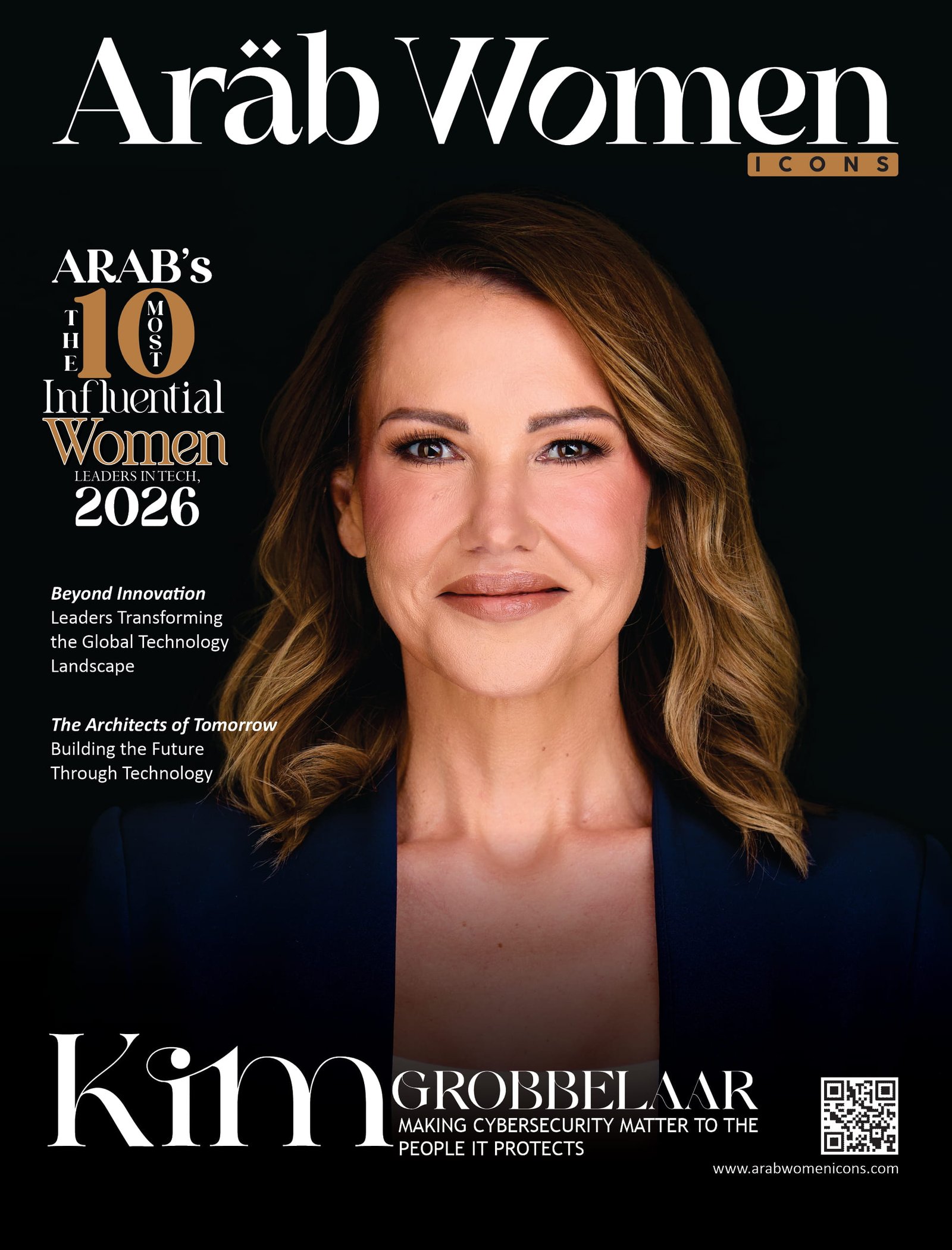
Kim Grobbelaar, Regional Consumer Channel Sales Manager at Kaspersky, works at the intersection of cybersecurity, business, and people across the Middle East and Africa. Covering more than 20 markets, she leads consumer channel strategy, develops growth opportunities, and builds partnerships with distributors, retailers, and resellers to expand access to cybersecurity solutions.
Her experience across the technology channel has given her a practical understanding of diverse markets and the importance of strong relationships. She looks beyond commercial growth, focusing on how cybersecurity can become more accessible and relevant to everyday consumers as digital risks continue to evolve.
Kim Grobbelaar’s contribution has earned recognition through the EDGE Women in Tech Power List 2026 and her feature in VisionHER: The Faces of Leadership in Technology. Her journey from sound engineering to regional cybersecurity leadership reflects an unconventional career shaped by curiosity, adaptability, and a belief in making technology work better for people.
From Sound Engineering to Cybersecurity Leadership
Kim Grobbelaar’s journey into cybersecurity did not follow a conventional technology career path. A qualified sound engineer, she began her professional life working in audio for a retail chain before moving into distribution, where she gained her first real exposure to the commercial and channel side of the technology industry.
Her introduction to Kaspersky came during her time in distribution, and it was there that her interest in cybersecurity began to take shape. She quickly recognised the growing importance of the sector and the opportunities emerging within the consumer space.
That experience led her into cybersecurity distribution and eventually to the vendor side. The move gave her a broader view of the industry, from developing markets to working closely with distributors, retailers, and resellers to grow the business.
Cybersecurity also took on a more personal meaning when she became a mother. Watching her son grow up in a world where technology is woven into everyday life made her see cybersecurity not simply as a way of protecting individuals, but also as something that helps protect families.
Today, Kim Grobbelaar Grobbelaar manages Kaspersky’s consumer channel business across the Middle East and Africa. Her experience across retail, distribution, and the vendor side has given her an understanding of the channel from multiple perspectives.
The journey from sound engineering to cybersecurity has been an unexpected one, but technology and people have remained at its centre. What began as an interest in the industry has grown into a genuine commitment to making cybersecurity more accessible and relevant to consumers and their families.
A Regional Market Needs More Than a Regional Strategy
Managing consumer channel sales across the Middle East and Africa means working across markets that can differ significantly in their opportunities, challenges, and business dynamics. Kim Grobbelaar works closely with distributors, retailers, and resellers across the region, with a clear focus on growing Kaspersky’s consumer business and making its cybersecurity solutions more accessible.
A significant part of her role involves understanding what is happening within individual markets, identifying where the business is performing well, recognising untapped potential, and deciding where a different approach may be needed. This can involve strengthening an existing partnership, developing new retail opportunities, entering new markets, or exploring different routes to reach consumers.
Commercial growth remains an important priority, but Kim Grobbelaar looks beyond simply getting products into the channel. Sell-through, visibility, partner engagement, and ensuring partners can clearly communicate the value of cybersecurity to customers are equally important parts of the equation.
Kim Grobbelaar focus ultimately remains on building sustainable business across the region while continuing to uncover new opportunities for growth.
Looking Beyond the Next Order
Commercial targets will always be part of the business, but Kim Grobbelaar believes sustainable growth cannot be built by focusing only on the next order. Relationships form an important part of her approach to long-term business development. Maintaining open communication with partners and understanding what is really happening in their markets helps her identify the reasons behind a slowdown. It could be pricing, competition, market conditions, or simply a need to approach the market differently together.
Market development requires a similar perspective. Some opportunities may deliver immediate commercial results, while others require time to build the right partnerships, establish a new route to market, or create demand before the results become visible.
Short-term numbers remain important, but Kim Grobbelaar also considers what those numbers are helping to build for the future. In her view, commercial performance and long-term investment need to work together to create sustainable growth.
Cybersecurity Makes More Sense When It Starts with People
Cybersecurity can appear complex to consumers, particularly when the conversation becomes heavily focused on technology. Kim Grobbelaar believes the industry can sometimes make that communication more complicated than it needs to be.
Most consumers do not necessarily need to understand everything happening behind a cybersecurity solution. What matters to them is how it affects their everyday lives. Is their banking protected? Is their personal information safe? Could someone steal their passwords or identity? Are their children safe online? These are the questions people understand, and Kim Grobbelaar believes they should be at the heart of the conversation.
The industry needs to speak the language of consumers rather than expecting consumers to understand the language of cybersecurity. When security is explained through protecting money, identity, privacy, family, and everyday digital life, its importance becomes much easier to recognise.
Kim Grobbelaar approach is simple: cybersecurity communication should be easier to understand without making the subject itself seem less important. When consumers understand the risks and the protection available to them, they are more likely to make cybersecurity a natural part of their everyday digital lives.
The Habit of Staying Safe Online
Many people only begin taking cybersecurity seriously after something has already gone wrong. A fraudulent link, a compromised account, a scam, or stolen personal information can suddenly make digital security feel very real.
Kim Grobbelaar believes the mindset needs to move from reacting to preventing, and education has an important role to play in that shift. With technology becoming part of everyday life from an increasingly young age, conversations around cybersecurity need to start early.
Awareness should become something people understand and practise every day. It should be part of family conversations and something children learn about, rather than a subject people only consider when they experience a problem.
AI is Changing the Cybersecurity Equation
AI is creating significant opportunities, but it is also adding another layer of complexity to consumer cybersecurity. One of the biggest concerns is the growing sophistication of scams. Consumers were once advised to look for poorly written emails, unusual wording, or messages that simply did not look right. AI has changed that. Fraudulent emails, messages, and other forms of communication can now appear more professional, personalised, and convincing, making it harder for people to distinguish between what is genuine and what is not.
At the same time, AI is helping make cybersecurity tools more capable. It can support the identification of suspicious behaviour, faster threat detection, and responses that can take place in the background before significant harm is caused.
AI, therefore, is operating on both sides of the equation, making threats more sophisticated while also strengthening consumer protection. Kim Grobbelaar sees knowing what to trust as one of the challenges ahead, making education and awareness as important as the technology itself.
Learning to Listen Across Diverse Markets
One of the strongest lessons Kim Grobbelaar has taken from working across the Middle East and Africa is that an approach that works in one country cannot automatically be applied to another. Each market has its own way of communicating, building trust, making decisions, and conducting business. Understanding those differences has become an important part of her regional role.
Her approach begins with listening. A strategy may look strong on paper, but without an understanding of the people and realities within a market, it may not deliver the expected results. Some of the most useful insights, she believes, come directly from partners and from seeing the market through their perspective.
Cultural intelligence does not mean changing who she is. Kim Grobbelaar describes herself as naturally direct and transparent, qualities that remain unchanged. It means respecting the person across the table, being open to different ways of working, and recognising that every market has something to teach.
A Moment to Reflect on the Journey
Being recognised on the EDGE Women in Tech Power List 2026 was a moment Kim Grobbelaar felt genuinely proud of. Career journeys can move so quickly that there is often little time to stop and consider how far one has come.
Much of her attention remains on what comes next, whether that means another target, market, partner, or challenge. The recognition gave her an opportunity to pause and reflect on the journey behind those responsibilities.
Living and working in the UAE has also allowed her to see the growing effort to recognise women working in technology and cybersecurity. With many talented women contributing to the industry, she believes platforms that make their achievements and stories visible have an important role to play.
Motherhood gives that recognition another personal dimension. Kim Grobbelaar wants her son to see that hard work, determination, and a willingness to keep learning can take someone further than they may have originally imagined. If sharing her experience encourages another woman to step forward or believe that a career in technology is possible, she considers that meaningful.
Finding Clarity When Everything Feels Urgent
Managing multiple markets and partners means there will always be several issues competing for attention. Kim Grobbelaar knows that treating everything as the top priority is neither practical nor effective, so she focuses on what can make the greatest difference.
Numbers are part of that process, but so are the insights coming from partners and teams. She looks at where the biggest challenge lies, where the strongest opportunity exists, what can actually be influenced, and what requires attention immediately.
Once the priority becomes clear, the next step is action. That means identifying what needs to happen, who needs to be involved, and when it needs to happen. Her experience has taught her that complexity does not always call for a complicated solution. Sometimes, the most useful approach is simply to define the problem clearly and concentrate on the areas where change is possible.
Staying Adaptable When Markets Shift
Working across the Middle East and Africa has shown Kim Grobbelaar that when something is not working, continuing with the same plan rarely changes the outcome. Her regional career has involved navigating geopolitical uncertainty, logistics disruptions, currency pressures, economic challenges, and rapidly changing markets. Stock may not arrive as expected, costs can shift without warning, or a business plan may no longer reflect the reality on the ground. Commercial expectations, however, continue.
Such situations have strengthened her ability to adapt. Sometimes the answer is to change direction quickly, rethink the route to market, adjust the plan, or look for an opportunity in a place that was not part of the original strategy.
The central lesson has been to focus on what can be controlled. External circumstances may not always be within her influence, but the response to them is. Staying calm, remaining practical, and being willing to change direction when needed has helped Kim Grobbelaar navigate some of the most demanding situations of her regional career.
Protection Is Expanding with the Digital Consumer
Across the Middle East and Africa, the definition of what consumers need to protect is changing. Cybersecurity is no longer limited to securing a laptop or mobile phone. Identity, personal information, and financial activity are increasingly part of the digital life that needs protection.
The shift is particularly visible in the Middle East, where digital payments, online shopping, social commerce, and AI are being adopted rapidly. These developments bring greater convenience, but they also create more opportunities for scams, fraud, and misuse of personal information.
Africa is experiencing equally rapid digital growth, although the journey differs across markets. Mobile technology is transforming how people access financial services, shop, communicate, and connect online, increasing the need for protection against fraud, scams, and identity theft.
The markets may differ, but Kim Grobbelaar sees a common direction across the region. As consumers become more digitally connected, protection must evolve alongside them. Identity, privacy, scam, and financial protection are likely to become increasingly important across MEA.
The Next Chapter Is Bigger Than Career Progress
Kim Grobbelaar sees plenty still ahead in her career. She wants to continue growing professionally, take on bigger challenges, and use the experience gained across the Middle East and Africa to create a wider impact.
The next chapter, however, is not simply about commercial results. Education, greater cybersecurity awareness, and encouraging more women to view the commercial side of technology as a viable career path are equally important to her.
Kim Grobbelaar wants to keep challenging herself, learning, and opening doors to opportunities that can make a meaningful difference. Success, in her view, is not only about personal progress, but also about what can be contributed along the way and the people who can be brought forward with it.
Do Not Wait Until You Feel Ready
Kim Grobbelaar’s advice to young professionals is straightforward: they should not wait until they feel completely ready, because that point may never come. She encourages people to put themselves forward for opportunities, even when those opportunities take them outside their comfort zone. Asking questions, staying curious, and learning from those around them can be just as valuable as having a carefully mapped-out career. Her own career did not follow a predetermined path, and some of her strongest opportunities came from being open to directions she had not originally planned.
Women, in particular, should not feel they need to meet every requirement before taking the next step. A career in technology or cybersecurity also does not necessarily require deep technical expertise.
Above all, Kim Grobbelaar believes in being authentic, working hard, understanding the business, and continuing to learn. Careers do not have to follow traditional routes. Sometimes, simply being willing to take an opportunity can lead somewhere entirely unexpected.