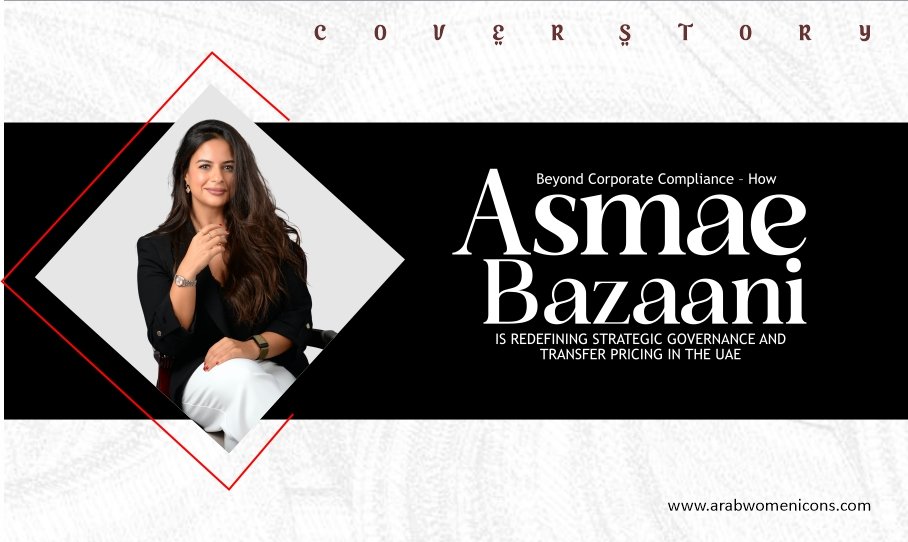
The modern corporate landscape demands more than mere compliance. It requires a precise marriage of legal defense and commercial strategy. Asmae Bazaani stands at this exact junction. As Galadari Advocates and Legal Consultants‘ Counsel – Tax Lawyer, she helps multinational groups, companies, investment platforms, and private equity clients in eliminating the divide in between complex tax regulations and sustainable business growth. Ensuring that while maintaining full integrity under OECD standards, global organizations can navigate the evolving UAE tax framework is her work focus.
Asmae Bazaani brings over a decade of international tax experience to her role. Her path began in Europe, where she developed her practice as a Tax Lawyer at CMS Luxembourg before spending years honing her advisory skills at industry giants like EY and Deloitte. This combination of formal legal training and Big Four advisory depth allows her to see through the clutter of corporate filings. Corporate tax advisory, transfer pricing governance, and intricate cross-border structuring are her specializations. Turning potential regulatory hurdles into clear, actionable paths for her clients is her mastery of the tax aspects of mergers and acquisitions.
Asmae Bazaani joined Galadari in March this year. It has been a pivotal moment, as the UAE tax landscape continues to change at a rapid pace. She views the firm’s integrated legal platform as the ideal environment to deliver solutions that are both strategically sharp and grounded in commercial reality. She continues to refine how corporations interact with these shifting regulatory frameworks, ensuring that every structure she designs serves the long-term vision of the organizations she represents.
Blending Global Experience with Practical Realities
Having built her career across international tax advisory and legal practice before joining Galadari Advocates and Legal Consultants, she has used these diverse experiences to heavily influence her approach to advising clients on complex tax matters. Her career has given her the opportunity to view tax from several different perspectives. Before joining Galadari, she worked in transfer pricing and international tax across Europe and the Middle East, advising multinational groups on complex cross-border transactions, restructurings, and operating models. She also had the privilege of contributing to the development of transfer pricing regulations in the GCC. Those experiences taught her that tax is rarely just about legislation. Every tax issue is ultimately a business issue. Clients are not looking for academic opinions; they need practical solutions that support commercial objectives while remaining legally robust. At Galadari, she combines legal analysis with a commercial mindset. Her role is to help clients understand not only what the law requires today, but also how decisions made today will impact their business tomorrow.
Navigating a New Era of Corporate Tax
According to Asmae Bazaani, the UAE’s tax landscape has undergone a significant transformation in recent years, creating specific opportunities and challenges for businesses operating in the region. The introduction of Corporate Tax represents a significant milestone in the UAE’s economic development. While many initially viewed it simply as an additional compliance obligation, she believes it presents an opportunity for businesses to strengthen their governance, improve operational transparency, and build more resilient structures. The biggest challenge is that taxation can no longer be treated as an annual filing exercise. It now influences legal structuring, financing arrangements, supply chains, transfer pricing policies, and strategic decision-making. Businesses that integrate tax considerations into their broader corporate strategy will be much better positioned than those adopting a reactive approach. The UAE remains an attractive investment destination. The key difference today is that investors increasingly value certainty, substance, and strong governance.
The Strategic Power of Transfer Pricing
Her expertise spans corporate tax, transfer pricing, and cross-border structuring, but she believes one specific area will hold the greatest strategic importance for organizations over the next five years. Transfer pricing will become increasingly strategic. Historically, many organisations viewed transfer pricing primarily as a documentation exercise. That perception is rapidly changing. Transfer pricing now influences how multinational groups allocate value, manage intellectual property, structure financing arrangements, and respond to increasing scrutiny from tax authorities worldwide. As jurisdictions continue implementing OECD standards and enhancing international cooperation, businesses will need transfer pricing policies that genuinely reflect their operating models rather than documents prepared solely for compliance purposes. Ultimately, well-designed transfer pricing policies support both tax compliance and better business governance.
Transforming Compliance into Growth
While helping multinational organizations balance regulatory compliance with long-term business growth in an increasingly complex global tax environment, Asmae Bazaani’s objective is to make compliance an enabler of growth rather than an obstacle. The first step is understanding the client’s business. Every organisation has different commercial priorities, risk appetite, and expansion plans. “Once those objectives are clear, we can develop structures that satisfy regulatory requirements while remaining commercially efficient.” She also encourages clients to think proactively. International tax rules are becoming increasingly interconnected, and decisions made in one jurisdiction frequently have implications elsewhere. Considering those issues early allows businesses to avoid unnecessary restructuring later. Good tax advice should support strategic decision-making, not simply identify risks.
Staying Ahead of Shifting Legislation
As a legal professional, Asmae Bazaani stays ahead of rapidly evolving legislation, international tax standards, and regulatory developments. “Continuous learning is fundamental to our profession,” she states, and dedicates significant time to monitoring legislative developments, reviewing OECD publications, analysing guidance issued by tax authorities, and participating in professional discussions with tax lawyers and friends across different jurisdictions. Equally important is practical experience. Every client matter presents new challenges and contributes to a deeper understanding of how legislation is interpreted and applied in practice. Tax law evolves constantly, and remaining technically current is both a professional responsibility and an essential part of delivering high-quality advice.
Dismantling Common Corporate Misconceptions
According to her, one common misconception is that tax planning is about minimising tax at all costs. In reality, sustainable tax planning is about aligning legal structures with genuine commercial activities. The strongest tax positions are those supported by substance, sound governance, and clear commercial rationale. Another misconception is that taxes should only be considered when a transaction is close to completion. By then, many planning opportunities may already have been lost. The most successful organisations integrate tax into strategic planning from the outset rather than treating it as a final compliance review.
Integrating Automation into Corporate Law
The legal profession is increasingly embracing digital transformation, forcing corporate teams to re-evaluate how they deliver advisory services. Artificial intelligence is already transforming the legal profession, particularly by automating repetitive tasks such as document review, legal research, and data analysis. However, AI should enhance professional judgment rather than replace it. Tax advice requires interpretation, commercial awareness, and an understanding of how different legal concepts interact within a client’s specific circumstances. Those are areas where human expertise remains indispensable. She sees technology allowing lawyers to spend less time on administrative work and more time providing strategic advice, building client relationships, and solving complex problems.
The Pillars of Exceptional Legal Counsel
In Asmae Bazaani’s experience, certain distinct qualities distinguish exceptional legal counsel from technically competent lawyers on a daily basis. Technical knowledge is the foundation of legal practice, but exceptional lawyers offer much more than technical accuracy. They communicate complex concepts clearly, understand the commercial realities facing their clients, and remain calm under pressure. Perhaps most importantly, they build trust. Clients rely on their advisers during significant business decisions, often involving considerable uncertainty. They need someone who can explain risks honestly while providing practical and commercially viable solutions. Empathy, integrity, and sound judgment are qualities that cannot be replaced by technical expertise alone.
Leading Complex Cross-Border Engagements
Cross-border transactions often involve multiple legal and regulatory frameworks, requiring specific leadership skills for successfully managing such complex engagements. International projects require collaboration. Successful leaders bring together multidisciplinary teams, coordinate advisers across jurisdictions, and ensure everyone remains focused on achieving the client’s objectives. Clear communication is essential. Different jurisdictions may approach similar issues from very different legal and cultural perspectives. Aligning those viewpoints requires strong organisational skills and an ability to translate technical advice into practical decisions. Equally important is maintaining perspective. Complex transactions inevitably present unexpected challenges, and effective leaders remain solution-oriented throughout the process.
Anticipating Future International Frameworks
Looking ahead, she advises that organizations must actively begin preparing for several emerging trends in international taxation and legal regulation today. Businesses should expect increasing international transparency and greater cooperation between tax authorities. Areas such as transfer pricing, Pillar Two, digital reporting, e-invoicing, and data-driven tax administration will continue to evolve rapidly. At the same time, environmental, social, and governance (ESG) considerations are becoming increasingly integrated into regulatory frameworks and corporate governance expectations. Organisations that invest early in governance, technology, and robust internal processes will be significantly better prepared for future regulatory developments.
A Marathon Beyond the Comfort Zone
To young women aspiring to build successful careers in tax law, corporate advisory, or international legal practice, Asmae Bazaani’s biggest piece of advice is simple: don’t be afraid to step outside your comfort zone. She grew up in a small city in Belgium, where many people spend their entire lives in the same place. If someone had told her then that she would one day be advising multinational businesses in the Middle East, contributing to the development of tax regulations, and building an international career, she probably wouldn’t have believed them. Every significant opportunity in her life came from taking a step into the unknown—moving abroad, embracing different cultures, changing industries, and accepting challenges that initially felt beyond her capabilities. Growth rarely happens when everything feels comfortable.
She also believes that curiosity is one of the most valuable qualities you can develop. Tax law sits at the intersection of law, finance, economics, and business, which means there is always something new to learn. Invest in your technical knowledge, ask questions, seek mentors, and never stop learning. Most importantly, don’t let self-doubt determine your ambitions. You don’t need to have every answer before taking the next step. Confidence is built through experience, preparation, and perseverance. Your career is a marathon, not a sprint, and consistency will always take you further than perfection.
Finding Balance Beyond the Legal Profession
Outside her demanding career in international tax law, Asmae Bazaan believes that maintaining balance is essential for long-term professional excellence. Rather than simply taking time away from work, she chooses activities that require her complete focus and allow her to be fully present in the moment.
Sport has always been a significant part of her life. Whether practicing kitesurfing, Brazilian Jiu-Jitsu, or yoga, each discipline has shaped her perspective and strengthened qualities that enhance her legal practice. Kitesurfing has taught her that while external circumstances cannot always be controlled, success depends on the ability to adapt. Brazilian Jiu-Jitsu has instilled humility, discipline, and a commitment to continuous learning, while yoga has strengthened her focus, resilience, and self-awareness. Her dedication to the practice led her to become a certified yoga instructor, reflecting her desire to gain a deeper understanding beyond participation alone.
These pursuits enable her to fully disconnect from the demands of her profession, return with renewed clarity, and sustain the energy required for a career in international tax law. She firmly believes that cultivating meaningful passions outside of work is not a luxury but an essential element of achieving consistent performance, personal well-being, and long-term success.
Integrity and Shared Success
Finally, as ARAB’s Top Influential Women Leaders in the Legal Sector 2026, if there is one legacy she hopes to leave, then Asmae Bazaani says it is to be remembered as someone who combined technical excellence with authenticity and integrity. She wants clients and colleagues to know that they could rely on her not only for sound legal advice, but also for honesty, pragmatism, and genuine commitment to helping them achieve their goals. Throughout her career, she has realised that our profession is about much more than interpreting legislation. As lawyers, we have the privilege of supporting businesses through some of their most important decisions and helping shape an environment built on trust, good governance, and long-term thinking. That is a responsibility she takes seriously.
Beyond her own career, she hopes to contribute to a profession that is more collaborative, more innovative, and more diverse. Success is meaningful when it is shared, and she believes we all have a responsibility to mentor others, create opportunities, and contribute positively to the next generation of professionals.
To the readers of Arabian Women Icons magazine, she would simply say that leadership is not defined by a title or seniority. It is reflected in how you treat people, the values you uphold, and the impact you leave behind. If she can be remembered for making a positive difference to her clients, her colleagues, and the profession, then she will consider that a meaningful legacy.