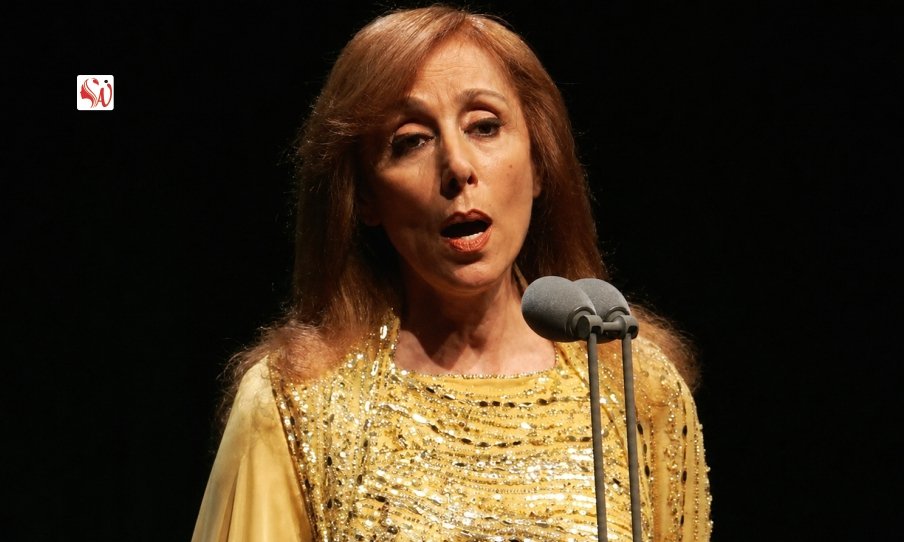
In Middle Eastern music, there are thousands of souls and many outstanding singers. However, Fairuz is an incomparable voice, which came from the middle of the XX century. She was born in 1930-s as Nouhad Wadie Haddad. This incredible woman became a pride of Lebanon, an honor of her country and a creator of songs that have become popular worldwide. Today, it is difficult to imagine Levantine music without Fairuz’s works. For more than seventy years, her voice sounded in millions of Lebanese homes, making her a true national hero. It is impossible to understand the history of Lebanon and its modern development without understanding the biography of this prominent figure and her work.
From Modest Roots to the Peak of Success
Fairuz was born in Lebanon in a poor family of a Syriac Orthodox and a Maronite Christian. The family lived in Beirut, in a small house in the quarter of Zuqaq al-Blat. From a very young age, she demonstrated amazing talent. At the age of ten, her teacher and schoolmates were stunned by her beautiful and melodious voice that could charm any listener. At first, her future seemed to be predetermined to follow the traditional family path, but everything changed in 1950.
That year, her future was determined by the famous teacher of the Lebanese Conservatoire, Mohammed Flayfel, who heard her singing at school. Convinced of the girl’s talent, he persuaded her father, a conservative Syriac Christian, to send her to the Lebanese Conservatoire. Soon, Halim el Roumi, the director of the National Radio Station, found out about the promising singer. He was impressed by her versatile voice, which could easily move from traditional Arabic melodies to Western music. He gave her the pseudonym Fairuz, meaning turquoise, and launched an extraordinary career.
The Rahbani Partnership and Global Stardom
The trajectory of Arabic music shifted permanently when the young vocalist was introduced to Assi and Mansour Rahbani. The Rahbani brothers were working as musicians at the radio station, and the artistic chemistry between them and Fairuz was instantaneous and magical. Assi began composing tailor-made tracks for her, leading to the 1952 release of the hit song “Itab.” This single track catapulted her to immediate stardom across the entire Arab world, establishing a new era of musical innovation.
In 1955, she married Assi Rahbani, cementing a personal and professional partnership that would redefine the regional arts scene. In the summer of 1957, Fairuz delivered an iconic live performance at the historic Baalbeck International Festival. Her performance was so profoundly moving that the Lebanese President, Camille Chamoun, awarded her the “Cavalier” medal, which is the nation’s highest honor for artistic achievement. From that moment on, her career expanded far beyond the borders of her homeland, filling prestigious international venues from the Royal Albert Hall in London to Carnegie Hall in New York.
A Healing Voice Through Times of Crisis
What truly elevates Fairuz above ordinary stardom is her deep, unwavering connection to her people, especially during times of immense suffering. When civil war broke out and threatened to tear Lebanon apart, she made the conscious, deeply principled decision never to leave Beirut. While many artists fled the country for safety, she stayed behind, refusing to sing for any political faction or specific regime.
By remaining fiercely neutral and focusing her art on the shared love for the homeland rather than its divisions, Fairuz became a powerful symbol of unity and hope. Her music was a rare sanctuary where citizens from all sides of the conflict could find comfort and a shared identity. During these dark decades, her songs were broadcast across radio stations on every side of the front lines, proving that her voice was a healing force that politics could not divide. This remarkable period solidified her legendary reputation as “The Voice of Lebanon” and “The Moon’s Neighbor.”
An Enduring Cultural Icon for the Ages
With a staggering career that spans more than six incredible decades, the sheer volume of her artistic output is nothing short of breathtaking. Fairuz has recorded nearly 1,500 songs, released over 80 albums, starred in 20 iconic musical plays, and sold over 150 million records globally. This makes her one of the highest-selling Middle Eastern artists in history, standing alongside global music legends.
Even today, as she lives a quiet and private life in her nineties, her immense influence remains completely undiminished. Every single morning across the Arab world, millions of people still begin their day by listening to her soothing melodies on the radio over coffee. Through her brilliant innovations, unmatched emotional depth, and fierce dedication to her country, Fairuz has earned an immortal place in music history, remaining a timeless beacon of peace, dignity, and artistic perfection.