The current global business environment demands that the legal function not merely interpret regulations or govern risks anymore. Legal leadership must be seen as a strategic role aiding enterprises in responsible innovation, expansion to new markets, protection of profitable ideas, and development of cultures based on trust and integrity. As industries become more intertwined and technology changes business, legal professionals are given an increasing number of legal tasks of balancing commercial ambitions with ethical obligations and maneuvering organizations in a fast-changing regulatory environment.
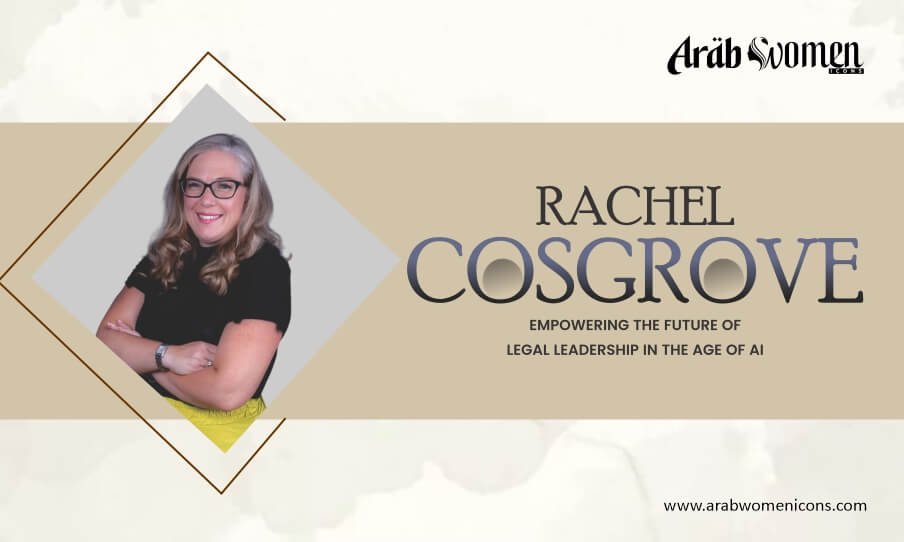
At the forefront of this transformation is Rachel Cosgrove, Legal, Patents and Compliance Cluster Lead for the Middle East, North Africa, Türkiye, and Sub-Saharan Africa at Bayer. Based in the UAE, she oversees legal, patents, and compliance across 68 countries, supporting the company’s Consumer Health, Pharmaceuticals, and Crop Science businesses. With more than two decades of experience spanning legal practice, intellectual property, compliance, and multinational leadership, Rachel Cosgrove has built a reputation for combining commercial insight with practical legal guidance. Her ability to navigate diverse markets, foster trusted partnerships, and champion ethical decision-making has made her a respected leader who continues to shape how legal functions contribute to business growth across one of the world’s most dynamic regions.
A Journey of Growth Across Diverse Markets
Rachel Cosgrove joined Bayer in 2018 as Head of Legal, Patents and Compliance for the Middle East. Over the years, her responsibilities expanded significantly, and today she leads legal, patents, and compliance across the Middle East, North Africa, Türkiye, and Sub-Saharan Africa.
The expanded role has allowed her to work with a broader range of markets while drawing on experience accumulated throughout her career. Although she had previously worked across many of these regions in different organizations, Bayer presented an opportunity to combine that international exposure with a company driven by scientific innovation and long-term impact.
She describes the progression as both professionally rewarding and intellectually stimulating. Each new market brings different perspectives, business priorities, and legal considerations, making continuous learning an essential part of the role. Supporting innovation across such a diverse region has only strengthened her commitment to helping businesses grow while remaining firmly grounded in legal and ethical principles.
Moving Beyond Legal Advice to Become a Strategic Business Partner
Rachel Cosgrove believes that an effective legal function begins with understanding what success looks like for the business itself. Before providing advice, legal teams must first understand commercial priorities, business objectives, and the challenges facing operational teams. This mindset has shaped the way she leads her team.
Rather than functioning as a department consulted only when legal issues arise, she believes legal professionals should work alongside business leaders throughout the decision-making process. Becoming an integrated partner allows legal teams to contribute practical solutions instead of simply identifying risks.
Over time, this approach creates stronger relationships across the organization. When business teams recognise that legal advisors understand their objectives and contribute to achieving them, trust naturally develops. That trust ultimately leads to better decisions where commercial ambitions and ethical standards support each other instead of competing against one another.
Leadership Built on Trust, Commercial Understanding, and Adaptability
One of the defining aspects of Rachel Cosgrove’s leadership journey has been establishing credibility with business teams across different regions and industries. She explains that trust is not created overnight. It develops gradually through consistent collaboration, practical advice, and a genuine understanding of how businesses operate. Legal expertise alone is not enough. Commercial awareness, pragmatic thinking, and the ability to communicate effectively all play equally important roles.
Throughout her career, Rachel Cosgrove has worked in private practice specialising in intellectual property before moving into corporate legal leadership across industries including fast-moving consumer goods, tobacco, pharmaceuticals, medical devices, consumer health, and agriculture.
Working across nearly one hundred countries has also shaped her perspective on leadership. While legal systems differ from one jurisdiction to another, she believes the greater challenge lies in understanding people. Every country brings different communication styles, varying attitudes toward risk, unique business cultures, and different expectations of leadership.
These experiences taught her that effective leadership requires flexibility rather than a one-size-fits-all approach. Remaining relevant to local teams means adapting communication, understanding cultural differences, and delivering advice in ways that resonate within each environment.
Supporting Innovation Through Early Collaboration
Innovation often develops faster than legislation, creating situations where businesses move into areas that existing laws do not fully address. Rachel Cosgrove believes this reality makes creativity an essential quality for modern legal professionals.
Instead of waiting until projects are close to completion, she encourages business teams to involve legal specialists from the earliest stages of planning and experimentation. Early collaboration allows legal teams to explore multiple compliant pathways before decisions become difficult to change.
When lawyers participate during brainstorming sessions and initial project discussions, they have greater flexibility to identify solutions that support innovation without creating unnecessary legal risks. If legal teams are only consulted at the final stages, the available options naturally become more limited.
Rachel Cosgrove views proactive engagement as one of the most valuable ways legal departments can contribute to business growth while maintaining responsible governance.
Protecting Innovation Through Strong Intellectual Property Strategies
With extensive experience in intellectual property, Rachel Cosgrove sees early identification and protection of valuable assets as fundamental to safeguarding innovation. The sooner businesses recognise what needs protection, the greater the opportunity to secure their competitive advantage.
Within multinational organisations, she also believes successful intellectual property protection depends on close coordination between global and local teams.
Global strategies provide consistency, while local experts understand country-specific legislation, regulatory expectations, and legal interpretations. Neither perspective can succeed independently. Strong collaboration between both levels ensures that protection strategies remain effective across different jurisdictions.
Her international experience has also shown that intellectual property laws may appear similar through international treaties, yet their interpretation varies considerably from one country to another. As a result, businesses often need market-specific legal approaches rather than relying on identical strategies everywhere they operate.
Rachel Cosgrove also highlights the importance of maintaining constructive dialogue between industry, governments, and intellectual property authorities. As technology evolves rapidly, continuous collaboration helps legal frameworks evolve alongside innovation, creating stronger protection for future discoveries.
Creating a Culture Where Compliance Becomes Everyday Behaviour
Rachel Cosgrove believes compliance is ultimately about people rather than policies. She recalls a thought-provoking observation from a recent conference that deeply resonated with her: a company itself cannot be compliant. The people within it determine whether compliance truly exists. This perspective shapes the way she approaches leadership.
While policies, codes of conduct, investigations, reporting mechanisms, and training programs remain essential, they represent only one side of the equation. Her greater focus is on influencing decision-making by helping employees develop confidence, sound judgment, and personal integrity. The objective is not simply to teach rules but to encourage ethical thinking that guides everyday actions, even in situations where written policies may not provide every answer.
Rachel Cosgrove also distinguishes between ethical culture and ethical climate. Ethical culture refers to the formal systems organisations establish, including policies, training, governance structures, and compliance programmes. Ethical climate, however, reflects what employees genuinely believe is expected, rewarded, and accepted within the organisation.
A business may have comprehensive policies on paper, but lasting success depends on whether people truly believe integrity is valued in everyday practice. When organisations succeed in aligning both culture and climate, compliance becomes part of how people naturally make decisions rather than something they follow only because rules require it.
Respecting Different Perspectives While Upholding Ethical Standards
Rachel Cosgrove’s career illustrates how modern legal leadership extends well beyond regulatory expertise. It requires commercial understanding, cultural awareness, collaborative thinking, and the ability to earn trust across diverse teams and markets. Her approach reflects a broader vision where legal professionals become strategic partners who help organisations innovate responsibly while protecting long-term business interests. Her leadership demonstrates that sustainable business success is achieved not only through strong governance but also through empowering people to make responsible decisions every day.
She believes that ethical leadership does not require everyone to think alike. Differences in personal values, opinions, and perspectives are inevitable, particularly within organizations that bring together people from diverse cultures and backgrounds.
Rather than viewing these differences as a challenge to compliance, she sees them as a natural part of healthy workplaces. The objective is not to eliminate varying viewpoints but to create an environment where respectful dialogue exists alongside clearly defined ethical expectations.
Leadership plays a decisive role in setting that environment. Through consistent actions, transparent decision-making, and everyday behaviour, leaders establish the standards that shape how employees understand integrity within the organization.
Rachel Cosgrove acknowledges that two individuals may arrive at different decisions while remaining equally aligned with ethical and compliance principles. Diversity of thought should not be mistaken for ethical inconsistency. What matters is that decisions remain honest, transparent, fair, and within the organization’s established standards.
She also believes that encouraging openness, mutual respect, and tolerance strengthens ethical cultures. When people understand where the organization’s ethical boundaries lie, they are able to exercise sound judgment without feeling that every situation demands identical responses.
Artificial Intelligence is Changing the Profession, Not Replacing Human Judgement
Rachel Cosgrove sees artificial intelligence and digital transformation as permanent forces that are reshaping both the legal profession and compliance functions. Rather than replacing legal expertise, these technologies are giving professionals better tools to analyze information, identify risks, and make more informed decisions.
In compliance, AI offers significant opportunities to process large volumes of information quickly, uncover trends, and detect potential risks before they become larger problems. Better data analysis enables organizations to respond faster and implement stronger preventive measures.
Legal practice has also benefited from these advancements. Research that once required extensive manual effort can now be completed in a fraction of the time. Access to broader data sources allows lawyers to explore complex legal questions more efficiently, freeing valuable time for strategic thinking and business advisory work.
Rachel Cosgrove believes this shift allows legal teams to focus less on repetitive administrative tasks and more on solving complex business challenges where professional judgement creates the greatest value. However, she also cautions against adopting artificial intelligence simply because it has become a popular trend.
Technology should always solve a genuine business need. Organizations must first understand the problem they are trying to address before investing in AI solutions. Using technology merely to claim that it has been adopted rarely delivers meaningful outcomes and can become an unnecessary expense.
Responsible governance remains equally important. Rachel Cosgrove encourages organizations to understand the AI tools they use, examine the reliability of their data sources, and remain aware of how algorithms generate responses. Unquestioningly accepting AI-generated information without verification can introduce significant risks, particularly in legal and compliance functions where accuracy is essential.
She also sees that the legal profession itself is evolving. Future lawyers will need not only legal expertise but also a practical understanding of artificial intelligence, digital governance, and emerging technologies. These skills will become increasingly important as legal professionals advise organizations on responsible technology adoption.
Despite rapid technological progress, Rachel Cosgrove remains convinced that human judgement cannot be replaced. Artificial intelligence may provide information and recommendations, but it cannot apply empathy, ethics, or moral reasoning in the way people can. Every important business decision still requires human responsibility, especially when those decisions directly affect employees, customers, and society.
Turning Challenges Into Strength as a Woman Leader
Rachel Cosgrove acknowledges that although progress has been made, women in leadership continue to encounter both conscious and unconscious bias throughout their careers. Early in her professional journey, she experienced assumptions about leadership that often differed depending on gender. Behaviours commonly viewed as confident and decisive in male leaders were sometimes described differently when demonstrated by women. Characteristics such as assertiveness could easily be misinterpreted as being overly demanding, while emotional intelligence was often unfairly viewed as a weakness rather than a strength. Over time, these experiences shaped her perspective on leadership.
Rather than encouraging women to adapt themselves to fit traditional expectations, Rachel Cosgrove believes they should embrace the qualities that make their leadership distinctive. Different perspectives, communication styles, and approaches to decision making contribute valuable diversity that strengthens organizations.
She often encourages younger women entering leadership positions to remain authentic instead of trying to imitate others.
Being the only woman in a leadership meeting can sometimes create pressure to conform. Rachel Cosgrove believes the greatest contribution comes from bringing one’s own perspective with confidence rather than attempting to fit an existing mould. Motherhood has also presented assumptions that many professional women continue to face.
Earlier in her career, Rachel Cosgrove admits she occasionally avoided mentioning that she had children during interviews because she worried it might influence perceptions of her commitment or capability. Looking back, she recognises that this reflected a broader misconception many women experience.
She hopes her own experience demonstrates that raising children and building a successful leadership career are not mutually exclusive. By being transparent about both aspects of her life, she hopes to encourage younger women to pursue ambitious careers without feeling they must hide or apologise for their personal choices.
Creating Equal Opportunities Instead of Meeting Quotas
Looking ahead, Rachel Cosgrove believes organizations should focus on building recruitment and leadership processes that naturally remove bias instead of relying solely on numerical diversity targets. She trusts appointments should always be based on capability, experience, and merit. Women want to know they earned leadership positions because they were the strongest candidates, not because organizations needed to satisfy representation goals.
In her view, the more sustainable approach is to redesign recruitment systems so that gender becomes less visible during the early stages of selection. Simple practices, such as anonymised applications, can help hiring managers focus entirely on qualifications and experience without unconscious assumptions influencing decisions.
Rachel Cosgrove also points to workplace policies that create more balanced opportunities for everyone. She recalls seeing the positive impact of equal parental leave policies, where fathers were offered leave comparable to maternity leave. This simple change shifted assumptions during recruitment and project allocation because both men and women could potentially take extended family leave. Small policy changes like these can gradually reshape workplace culture while creating fairer opportunities for leadership advancement.
Rachel Cosgrove believes meaningful progress comes from removing structural barriers, encouraging confidence, and creating workplaces where talent, integrity, and capability remain the defining qualities of successful leaders, regardless of gender.
Aligning Courage with Expertise
Rachel Cosgrove believes that technical legal knowledge alone is no longer enough for professionals who aspire to executive leadership. While qualities such as commercial awareness, creativity, and practical thinking remain fundamental, she considers one characteristic to be the true differentiator: courage.
Working within a corporate environment requires legal leaders to make decisions in real time, often with incomplete information and under significant business pressure. Unlike private legal practice, where advice is frequently delivered through carefully considered written opinions, in-house leadership often demands immediate direction. Business leaders look to legal advisors not only for analysis but also for confident recommendations.
Rachel Cosgrove believes future leaders must be prepared to stand behind their advice, take ownership of difficult decisions, and remain accountable for the outcomes. Every decision carries an element of uncertainty, yet leadership requires the confidence to act rather than waiting endlessly for perfect clarity. She also believes mistakes should never discourage professionals from making decisions. Even when outcomes are not exactly as expected, the lessons gained through action are far more valuable than the opportunities lost through hesitation.
For Rachel Cosgrove, leadership is built by accepting responsibility, learning continuously, and having the confidence to move forward even when every answer is not immediately available.
Building Agile Teams Through Open Debate and Intelligent Risk Management
Keeping legal teams agile requires much more than staying updated on regulations. Rachel Cosgrove believes the real value lies in developing the ability to assess risk thoughtfully rather than simply avoiding it altogether.
Every business decision carries a degree of uncertainty. Some risks are unacceptable, while others can be managed through appropriate controls and safeguards. Understanding that distinction allows legal teams to support innovation without compromising compliance.
She also encourages challenging long-standing assumptions. Many organizations continue following policies simply because they have always existed, even when changing business realities may justify a different approach. Rachel Cosgrove believes legal professionals should regularly reassess existing practices instead of accepting them without question. Innovation often begins by asking whether traditional approaches remain the best solution.
Another defining feature of her leadership is creating an environment where respectful debate is encouraged. Within her team, differing opinions are viewed as opportunities to strengthen decision-making rather than challenges to authority. Legal questions frequently involve judgement rather than absolute certainty, making discussion and diverse perspectives essential.
Rachel Cosgrove welcomes colleagues to question legal advice openly and revisit previous conclusions whenever new information emerges. These conversations are never treated as criticism but as opportunities for collective learning.
She believes that teams willing to challenge ideas constructively are better equipped to develop creative solutions that ultimately serve both the business and its ethical responsibilities.
Preparing for a Rapidly Changing Legal Landscape
Looking ahead, Rachel Cosgrove believes artificial intelligence will remain one of the strongest forces influencing the future of legal practice and corporate governance. As technology continues advancing, legislation will inevitably evolve alongside it. This ongoing process will introduce new legal questions, regulatory developments, and ethical discussions that governments, businesses, and legal professionals will need to address together. She expects these conversations to extend far beyond technology itself, influencing broader discussions around responsibility, governance, and corporate accountability.
Rachel Cosgrove also points to the rapid transformation taking place across the Middle East, where countries such as the United Arab Emirates and Saudi Arabia are actively investing in digital innovation and artificial intelligence. Their ambition to become global technology leaders is accelerating regulatory development and creating new opportunities for businesses operating across the region.
Alongside technological progress, she has also observed a broader shift toward more open and competitive business environments across both the Middle East and Africa. Markets that were once shaped by more traditional regulatory approaches are increasingly embracing international competitiveness and economic transformation. Rachel Cosgrove believes these developments will continue reshaping the legal landscape for years to come, creating new expectations for legal leaders who must balance innovation with responsible governance.
Advice for the Next Generation of Women Leaders
Rachel Cosgrove’s advice to aspiring women in law and corporate leadership begins with confidence in their own identity. She encourages women to embrace the qualities that make them different rather than trying to fit preconceived ideas of leadership. Authenticity, she believes, creates stronger leaders than imitation ever could. She also encourages professionals to remain open to unexpected opportunities.
Career growth is rarely a straight line. Sometimes the most valuable decisions involve moving sideways into unfamiliar roles that broaden knowledge, strengthen capabilities, and create new perspectives. Those experiences often become the foundation for future leadership opportunities.
Rachel Cosgrove believes professionals should resist becoming overly focused on future promotions while overlooking the importance of their current responsibilities. Excellence in today’s role creates the reputation that opens tomorrow’s opportunities. Leaders notice individuals who consistently deliver high-quality work, demonstrate commitment, and contribute beyond expectations. Perhaps her most personal advice concerns resilience.
Every career brings moments of uncertainty, disappointment, and difficult decisions. Those experiences can feel overwhelming in the moment, yet they often become the greatest sources of growth.
Looking back on her own journey, Rachel Cosgrove recognises that many of the challenges she once questioned ultimately strengthened her confidence, sharpened her judgement, and prepared her for greater responsibilities.
She encourages young professionals not to allow setbacks to define their future. Instead, every challenge should be viewed as another lesson that builds the experience, courage, and resilience required for the next stage of leadership.
Rachel Cosgrove’s leadership journey demonstrates that legal excellence extends well beyond technical expertise. It is built through trust, thoughtful decision-making, commercial understanding, and the courage to lead with integrity even in uncertain situations.
Across diverse markets and rapidly changing industries, she has consistently shown that the most effective legal leaders are those who understand people as well as they understand the law.
Whether guiding innovation, strengthening ethical culture, embracing new technologies, or mentoring the next generation of leaders, Rachel Cosgrove’s approach reflects a simple but lasting belief: meaningful leadership is measured not only by the decisions people make, but by the confidence they inspire in others to make the right ones.